Last week, we broke the news of the Chinese government’s plan for censoring console games in China. To an outsider, the list of things that can’t be included in games probably looks grim.
But while there are a lot of rules there, and while those rules (if interpreted broadly) could ban almost any game, gaming in China is actually much more officially accepted than it used to be. With the exception of a few idiots, the country has come a long way from the age where games were called “electronic heroin.” Now even the state-run television channel is running documentaries that show gaming in a positive light.
China’s current government will never stop censoring games that have unapproved political content. But the fact that games involving excessive violence and crime are sometimes banned has more to do with concerns about easily-influenced youth than it does politics. I think China could—and should—take another step towards a more free games industry by establishing a game ratings board.
Establishing a ratings board like the ESRB or PEGI, and supplementary laws governing who can buy what sort of games, could eliminate the need to ban overly violent or controversial games like Grand Theft Auto completely. Instead, China’s ratings board could simply rate them as 18+ or 21+, which would prevent them from being legally sold to minors.
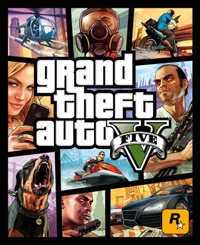 And yes, smart kids can and do circumvent those laws, or trick their parents into buying violent games for them. But the current system of banning these games in China is ineffective anyway, as games like Grand Theft Auto are easily pirated. Legalizing and rating them wouldn’t prevent children from playing completely, but it would make parents more informed of the kind of content the games have. And since accessing many online services in China requires the use of one’s real identity these days, it might even be possible to effectively ban minors from playing games with an 18+ or 21+ rating online.
Implementing a ratings system would inform parents, protect children, empower adult gamers, and assist developers of banned games, who would finally be able to receive some remuneration for their work. The current system leaves parents in the dark, trusts children not to pirate banned games, treats adult gamers like children, and leaves developers helpless to offer alternatives when their games get pirated.
Part of the problem, of course, is that China’s older generation—which is the one making the laws—still mostly sees video games as something inherently for children. China has millions of mature adult gamers that are ill-served by its current policies, but when the discussion arises, they are almost always ignored.
(See: Education and addiction in China)
For China to establish a ratings board and open up its game market a bit more, its government will probably have to stop thinking about games as content medium consumed by exclusively by middle schoolers. That may take time—it may even take until the first generation of China’s gamers get old enough that they’re the ones holding public offices.
But given how much public perception of gaming has changed over just the last ten or twenty years, I don’t think it will take that long. China’s games industry is ready for a freer system and a game ratings board now, and I think it should implement one.
It probably won’t just yet—in fact, China doesn’t even have a film rating system—but it is something the government should seriously consider.





Stay updated on the go with our mobile app.
Get latest insights with smoother, more personalized experience through TIA mobile app.