Terence Lee · · 4 min read
How Shopify plans to be an advocate for Asia’s small online retailers
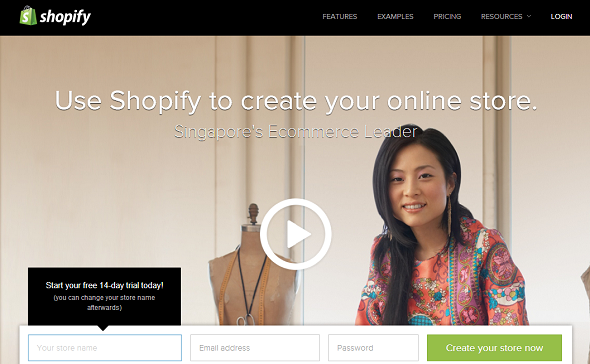
When Shopify entered Singapore, Malaysia, Indonesia, and India, there was plenty of buzz about how it lets retailers sell online without needing the skills to build a website or shopping cart from scratch.
New to the region, the Canadian startup has been busy learning about the local environments, organizing meetups with retailers, sharing with them the benefits of using Shopify, and getting a feel for their needs.
Shopify plans to be more than a distant online platform, according to Harley Finkelstein, the company’s Chief Platform Officer. It wants to be plugged deep into the community.
“My promise is that once we learn enough about the region, we’ll be able to put pressure on our shipping partners to improve their services to online stores,” he said over a phone interview.
Shopify certainly has the clout to be an effective advocate for retailers in Asia. It currently has about 60,000 online stores in about 100 countries selling USD 1.5B worth of goods to date. It has snagged big-ticket brands like Budweiser, Gatorade and Wikipedia.
With international presence, the company has worked with shipping partners around the world, and as such would be able to point shipping companies in Asia to how counterparts around the world are accommodating e-commerce businesses.
For example, Shopify has worked with the Canada Post to remove the need for home businesses to go to the post office just to deliver their goods. The Post now goes to them.
It helps that Shopify has teamed up with telco SingTel, which has a presence across Southeast Asia. In Singapore, Shopify is available through SingTel’s myBusiness SaaS platform. Further south in Indonesia, the telco has partnered with local e-commerce agency Ideoworks.co to bring Shopify into the largest Muslim country in the world.
The combined regional expertise and international clout of Shopify and SingTel could lift up the e-commerce ecosystem as a whole, making it easier for business owners to sell online and improve customer experience.
The partnership has been a few months in the making, and it was only about a year ago that Harley got fascinated with Southeast Asia.
While a less mature e-commerce market compared to North America, Asia-Pacific has vast potential. A report by eMarketer estimates that B2C e-commerce sales in Asia-Pacific has surpassed North America as a share of global revenue, at 33.4 percent compared to 31.5 percent of the USD 1.3 trillion market. That gap is expected to widen to double digits by 2016.
So the company started looking around for partners that could help it reach as many entrepreneurs in the region as possible.
“There was one company that cared. That was SingTel. It’s very compelling on the digital side, very forward-looking,” said Harley.





Stay updated on the go with our mobile app.
Get latest insights with smoother, more personalized experience through TIA mobile app.