Sumit Chakraberty · · 11 min read
A chat with ex-VP of Alibaba Porter Erisman on new opportunities in ecommerce

Porter Erisman with Alibaba boss Jack Ma. [A still from Crocodile in the Yangtze.]
This is the second part of an in-depth interview with former Alibaba VP Porter Erisman, who has devoted his time to writing books and advising internet companies after leaving the Chinese tech giant. His second book Six Billion Shoppers released a little over a month ago.
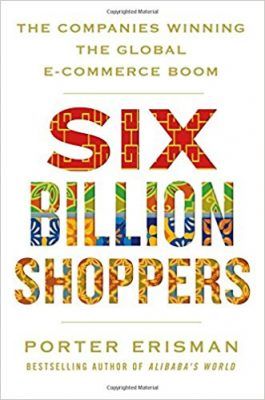
While the first book Alibaba’s World provided an insider’s view of the growth of Alibaba and its founder Jack Ma from their formative years of ecommerce in China in 2000, Six Billion Shoppers draws upon Erisman’s travels in emerging ecommerce markets across Asia, Africa, and Latin America.
The first part of this Tech in Asia interview with Erisman went into the main thesis of the book around a clash of ecommerce models from the West and East in emerging markets. The second part dives deeper into cultural and political differences and how they impact ecommerce strategies.
Amazon, I think, is really going to start looking at Southeast Asia in a serious way because it’s very well set up to sell cross-border into these emerging markets.
In Six Billion Shoppers, Erisman delves into history and behavioral research to support his view that the Chinese are inherently more social than people in the West. This was reinforced during his visits to the rural interior of China in Guizhou province to witness the tight-knit community vital to the success of farming in terraced paddy fields, where water flows from one plot to another. “Unlike the wheat farming of the American West, this was no individualistic pursuit,” he writes. “Sorting out the irrigation routes required the co-ordination of the entire village.”
Later he came across a 2014 study in the journal Science that presented a “rice theory of culture.” The researchers’ hypothesis was that the standing water required for rice cultivation fosters a more collectivist view than wheat farming that just needs rain. They correlated this with behavioral differences between people not only in different countries, but also in rice-farming and wheat-farming regions of China.
To Erisman, this helped explain why ecommerce and other internet businesses were so much more social in China than in the US, something that he had already observed over a long period of time.
Here are excerpts from our interview with Porter Erisman:
You’ve said there are historical reasons for the Chinese being more social than people in the West, and this is reflected in ecommerce sites and WeChat. But how much do we really know about Chinese preferences when it’s so hard for foreign companies to do business in China?
I think there’s two reasons foreign internet companies haven’t worked in China. The first is more based on politics and regulations. So for example anything involving news and information or social networks, the government simply doesn’t allow them to succeed. But something like ecommerce is politically neutral.
My belief is that the Western companies didn’t succeed in China because they simply didn’t build something that fit the needs of the China market. I got started in China in 1999, and at that time all the big internet companies from the US were beginning to get into China, but they just couldn’t understand the China consumer.





Stay updated on the go with our mobile app.
Get latest insights with smoother, more personalized experience through TIA mobile app.