
Warungs are an important part of life in Indonesia. These local mom and pop shops are the go-to place for many everyday essentials, whether you’re picking up some toothpaste or need a cold drink to cool off on a hot day.
An estimated 70% of fast-moving consumer goods transactions in the archipelago happen through these small businesses. However, many warungs are still reliant on old-school processes and manual methods of accounting, procurement, and stock management.
The potential for digitalization in the segment has led to a rise in business-to-business startups looking to address this gap, some of which have raised sizable amounts of funding from investors. Still, it’s not exactly an easy business to get into, thanks to roadblocks such as the digital divide.
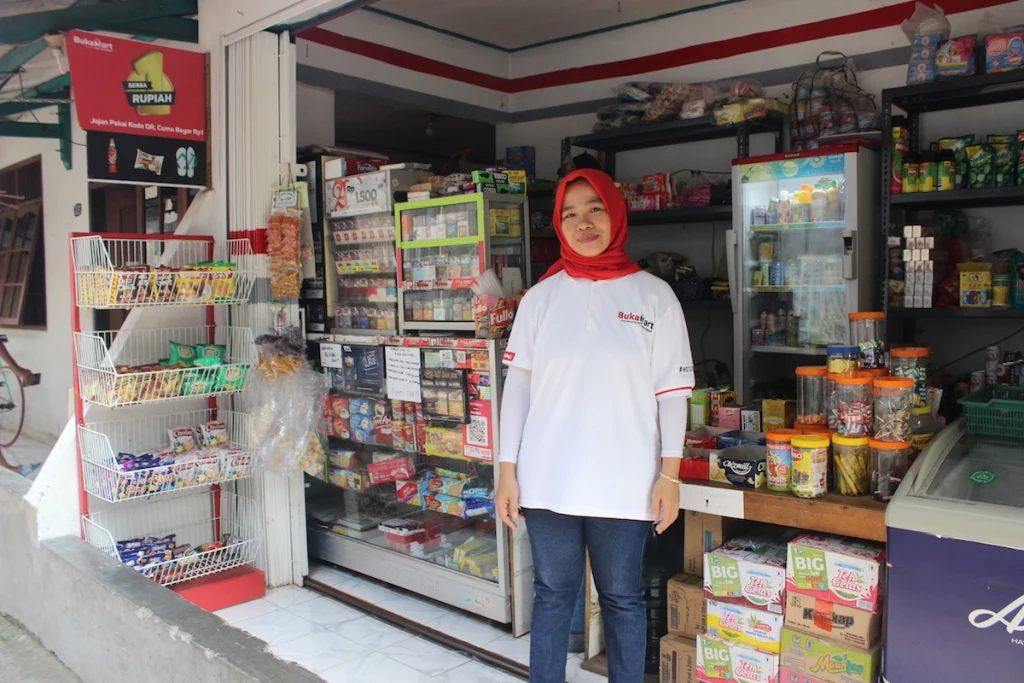
Photo credit: Bukalapak
Despite the challenges, one of the earliest players in the space, Mitra Bukalapak, is on an upward climb. The online-to-offline (O2O) arm of Indonesian ecommerce firm Bukalapak was launched in 2017 and has seen significant growth over the last four years.
There are now 8 million small-business owners, known as partners, on the Mitra Bukalapak platform, and that number is set to grow even further as more small businesses beyond warungs – such as airtime kiosks and travelling hawkers – come on board. What’s also notable is the O2O platform’s presence in the rural regions of Indonesia outside of Tier 1 cities.
One of the main reasons behind its continued success – and its status as a leader in the O2O industry – is the company’s focus on keeping its users at the core of everything it does, says Mitra Bukalapak CEO Howard Gani.
“The whole idea [behind Mitra Bukalapak] is really about listening to our customer base, understanding their pain points, and what kind of solutions we can introduce to address those,” he explains.
Listen and learn
The notion of building products to address customer needs is a major driver behind how Mitra Bukalapak evolved over the years. A warung located next to the Bukalapak office, for instance, inspired the initial version of the app that would aim to address the challenges of warung owners with procuring items for their stalls.
Over time, as they connected with more businesses, the team saw other areas that stall owners needed help with, such as inventory management and accounting tools. The company also expanded the offerings on the Mitra Bukalapak platform in line with what would be most beneficial for its partners, enabling them to sell virtual products such as phone credits and data plans, as well offer financial services like bank transfers.
Each new product and feature that was developed underwent rigorous user testing with these Mitra Bukalapak partners as well.

Mitra Bukalapak CEO Howard Ghani / Photo credit: Bukalapak
“When we come up with an idea, as raw as it may be, we test it with the Mitra partners,” shares Gani. “When we [develop a prototype], we take it to these partners to see how they interact with it, whether it’s really useful for them, whether they can use it, or if the changes are too much.”
By keeping its customers at the forefront of their development process, Bukalapak ensures that whatever it develops meets an actual need in the market and that its customers can use it easily. But this process doesn’t stop once a product is launched.
“That kind of iteration happens even after we launch the product. We listen to the feedback coming from the Mitra partners, we continue iterating those products to make sure that we address whatever pain points that come up,” Gani notes.
Try and try again
What has powered Mitra Bukalapak’s growth even further is the willingness to experiment and learn from its mistakes.
For Gani, the market is still sizable, and at the platform’s current level of business, he believes there’s still room for improvement. “We’re not afraid of failure because if we’re not experimenting, we’re not improving,” he adds.
When the platform was first launched, for instance, it relied on both unofficial distributors and partnerships with manufacturers in order to deliver goods to its partner warungs at the best prices. However, this inadvertently meant it would tread on the toes of larger FMCG incumbents.
We needed to understand and position ourselves in a certain way so that we can add value to both sides of that supply chain.
“We were not thinking at the time about the whole supply chain and the implications of us being involved,” Gani recalls. “We had to think about how Mitra Bukalapak fit into that nature of the supply chain and how we could add value to that.”
The platform has since struck numerous partnerships with many of the major FMCG manufacturers in Indonesia, tapping into its own digital expertise to address and streamline their challenges with distributing products to the sellers that sit at the end of the chain.
“We needed to understand and position ourselves in a certain way so that we can add value to both sides of that supply chain,” Gani says.
All about community
Mitra Bukalapak’s strong community of partners is another crucial piece of the puzzle.
In Indonesia – and in many parts of the world – one of the biggest hurdles to digitalization is getting small businesses on board. Case in point, startups often have to send business development teams to connect with potential customers on the ground.
While that was certainly the case in Mitra Bukalapak’s early days, word of mouth via its existing network of partners – which it amassed by being an early player in the sector – has helped the platform kickstart such conversations.
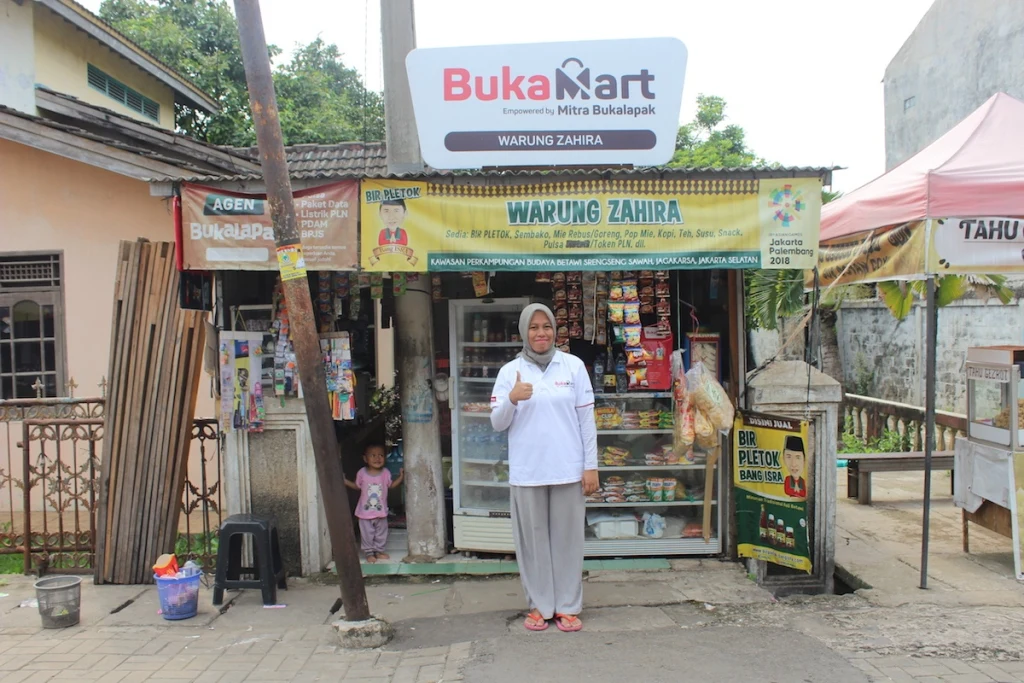
Photo credit: Bukalapak
“There are certain segments that we do still need to approach on an offline basis, and that’s where our Mitra partners come in,” explains Gani. “They play a key role in explaining how this will help their business because it’s more powerful if it comes from a colleague, if it comes from someone that is running a similar business to yourself.”
Besides helping with customer acquisition, these Mitra Bukalapak partners can also guide new users on how to navigate the app or troubleshoot problems when they arise.
“We want to keep developing and introducing new products, new iterations, so it really helps to have a community of Mitra partners that’s close to us,” Gani shares.
What’s ahead?
Mitra Bukalapak has transformed significantly over the last four years, but there’s more to come.
“We want to really empower and help our Mitra partners in doing their offline sales, and we want to introduce a range of services to help bring new sellers onto our platforms,” Gani shares.
The company plans to roll out more specific inventory management and bookkeeping tools for the different partners that use its platform, and it wants to expand the types of businesses that it works with. One area of interest for the firm is the small businesses that sell items through social media or chat platforms like WhatsApp.
Ultimately, Gani says that Mitra Bukalapak remains focused on its broader mission to help Indonesia on its digitalization journey.
“We see our role as really addressing [the needs of] the non-digitalized and adding value to them,” he concludes.
Bukalapak is a leading tech company that serves both online and offline markets driven by its mission to empower SMEs through innovation and technology to create a fair economy for all.
Learn more about Mitra Bukalapak, its O2O arm, on its website.
This content was produced by Tech in Asia Studios, which connects brands with Asia’s tech community. Learn more about partnering with Tech in Asia Studios.
Stay updated on the go with our mobile app.
Get latest insights with smoother, more personalized experience through TIA mobile app.
Recommended reads
 Fave names ex-Touch ‘n Go exec as chief product officer
 How financial infrastructure powers global startups
 Market insights startup nets $1.5m seed money
 Baby boom: SEA’s mom and babycare startups meld content with commerce
 Sociolla CEO to step down
 SEA food delivery spending tops $16.3b in 2022: report
 So you think you know startup growth
 How the newest generation of hospitality businesses is revolutionizing the industry
 Can Singapore’s new digital banks break into a saturated market?
 Making sense of Grab’s cloud kitchen shutdown in Indonesia





Editing by Nathaniel Fetalvero and Jaclyn Tiu
(And yes, we’re serious about ethics and transparency. More information here.)




📅 Upcoming Events
22 October 2026
Payoneer x CSPN Summit 2026