Merlin Francis · · 6 min read
Sex education can’t be a biology class. This founder bats for stories instead
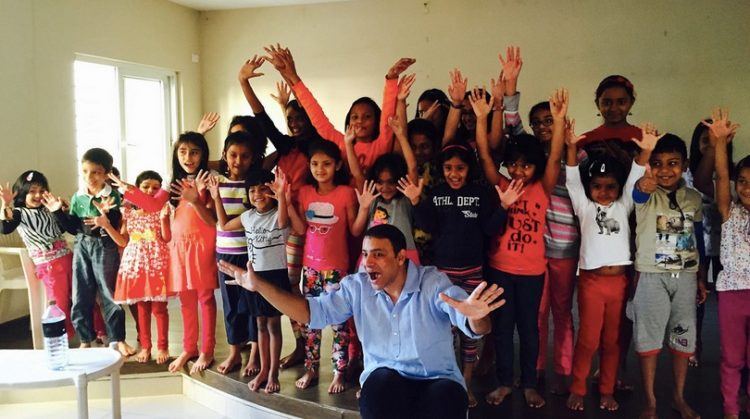
Photo credit: The Storywallahs.
Rahul and Smitha became friends almost immediately after they met in ninth grade. Rahul needed help catching up with his classes, as he had joined the school mid term and Smitha was willing to help. For hours they studied together, talked about life and friendship, and became closer. While she felt that Rahul was the one friend she could confide in, he looked forward to every minute he got to spend with her. No one could understand him like Smitha did.
Towards the end of the school year, Rahul posted on Facebook that he was in a relationship with Smitha. Her mom, a scientist, was the first to see the updated status and confronted Smitha. “Is this why we send you to school? Is this what you are learning? I knew that boy Rahul could not be trusted,” she scolded Smitha that night.
“Rahul is the only person I can trust right now, Mom. I don’t care what you think,” she screamed as she ran out of the dining room, slamming her bedroom door. Furious about what her mom was telling her, confused about what it meant, Smitha logged onto Facebook, knowing that Rahul would come online in a bit. He was the one she needed to talk to.
She clicked on the numerous notifications only to be startled by what she saw: Rahul’s updated relationship status. What was he talking about, she wondered, suddenly understanding what her mother was trying to tell her. In the meantime, comments had begun flooding the updated status, many congratulated him, others teased him. A few friends had congratulated her as well, as if she had anything to do with this. She was angry, terrified, and lost all at the same time. She logged out. But her problems were just beginning. Most of it was offline.
If you read this story with rapt attention, Ameen Haque, founder of Storywallahs is right: stories speak louder than anything else.
“A majority of us would remember the story about the hare and the tortoise, but if I were to quiz you on the Pythagoras’ theorem, which you had to learn and use for years in math, do you remember it?” he asks me, on the sidelines of an edtech conference last week in Bangalore. “Most of us wouldn’t.” (I had to Google it.)
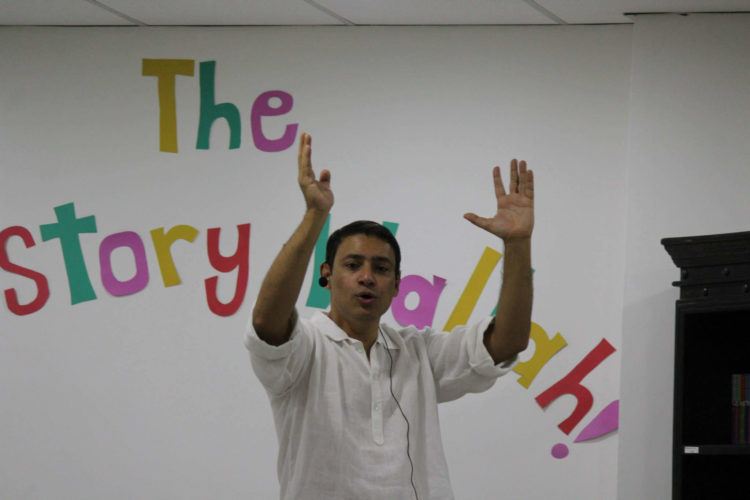
Photo credit: The Storywallahs.
Ameen, with his background in advertising and theater, believes that it is stories that move the world and shape history. By performing in cultural spaces like Rangashankara and through workshops for corporates and in schools, Ameen hopes to revive the culture of storytelling and make learning fun, easy, and most importantly, memorable.
Sex education can’t be a biology lesson
Ameen uses stories to teach life skills and advocates the use of stories in math and science classes. Now, through stories, Ameen is hoping to plug a serious gap in Indian school curriculum: sex education.
Sex education often ignores issues such as body image, gender equality, sexual orientation, etc. in the context of the modern world, especially social media.
“Sex education is usually a biology lesson in most classes. It ignores the emotional aspect. There is no curriculum for sex education in schools and it often ignores issues such as body image, what beauty is, skin color, gender equality, sexual orientation, etc. in the context of the modern world, especially social media. While there are schools that want to impart sex education to students, they do not know how to do it. This is where we come in,” he says.
Rahul’s and Smitha’s story is an example about consent and misreading signals between opposite genders, put in a modern context of social media. Not only is there a large number of people who are discussing their private lives on social media, but the age bar is getting lower.
The controversial subject





Stay updated on the go with our mobile app.
Get latest insights with smoother, more personalized experience through TIA mobile app.