- Premium Content It takes our newsroom weeks - if not months - to investigate and produce stories for our premium content. You can’t find them anywhere else.
 Melissa Goh · · 8 min read
Shopee’s rivals cry foul over its aggressive tactics to win sellers
Southeast Asia’s ecommerce marketplaces are locked in a bitter tug-of-war to secure more sellers.
But Sea-owned Shopee has come under fire from rivals after crawling its way to the top of the pack. Some of its tactics are seen to put competitors at an unfair disadvantage, according to several industry sources as well as documents reviewed by Tech in Asia.

Shopee with Blackpink / Photo credit: Shopee
At a meeting last year held by the Indonesian E-commerce Association, a body made up of the country’s prominent industry players, a Shopee competitor raised concerns about how its practices might be anti-competitive, according to a presentation we’ve reviewed. Tech in Asia understands that Shopee has clarified its approach, and no further action has been taken since.
Granted, its practice of securing exclusive arrangements with sellers isn’t unique to the industry. Based on contract terms and WhatsApp conversations Tech in Asia has seen, rivals like Tokopedia and Lazada also offer opt-in “priority” agreements with its merchants, precluding them from opening storefronts on other platforms for certain durations of time.
But sources believe that Shopee has crossed a line by asking merchants to shut down their existing stores on other platforms.
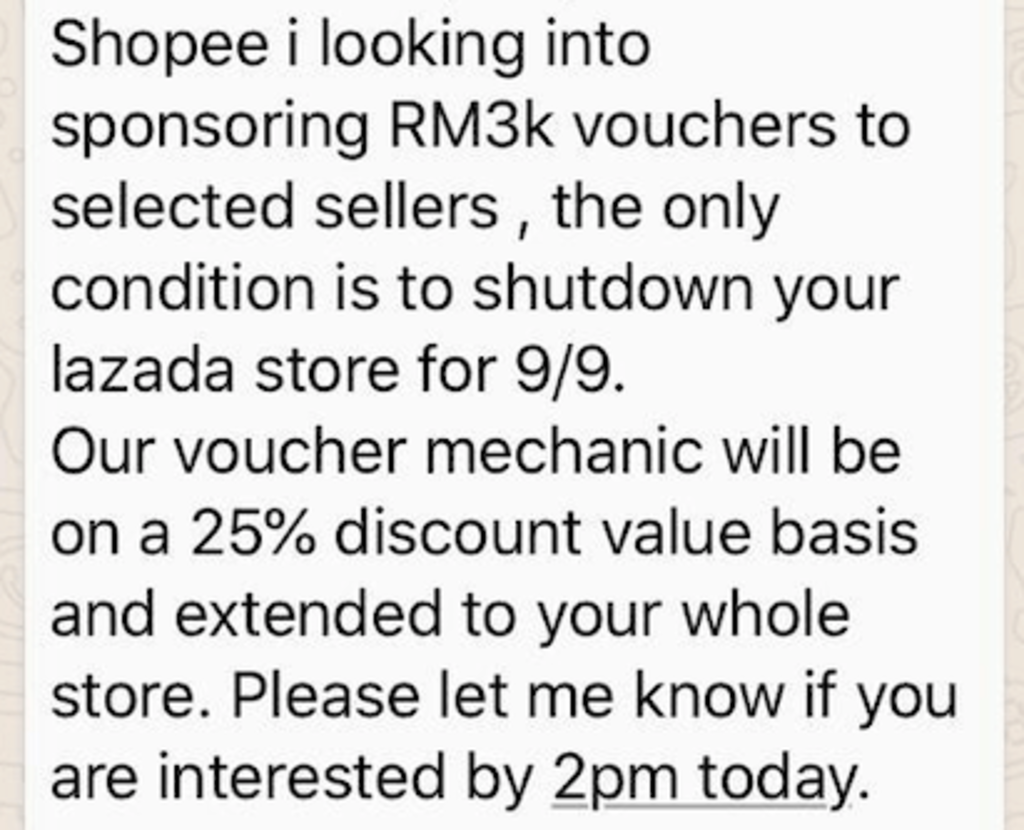
A WhatsApp conversation between a seller and Shopee, which is offering vouchers on the condition that the seller shuts down their Lazada store.
“Shopee is looking to sponsor US$459 [worth of] vouchers to selected sellers. The only condition is to shut down your Lazada store for 9/9,” reads a WhatsApp text sent last year to a Shopee seller, referencing a shopping festival that occurs in September each year.
According to documents, Shopee has also spelled out the penalties for breaching the terms of exclusivity agreements, which include revoking not only the benefits of the agreement, but also removing free shipping and shipping rebates, having listings “de-boosted,” or worse, getting banned from marketing campaigns.
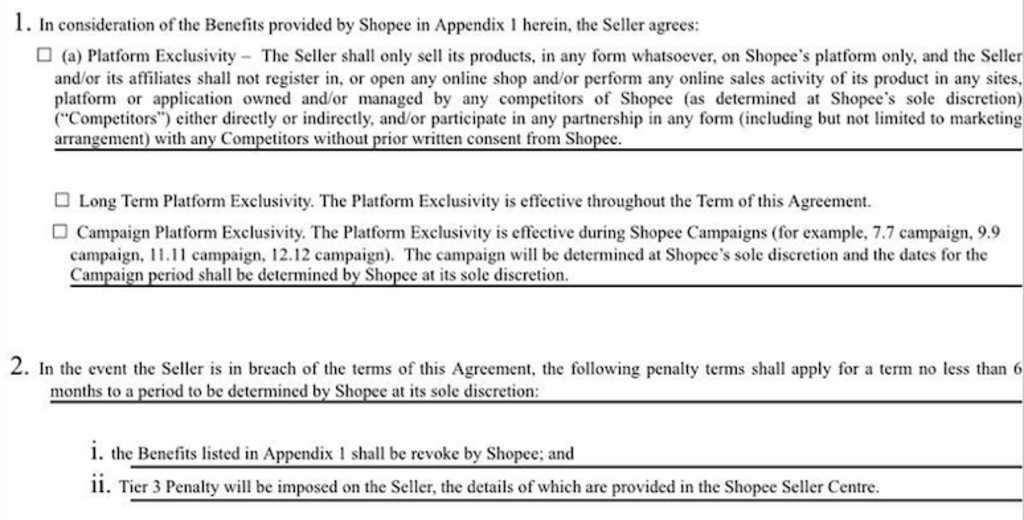
An exclusivity contract by Shopee from November 2019 detailing the potential penalties faced by a seller in the event of a contract breach.
Tech in Asia understands that Shopee’s current contracts with sellers, across all of its markets, don’t include a penalty clause.
That said, critics allege that such arrangements push small sellers to make a choice: either go exclusive with Shopee and benefit from its generous shipping rebates, which has been key to the platform’s growth, or hope that they can make good business by maintaining storefronts on multiple marketplaces. There’s also a fear of missing out: Sellers don’t want to opt out because they may lose sales to competitors who benefit from Shopee’s added perks.
Shopee’s stronghold
Being exclusive
Stay ahead in Asia’s tech landscape
This is premium content. Subscribe to read the full story.
Amid the region’s ecommerce wars, merchants are caught between a rock and a hard place.
We know this is not ideal. ⌛ Sign up in 20 seconds. Cancel anytime.
Our subscriber community includes professionals from these companies:





Stay updated on the go with our mobile app.
Get latest insights with smoother, more personalized experience through TIA mobile app.