 Christopher Quek · · 3 min read
Company culture is what you reward, punish, and tolerate, says this founder
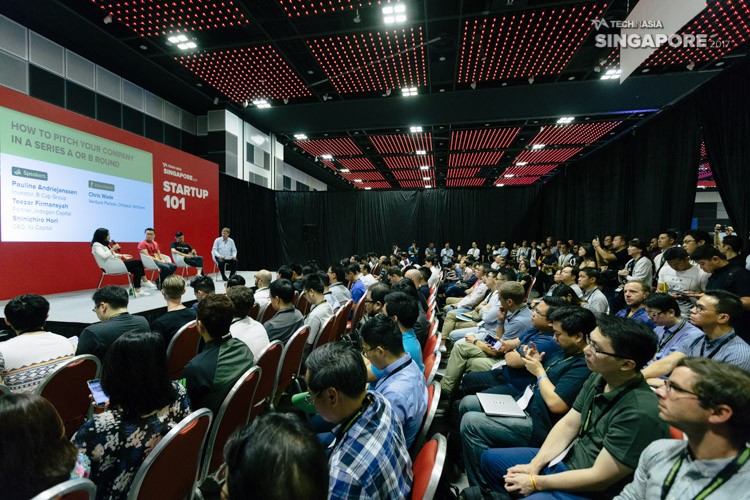
The Startup 101 stage at TIASG2017.
“We don’t look at passion, as it is very intangible. In fact, everyone is very passionate at job interviews,” exclaimed Oswald Yeo, CEO and co-founder of Glints.
I spoke with him on stage at Tech in Asia Singapore 2017 on the topic of company culture. Yeo thinks passion is overrated. To him, it is very intangible and short-lived. “Look out for skill sets and attitude instead,” he advised. For him, these four metrics determine the quality of a candidate: general intelligence, cultural fit, role-related knowledge or skill sets, and leadership potential.
He almost made his first hiring mistake two years ago when hiring for a software engineer, choosing between two candidates: a passionate articulate candidate vs a skilled, soft-spoken one.
“I wanted the more articulate one, but luckily, my CTO stopped me to say that guy didn’t know how to code, and he was more of a sales person. We ended up hiring the soft-spoken one and that worked out really well. He became one of our best hires.”
Stick to your culture even if it hurts
Company culture is defined as the personality of the company. This includes elements like company mission, environment, values, ethics, expectation, and goals.
Yeo shared that when the company started two years ago, his team sat down together to jot down their company culture on paper. They decided on two values: integrity and user focus.
However, Glints began facing a problem in the marketplace platform: they were getting a lot of spam job listings.
While it was good for the numbers, it was not what the users wanted. They decided to only accept verified companies to post listings on their platform. This, of course, affected their numbers for a few weeks.
As a growing company, it becomes even more important to stick to your culture regardless of possible gains or profits.
Attracting millennial talent
Setting up a job advertisement is different when hiring millennials. “Job advertisements are advertisements to attract talent,” Yeo said. “You [have] to sell the job and sell the vision. You see lots of job listings that are pretty much the same—copy and paste—very wordy and very boring.”
Keeping the company culture scalable
One member of the audience asked, “As the company grows, how does one keep the company culture scalable and consistent?”
Here’s Yeo’s strategy:
Notes on nurturing company culture





Stay updated on the go with our mobile app.
Get latest insights with smoother, more personalized experience through TIA mobile app.








📅 Upcoming Events
22 October 2026
Payoneer x CSPN Summit 2026