Terence Lee · · 4 min read
We minted and sold an NFT for $1,100. Here’s what we learned
Our announcement that we were going to sell an NFT artwork generated a bit of buzz, though it wasn’t all positive.
One person thought it was “lame AF,” while a couple of others thought it goes against our green ethos (more on this in a bit).
Still, we were having too much fun to care.
We changed the theme of the artwork at the last minute – after realizing that Grab’s IPO was just around the corner – and then we worked late into the night and over weekends to get everything ready. (Apparently, the “996” work culture is common in the crypto world, I later learned.)
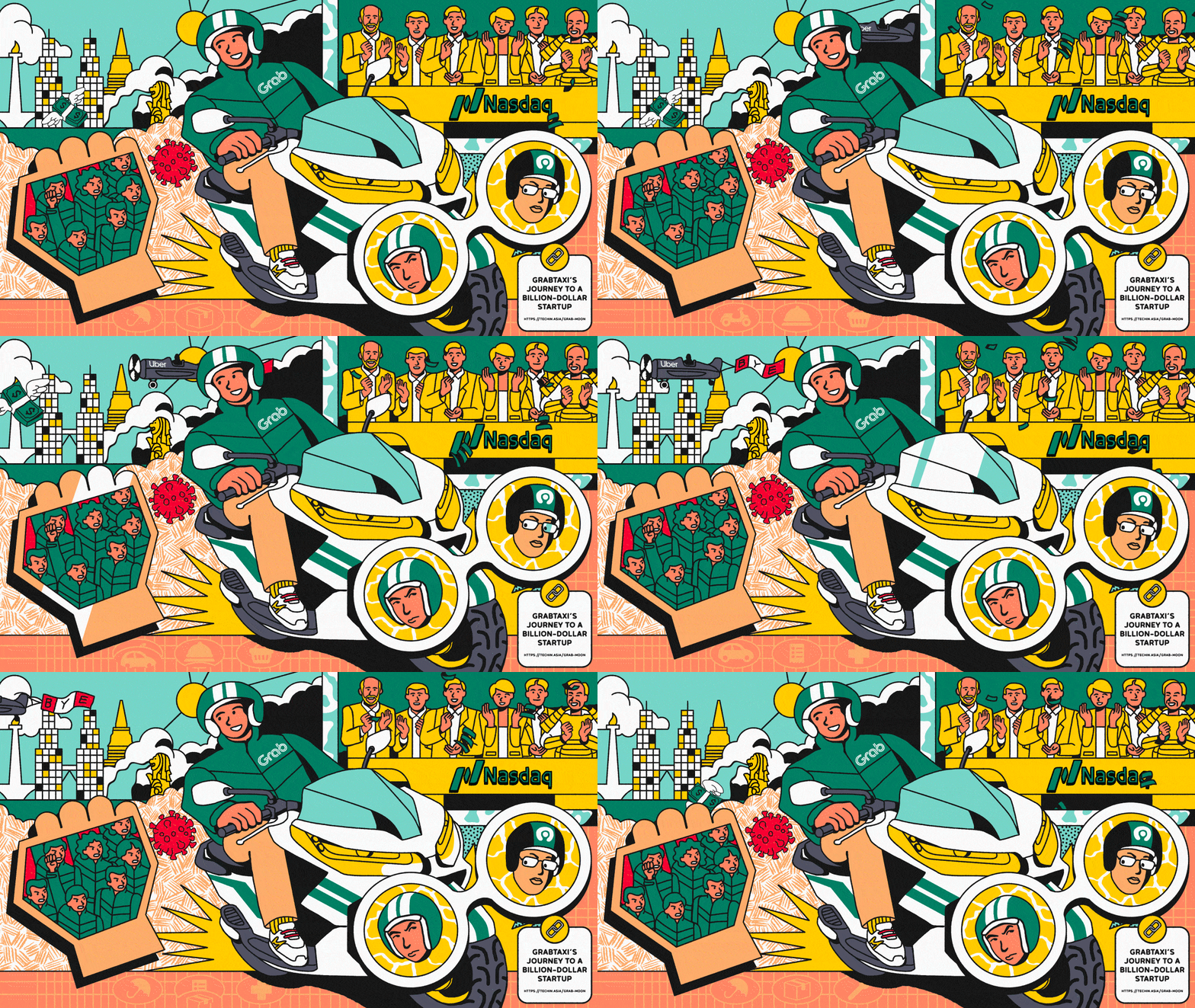
Image credit: Timmy Loen
After the auction launched, I nervously refreshed the page one too many times while on a staycation to see how it was going.
10/10 I will do this again.
Who won
In the end, after getting three bids, we sold the piece for US$1,100. And the winner was… anonymous.
This person, it seems, used a dormant wallet to buy this artwork and clearly knows his or her way around crypto.
We sent out a blast to our mailing list asking the buyer to come forth, but alas, maybe the person had buyer’s remorse already. (We’re still waiting.)
Still, congrats to anon for owning a piece of history. We hope you’ve found the purchase worthwhile.
Where did the proceeds go?
We found out that Ethereum gas fees (essentially transaction fees) took a huge bite out of our proceeds, leaving us with US$731. Still, that’s not too bad. We used all the money to buy carbon credits. We also topped upanother US$7,204.51 to purchase a total of 1,000 carbon credits.
This makes us carbon neutral for the year 2022. It also offset the legacy carbon emissions we put into the atmosphere during our founding years in 2011, 2012, and 2013. Thank you Cool Effect for making this possible. You can check out our carbon reduction and offset progress here.
What did we learn?
Running this experiment certainly got us thinking a lot more about NFTs – what its implications are for the creator economy, what it could mean for Tech in Asia, and so on. We do believe this won’t be the last NFT we’ll create.
Finding a new foundation
For this auction, we used Foundation, a sleek NFT marketplace built on top of Ethereum that is suited for edition-of-one digital artworks.
What wasn’t sleek about it was the gas fees for minting and listing the NFT, which was surely a deterrent to potential buyers.
When we auction our next NFT, we’ll check out other marketplaces that are much more friendly on the wallet – and the earth.
Bad for the planet?
Bitcoin and Ethereum have been criticized for consuming too much electricity.
See also: Why China’s crypto exodus is a boon for green bitcoin mining
However, we believe that this argument is outdated.
First, Ethereum will soon move to a proof-of-stake model, a method of verifying blockchain transactions that doesn’t require intense computations and, therefore, consumes far less power.
Second, a number of NFT marketplaces support “layer 2 networks” as well as alternative blockchain networks that are much less energy-intensive.
OpenSea, for example, supports Polygon, a layer 2 network built on top of Ethereum. SolSea, meanwhile, is built on Solana, a proof-of-stake Ethereum competitor.
We believe minting and selling NFTs on marketplaces like these is the way to go.
Tactical lessons
On the execution side, we picked up a few things, too.
We’d definitely want to give ourselves more time in the next go-round to create a stunning piece of work.
NFT art pieces are fundamentally different from PFP (profile pic) NFTs. Both are meant to be eye candy, but while PFP NFTs are essentially expensive Twitter profile pictures, NFT art pieces are something you’d want to print and frame up on your wall or display on a large screen.
We might also play around with the auction’s timing (weekdays instead of weekends) and its length (is 24 hours the right amount of time?).
We’ll also find ways to better remind interested parties about our auction, such as allowing them to set up calendar reminders.
All in all, we’re happy we did this. I can’t speak for the others, but I came away from this no less enthusiastic about NFTs (though I think there are way too many Bored Ape Yacht Club copycats around).
In my view, NFTs have the potential to:
- Easily verify ownership and provenance, which prevents art scams like this
- Imbue utility into ownership
- Improve liquidity of the content market
- Seamlessly reward content creators with a cut of secondary sales
While NFTs have been criticized for being worthless because the underlying asset can be easily copy-pasted, that argument was so yesterday.
After all, the abundance of forgeries has not stopped an original Kooning or Rothko from fetching millions of dollars in the art market. Owning counterfeits defeats the purpose of owning an art piece: bragging rights.
In the meantime, we’re happy to join the ranks of this group of pioneers – modest as our results may be.
Want to be the first to know about our next NFT artwork? Drop your email address in the form below.
Stay updated on the go with our mobile app.
Get latest insights with smoother, more personalized experience through TIA mobile app.
Recommended reads
 The necessary nature of branded content
 Line launches NFT marketplace in Japan
 UangTeman sues OJK for revoking lending license
 Zilingo names financial adviser as debtholders recall loan
 Zilingo co-founder denies charges of financial irregularities
 Say hi to Token Issue, Tech in Asia’s crypto newsletter
 Binance lays groundwork for Ethereum Merge support
 Physical collectibles maker Mighty Jaxx launches NFT collection
 This fintech firm’s fight with its founder may end in a courtroom
 Binance drops most FTT trading pairs after FTX fiasco





Editing by Willis Wee and Jaclyn Tiu
(And yes, we’re serious about ethics and transparency. More information here.)