 Grace Priscilla Teo · · 4 min read
Lyft CEO on AI’s effect on ridesharing (and why he’s not worried)
This article summarizes an episode of The Verge’s video series featuring David Risher, CEO of Lyft.
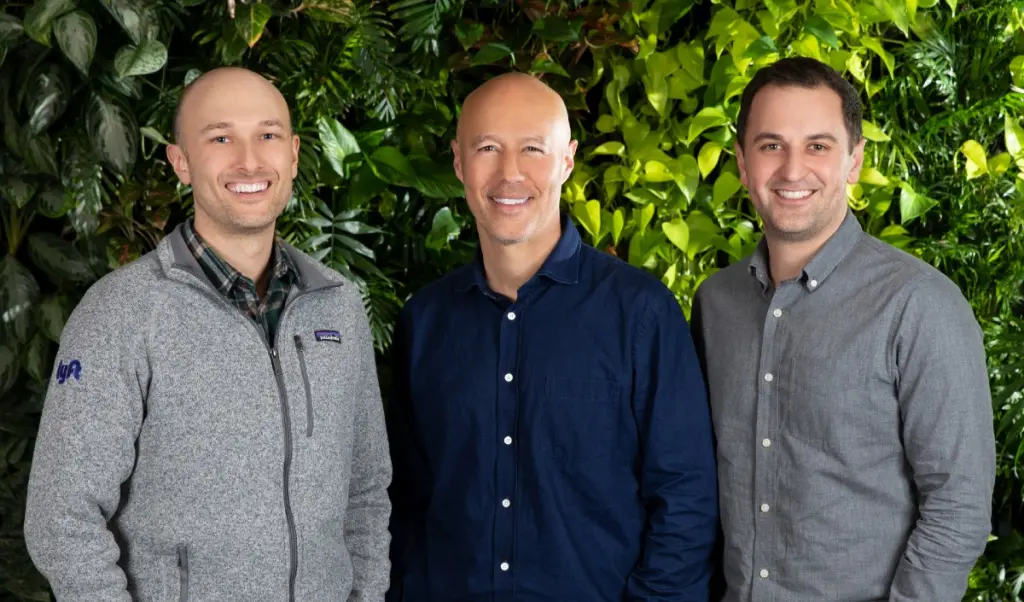
David Risher (center), CEO of Lyft / Photo credit: Lyft
Lyft CEO David Risher believes the company must focus on customer service. It’s a simple plan for a company facing competition, the threat of AI making rideshare a generic service, and the move to self-driving cars. But Risher’s plan is based on the idea that doing a better job in the real world is the best moat.
A turnaround based on focusing on customers
When Risher became CEO of Lyft, he found a company losing money because its high cost structure hurt both riders and drivers. He gained board approval for a ‘customer obsession’ strategy, which began by fixing those unsustainable costs.
The first, painful step
Risher explains, “[We had to slim down] to be able to pay drivers what we needed to pay them, and to be able to charge riders what they wanted to…what they could afford. So, again, if you start with customer obsession, that’s gonna drive our profitable growth, and that was the thesis.”
This customer-focused approach also required him to be a hands-on leader. Risher uses a method he calls “falcon mode” to switch between big-picture plans and small details. He argues that to make a plan work, a CEO has to get involved in how things are done.
Proof is in the pickup
Risher points to one specific metric: driver cancellations. He had his team focus on it and analyze every detail, from the font size on the driver’s app to when information was presented, all to stop the painful experience for riders.
Risher states, “When I started, [driver cancellations were] 15%. A year later, it was 10%. Three weeks ago, it was 5%. As of this last Wednesday, it was 4.5%. So massive change.”
Competing on service not just price
The rideshare market is competitive, with many customers comparing prices between Lyft and Uber. Risher sees this price competition as a reality.
Turning a price war into an advantage
For a company with a smaller market share, the threat of customers switching apps to save a dollar seems like a weakness. Risher sees the opposite. He views the way people shop for the best price as his biggest opportunity for growth.
Risher argues, “I wish everybody price shopped. Because remember I have 30% share and the other guys have 70% share. And we price almost at parity…if everyone checked both, I’d win probably 55% of the time as opposed to 30% of the time. So that’s great for me.”
You can’t automate trust
This fact shapes how he sees threats like AI assistants. Risher is not concerned that AI assistants booking rides will turn Lyft into a generic service. He believes Lyft’s size, brand trust, and service quality create an advantage.
“You are trusting that this thing, this person is gonna come and pick you up and they’re gonna be on time and it’s gonna be safe,” Risher explains. “It’s physical, you know, it’s safety and it’s real-world stuff…I don’t think a lot of people would be super excited about just some ‘rando’ coming picking me up in sort of an unbranded service.”
The logistical moat
Beyond brand trust, there’s the challenge of copying Lyft’s network. Any new competitor would face the huge task of building a network of drivers and riders from nothing.
A hybrid future for drivers and robots





Stay updated on the go with our mobile app.
Get latest insights with smoother, more personalized experience through TIA mobile app.










📅 Upcoming Events
22 October 2026
Payoneer x CSPN Summit 2026