- Premium Content It takes our newsroom weeks - if not months - to investigate and produce stories for our premium content. You can’t find them anywhere else.
 Ardi Wirdana · · 6 min read
How Bukalapak is betting on rolling up brands in pursuit of profits
When Bukalapak released its latest quarterly report in March, the headline was always going to revolve around its first-ever net profit.
The problem, as many have highlighted, was the fact that this profit owed largely to the unrealized gains earned from its investment in Allo Bank, a Jakarta-based digital bank. While the deal no doubt helped improve Bukalapak’s numbers, it did not reflect the operational prowess of the ecommerce company’s core business.
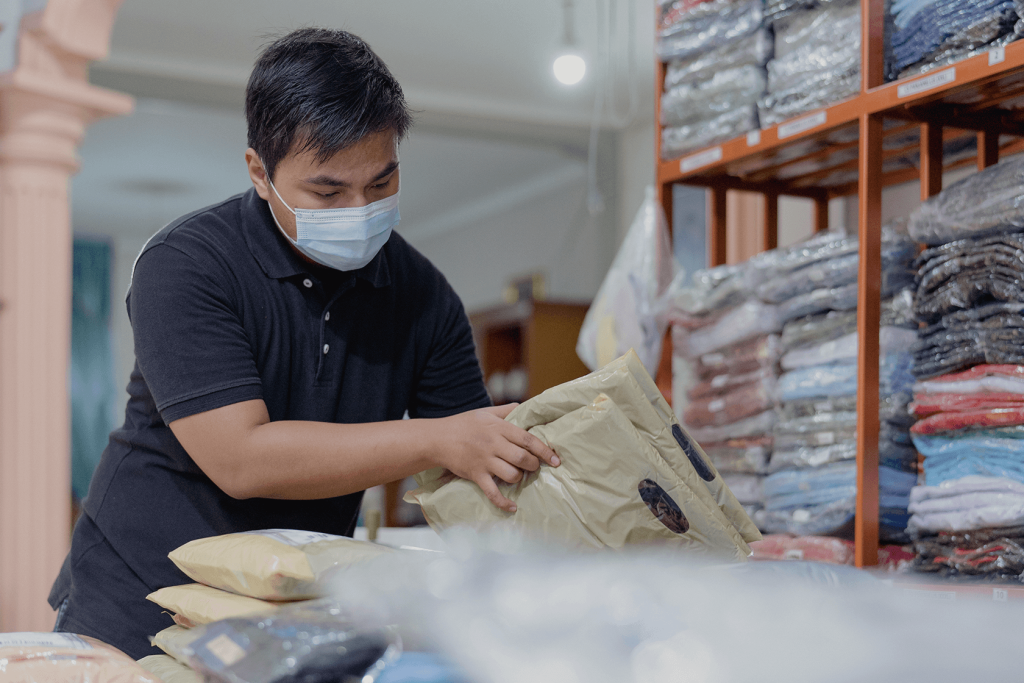
An online seller going through his stock / Photo credit: Bukalapak
Bukalapak needs to generate a sustainable stream of revenue within its core competency, and a closer look at its financial report indicates that it may be quietly doing just that through its acquisition of as many as ten local consumer brands.
This marks a fresh venture for Bukalapak that could nudge it toward the path of “proper” profitability.
Rolling up profitable consumer brands
Having allocated a third of its US$1.5 billion IPO proceeds for investments and acquisitions, Bukalapak has embarked on a deal spree. As shown in its financial report, the company has acquired four tech startups in the fields of edtech, MSME solutions, and AI messaging services. Aside from Allo Bank, Bukalapak has also poured capital into Allo Fresh, an e-groceries joint venture it set up with Trans Retail, the retail arm of conglomerate CT Corp.
The investments in consumer brands, however, were less apparent. Bukalapak’s financial report states that it has “established” a number of companies whose majority stakes are owned by a subsidiary firm by the name of Buka Labs Indonesia (BLI). This company, Tech in Asia understands, is the legal entity behind Open Labs, a Jakarta-based ecommerce roll-up firm that acquires, and then scales, online-native consumer brands in the country.
Among the brands that have been acquired by Open Labs are Emaku (spices), Starco (home appliances), Ree Derma (hair treatment), and Atmos (facial masks). It is likely that the ten disclosed brands constitute some of the early deals sealed by Open Labs, which began operating last year.
Spearheaded by Jeffrey Yuwono, the former CEO of fashion ecommerce startup Sorabel, Open Labs introduced itself to the public with a US$100 million fund, which it said was backed by an “ecommerce unicorn.” The fund, which according to the company is the biggest of its kind in the region, would invest and acquire direct-to-consumer brands in Indonesia.
In a conversation with Tech in Asia in November 2021, Open Labs said it was looking to acquire 51% to 100% stakes in digital native consumer brands that are “growing profitably and cash flow positive.”
Bukalapak’s financial report, however, shows that some of the brands are still loss-making as of December 2021. Open Labs did not respond when asked for clarifications on this.
Once acquired, these brands are then given operational support by the Open Labs team that consists of “experts” in various key areas of ecommerce such as branding, marketing, customer service, and supply chain, which is expected to help scale the business further.

Bringing Bukalapak’s expertise to bear
Competition and anti-competition
Stay ahead in Asia’s tech landscape
This is premium content. Subscribe to read the full story.
Through its US$100 million ecommerce roll-up play, Bukalapak may be building a venture that could nudge it toward the path of “proper” profitability.
We know this is not ideal. ⌛ Sign up in 20 seconds. Cancel anytime.
Our subscriber community includes professionals from these companies:





Stay updated on the go with our mobile app.
Get latest insights with smoother, more personalized experience through TIA mobile app.












📅 Upcoming Events
22 October 2026
Payoneer x CSPN Summit 2026