Education veterans Zhizhong Neo and Alicia Cheong first established a brick-and-mortar education center in 2007, providing mathematics and science lessons for grade 1 to grade 10 students. The duo found success quickly thanks to their personalized learning approach, in which topics and practice were tailored to address each student’s individual weaknesses.

Neo Zhizhong and Alicia Cheong, co-founders of Geniebook / Photo credits: Geniebook
However, they soon found themselves teaching some 15 classes weekly and hit the inevitable obstacle in their strategy: scaling. Personalization was notoriously difficult to scale because of the growing number of students at the learning center. Tailoring the experience was also a highly manual process that required extensive time and energy.
“We really wanted to help students, but our efforts and time were simply restricted,” recalls Neo. “I can’t be at two locations at once, and within a classroom, we can’t personalize for more than 15 students simultaneously.”
The founders scoured the web for two years to seek solutions. Frustrated at finding none, they finally made the bold move of developing their own edtech platform, Geniebook, which now leverages a trifecta of artificial intelligence, livestreams, and chatrooms to turn the educators’ dream of personalized learning into reality.
Primary roots
When Neo and Cheong first started looking into personalized learning solutions, the problem was much larger than simply finding suitable technology. They also had to consider how to make this solution work effectively for all students both in terms of hardware and software.
When the iPad was released in 2010, Neo spotted a way forward. The founders were at a crucial crossroads: to continue profiting off their current model by opening new outlets or to invest what they had into creating a software solution that would meet their needs.
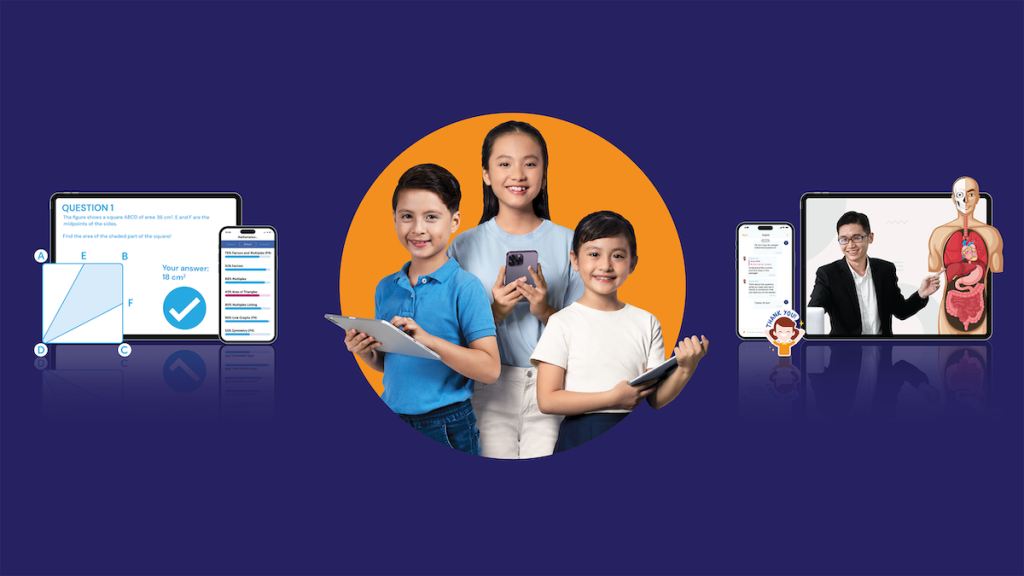
Photo credit: Geniebook
They chose the latter by developing an AI-powered smart question bank that could identify a user’s academic strengths and weaknesses and deliver more questions to target the latter. This software was deployed in their five learning centers and proved to be a big hit. Geniebook shares that 90% of the students showed improvement in their test scores after completing eight worksheets on the platform.
Secondary hurdles
At that point, it became clear to the team that to meet their grand vision of “helping students learn 1,000 times faster,” Geniebook would have to evolve beyond its brick-and-mortar education centers.
“While we would definitely benefit many students with the in-person approach by simply opening more centers, the scale of it would not be comparable to a technology-led approach,” says Neo. “Going fully digital was the fastest way to achieve that vision.”
The challenge then was bringing this product to the masses. A completely digital learning platform was not something parents were familiar with in 2017 – this raised concerns about whether they would be willing to pay for it. The Geniebook team would also have to quickly design, develop, test, and launch a companion app , which can help parents manage their child’s learning by assigning worksheets, giving out rewards, and monitoring progress.
“At the time, I thought this only had a 5% to 10% chance of success,” shares Neo. “We only had one shot at this.”
Cheong pitched the service to parents using a deck of app mock-ups created by Geniebook’s designers. Within half a month, more than 10 subscriptions were closed, validating the demand for such a service. After three months, that number rose to 70.
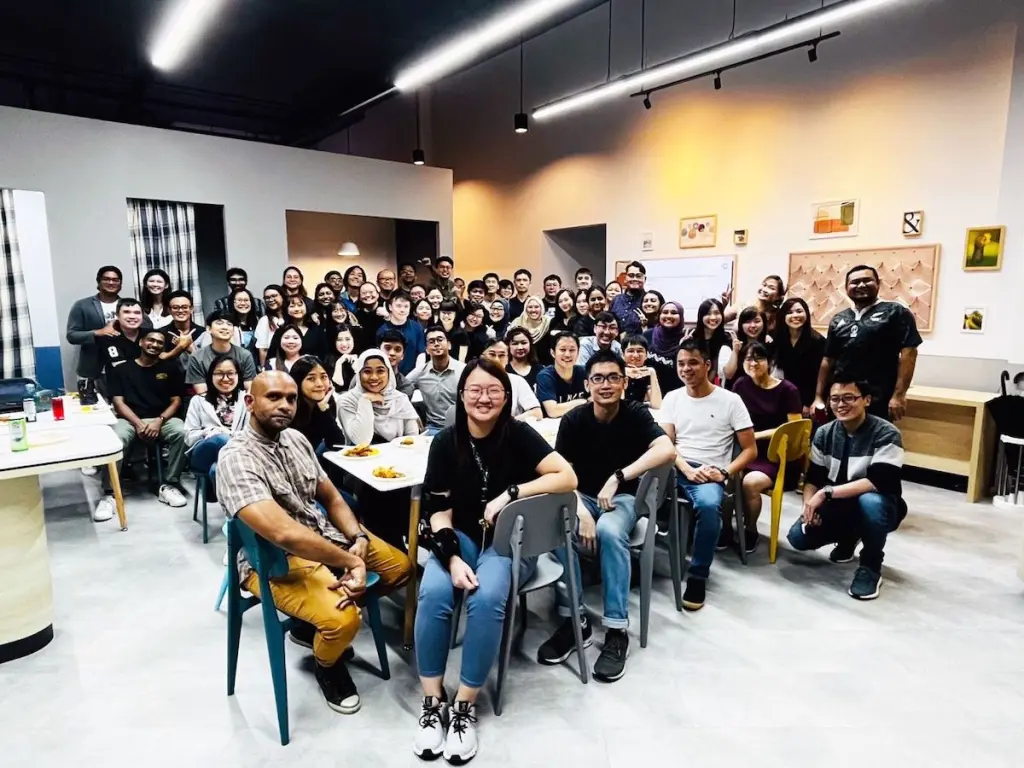
The Geniebook team / Photo credit: Geniebook
As Geniebook rolled out its platform to the public, the team sought and received feedback from both students and parents on how the apps could be improved. Doing so allowed Geniebook to rapidly iterate its products in tune with what its users desired, ultimately aiding the goal of creating a service that was more scalable.
Since then, Geniebook has grown its revenue more than 35x in the last four years. It even scored a 100% revenue growth in 2021 alone and saw its user base grow to 250,000 users in 2022.
In hindsight, Neo realizes how unprecedented going from a brick-and-mortar business to a fully online platform was. Pointing to nearly two years of Covid-19 restrictions, Neo says that in-person learning centers had every incentive to pivot themselves online, yet successes were few and far between.
“That was when we realized that it was an extremely difficult maneuver, and we’re really very fortunate to have the team that accomplished this,” he shares.
Tertiary goals
With the momentum from its positive start, Geniebook hired leaders from top startups around the world. It also employed 300 full-time teachers and built up its team of data scientists and AI experts to further enhance its products.
The firm has successfully raised funding as well, bagging US$16.6 million in a series A round from Lightspeed Venture Partners and East Ventures – investors who have backed edtech giants such as Byju’s and Ruangguru.
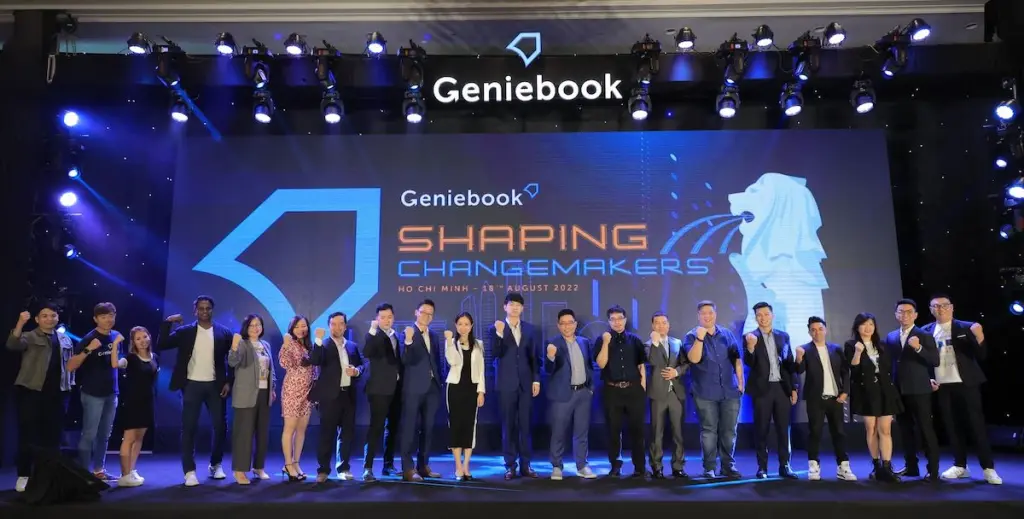
Photo credit: Geniebook
Neo says that the team members remind each other to be vigilant and to continue growing without sacrificing profitability and sustainability. In addition to AI-powered personalized learning, Geniebook holds regular livestreams of lessons that students can watch or catch up on later, as well as subject-based chatrooms moderated by full-time teachers. This allows students to drop questions about concepts they don’t understand or offer help if they know the answers.
“They say that children form 20% of our population, but 100% of our future,” says Neo. “Through providing that personalized learning journey, we enable students to become the self-directed, confident learners of tomorrow.”
With a firm lead in Singapore and users across 17 countries in Asia, Geniebook has set its sights on global growth next.
“We don’t believe that learning should be restricted by geographical borders,” asserts Neo. “Students are students, whether they’re from Vietnam or Singapore, and we want to benefit them.”
As for any regrets leaving the offline business, Neo has none to speak of.
“Our previous business didn’t fade away,” he emphasizes. “It simply transformed into what we wanted it to be – a scalable personalized learning solution.”
Geniebook champions personalized learning for grade 1 to grade 10 students by empowering them to take charge of their educational journey through AI-assisted products and innovation that help accelerate improvement.
Learn more about Geniebook today.
This content was produced by Tech in Asia Studios, which connects brands with Asia’s tech community. Learn more about partnering with Tech in Asia Studios.
Stay updated on the go with our mobile app.
Get latest insights with smoother, more personalized experience through TIA mobile app.
Recommended reads
 Forget startups. Buy the business running on Excel
 Life’s a game, and AI agents are Animoca’s new play
 Indonesian AI startup goes global
 Forrest Li on scaling Sea, building smarter bots, and founder grit
 An AI assistant that joins sales calls and scores team skills
 Beyond the check: Why VCs need more than capital
 SGX’s CEO says it doesn’t need a unicorn to win
 SMEs want AI too, but not the kind Big Tech is selling
 Oatside’s alt-milk rise hits a profitable gear
 Alibaba’s financial health in 12 charts





Editing by Stefanie Yeo, Winston Zhang, Dhania Putri Sarahtika, and Jaclyn Tiu
(And yes, we’re serious about ethics and transparency. More information here.)