 Gilang Kharisma · · 6 min read
Sam Altman: The future of cybersecurity is AI defending AI
This article summarizes an episode of OpenAI’s video series featuring its co-founder, Sam Altman.
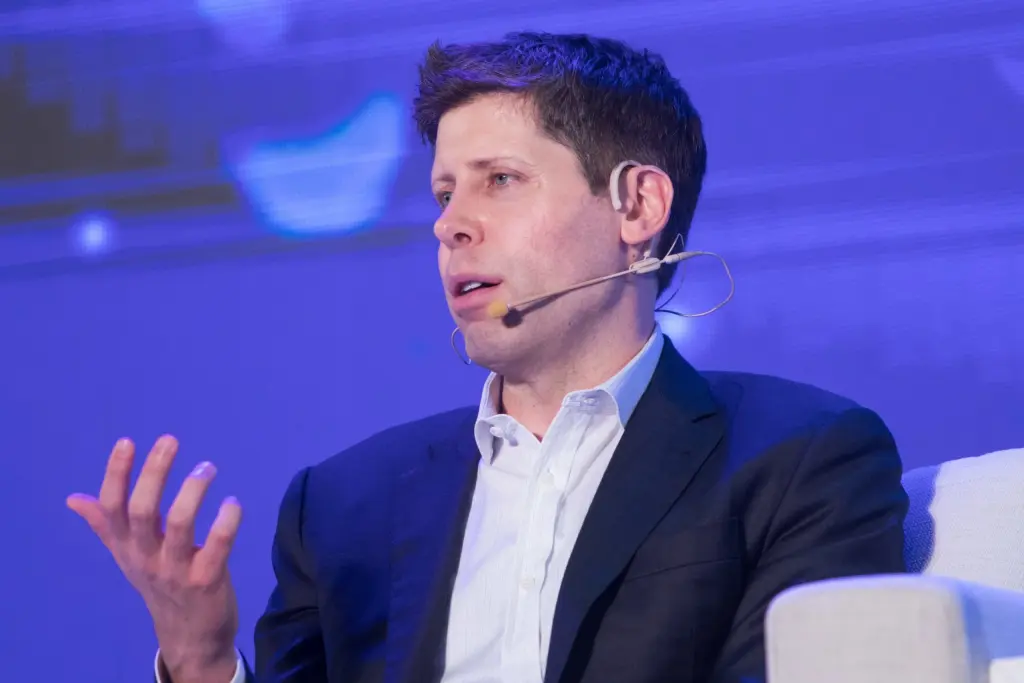
Photo credit: Shutterstock
Building AI that millions of people use every day requires changing how the world handles software security. Sam Altman, co-founder and CEO of OpenAI, warns that the old method of trying to lock away a few powerful systems is outdated.
He notes that the market is now filled with many different tools, forcing a shift away from running safety tests inside closed labs.
To keep society safe, Altman believes developers must use AI as the primary tool for global defense. By adopting this strategy, teams can stop trying to prevent every possible harm and instead help the world automatically defend itself against new dangers.
A new approach to digital safety
Trying to monitor and control every single piece of software is impossible in a market crowded with both open and closed systems. Early safety models incorrectly assumed that society would only ever need to manage a handful of highly restricted programs locked inside corporate facilities.
Altman explains that this narrow view fails to capture the current reality of widespread technology, observing, “The picture [of AI safety] now is actually more stable but more complex.”
Moving beyond single-company control
Instead of trying to keep one specific program trapped in a testing environment, society must prepare for a landscape where automated tools operate everywhere. It is no longer practical to rely on one single company to guarantee public safety or catch every potential error.
Therefore, governments and businesses must accept this rapid spread of technology and work together to manage the complex new environment.
This is because distributing the responsibility for safety across many different groups creates a stronger overall network than relying on a single point of failure.
Stopping digital and real-world threats
Accepting this widespread use of technology means recognizing that simple written rules will not stop complex computer and biological attacks. While developers must attempt to build safe software from the start, controlled lab tests have strict limits when faced with real-world hackers.
Altman argues that society must build its own protections. “There’s AI that is really good at exploiting computer systems,” Altman says. “Let’s use AI to defend them.”
Building automated shields
Relying on traditional laws and human monitors to stop digital attackers leaves important global networks open to severe damage. The most effective solution requires using the exact same advanced software to build automated defenses.
By deploying these intelligent tools directly into national security networks and hospital databases, society can automatically detect and block attacks. This allows defense systems to react at the speed of the software itself, neutralizing threats before human operators even realize a breach has occurred.
The danger of limited computer power
Building these massive automated shields requires an enormous amount of physical hardware and server space. If the physical computers required to run these programs remain in short supply, only the richest groups will be able to afford the necessary protection.
Altman warns that failing to build enough hardware guarantees inequality, noting that “the richest people and the richest companies in a world will just sort of bid up the price to a kind of extreme degree.”
Preventing corporate monopolies
Attempting to build powerful software without securing enough physical servers puts far too much control in one specific place. When computing power is strictly limited, wealthy organizations simply buy all the available resources and lock out smaller competitors.
To stop a small group of highly capitalized companies from controlling the entire technology sector, the industry must focus heavily on manufacturing. Producing massive amounts of computer hardware ensures that the market does not consolidate into a single monopoly.
Expanding access to data centers
Writing strict regulations for a resource that remains in short supply rarely succeeds in making it available to the general public. To fix the hardware shortage permanently, the industry must build enough data centers to make computing power plentiful and cheap.
Altman argues that treating server space like a public utility actively prevents monopolies, noting that building “more data centers is actually a very egalitarian initiative.”
Treating computer power like electricity
This massive physical expansion mirrors how making basic electricity widely available improved living standards across the globe. When data centers exist in large numbers across different regions, the daily cost to use them drops significantly for everyone.
This simple supply and demand approach ensures that small teams and everyday people can access the same tools as large corporations.
As a result, abundant computing power allows anyone with an internet connection to utilize advanced software for their own projects and businesses.
Fixing the modern economy
Making these powerful tools cheap and widely available will permanently alter how people work and earn a living. Capitalism currently depends on a careful balance between human labor and the financial capital that labor creates.
Altman warns about the speed of this economic shift, saying, “If that gets totally out of whack, then the current system is not going to work. There will have to be some sort of evolution.”
Removing the hurdles for beginners
Founders now use digital assistants to handle hard technical jobs, quickly turning ideas into working businesses. People without computer backgrounds can guide the work by telling the AI what to do, acting like top managers from the very first day.
Altman observes this big change is already visible in younger age groups. Children currently use typing tools to build complete video games simply by describing their ideas to the software, removing the need to learn complex computer languages.
Fixing the modern economy
While these automated tools create new opportunities, they also break the traditional rules of the job market. As software does more of the daily thinking, the old money setup between paid workers and company owners breaks down.
Adrien Ecoffet, an OpenAI researcher, points out the urgent need to design new rules that share this new wealth fairly, asking how society will ensure everyone benefits rather than just a few rich owners.
Updating the rules for society
A money system that cannot adapt will drag everyone down as machines take over more work. Altman and his team argue that handling this lasting change requires three specific updates to how the country runs:
- Taxes: Governments must stop taxing only what human workers earn and start taxing the money created by the AI software itself.
- Labor: New rules must give workers more power by letting groups of employees decide exactly how AI is used in their own offices.
- Healthcare: Programs must separate doctor benefits from company jobs, ensuring people keep their health coverage even if a computer takes their specific job.
⚖️ The other side:
- Although Altman presents more data centers as a straightforward way to make compute cheap and widely accessible, the economics of frontier AI suggest that abundance alone may not democratize the market. Stanford’s 2025 AI Index notes that training costs for frontier systems have already reached extraordinary levels, with earlier estimates putting GPT-4 at roughly US$78 million in compute and Gemini Ultra at about US$191 million.
- Separately, Epoch AI’s analysis of frontier model training costs says those costs have been rising by 2x to 3x per year and could exceed US$1 billion for the largest models by 2027. This suggests that even if more capacity gets built, the frontier may still remain concentrated among a small number of companies that can afford the escalating scale of training, talent, and infrastructure.
- Altman also suggests that AI is already removing technical barriers so quickly that beginners can build sophisticated products just by describing what they want, but recent evidence points to a much less frictionless reality.
- In a 2025 randomized controlled trial, METR found that experienced open-source developers using frontier AI tools actually took 19% longer to complete tasks on average.
- The 2025 Stack Overflow Developer Survey also found that more developers distrust AI output accuracy than trust it, with 46% expressing distrust versus 33% expressing trust. That suggests AI may lower some entry barriers, but it is not eliminating the need for technical judgment, debugging ability, and verification nearly as fast as the rhetoric implies.
This Too Long; Didn’t Listen (TL;DL) summary was created with the help of AI and edited by our staff. Read all summaries here.
Stay updated on the go with our mobile app.
Get latest insights with smoother, more personalized experience through TIA mobile app.
Recommended reads
 SEA financials tracker: Moladin’s revenue rises 6% in 2025
 Flipkart’s costly late push into quick commerce and food delivery
 Inside Singapore’s government team that kills its own products
 Once an IPO hopeful, SCI Ecommerce nears collapse
 Who’s betting big on ChatGPT ads? Not Asian brands
 VC tracker: Granite Asia launches US$50 million fund
 GCash trims IPO ambitions to meet market realities
 Igloo CEO eyes global M&A: ‘We have an appetite to grow more’
 Why SBI paid a premium for Ajaib amid a tough market
 OpenAI warns building for today will cause technical debt





Editing by Gilang Kharisma
(And yes, we’re serious about ethics and transparency. More information here.)



📅 Upcoming Events
22 October 2026
Payoneer x CSPN Summit 2026