- Premium Content It takes our newsroom weeks - if not months - to investigate and produce stories for our premium content. You can’t find them anywhere else.
 Tay Tian Wen · · 5 min read
What the Russia-Ukraine crisis spells for spacetech in SEA
As the war between Russia and Ukraine rages on, the commercial space-launch industry is in turmoil.
Both countries are not just manufacturing hubs for propulsion systems, which are designed to take humans and satellites into space. Between them is also a large pool of aerospace engineering veterans who make these machines possible.
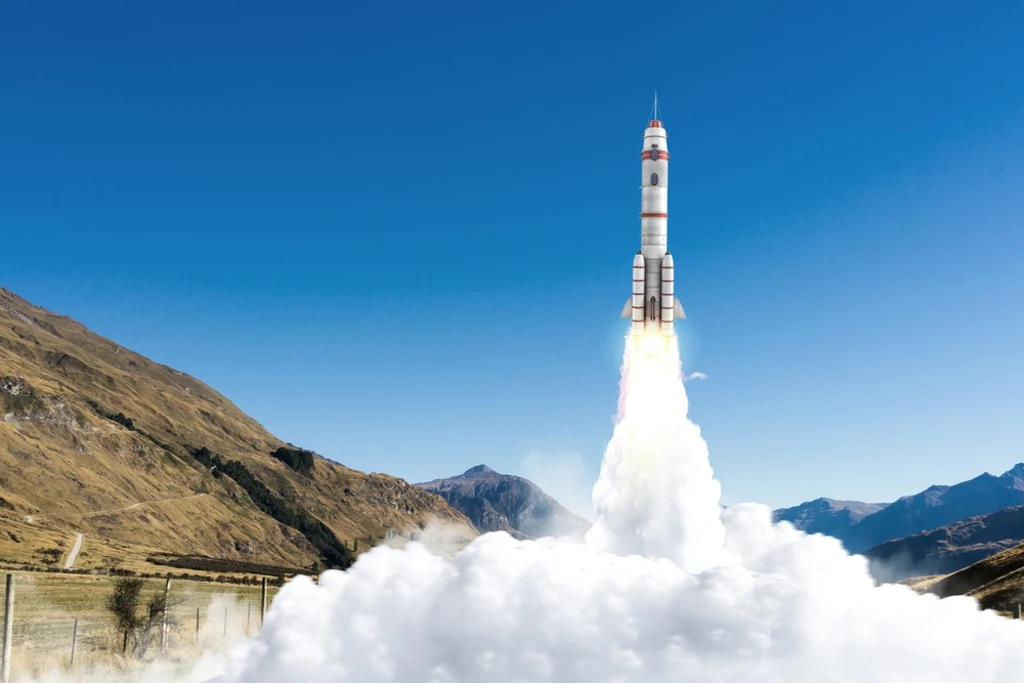
Image credit: Shutterstock
The fallout from the conflict has been staggering. From major broadband satellite providers such as UK-based OneWeb to national space agencies like NASA, losing access to traditional launch partnerships has upended fortunes overnight.
As companies and governments worldwide turn to alternative launch providers and uprooted professionals seeking safe havens abroad, spacetech players in Southeast Asia have spotted opportunity amid the crisis.
A “golden opportunity”?
For Aliena, a propulsion systems provider based in Singapore, business has never been better.
“We’re seeing a whopping five to seven [order] requests a month,” Aliena’s co-founder and CEO Mark Lim tells Tech in Asia. Before the war, the company would receive just one or two requests “every few months,” he adds.
It’s also likely that Aliena won’t incur significant cost increases by scaling up production, since prices of key materials like aerospace-grade aluminum and titanium have plummeted from previous highs.
Still, suppliers lament the rising costs of components and supply shortages, according to Elevationspace’s Ryohei Kobayashi. He is the co-founder and CEO of the Japanese spacetech firm, which develops next-generation satellites.
That said, other operating expenses may throw a spanner in the works.
Electricity costs, for example, have soared threefold over the past month. Though it only accounts for 3% of Aliena’s total operating expenditure, Lim stresses that it’s tougher to account for shocks like this in Aliena’s financial projections.
Even if cost isn’t a hindrance, meeting this sudden flurry of demand could still be difficult. Lim shares that it takes “anywhere between six months to a year” to sign a contract, and another year before Aliena can deliver the requested system to a client.
The long sales cycle is also exacerbated by the limited availability of test facilities in Singapore and a growing number of spacetech startups competing for their use. Heading abroad to do a test launch is a practical compromise, but that can come with its own set of logistical complications.
Missing out on space talent
All quiet on the funding front
Stay ahead in Asia’s tech landscape
This is premium content. Subscribe to read the full story.
Spacetech know-how and talent are exiting Russia and Ukraine because of the war, but Southeast Asia seems too slow to capitalize on the opportunity.
We know this is not ideal. ⌛ Sign up in 20 seconds. Cancel anytime.
Our subscriber community includes professionals from these companies:





Stay updated on the go with our mobile app.
Get latest insights with smoother, more personalized experience through TIA mobile app.












📅 Upcoming Events
22 October 2026
Payoneer x CSPN Summit 2026