- Premium Content It takes our newsroom weeks - if not months - to investigate and produce stories for our premium content. You can’t find them anywhere else.
 Elisa Valenta · · 5 min read
Protests in Indonesia force a rethink of Prabowonomics
Bubbling tensions over layoffs, rising costs, tax hikes, graft, and political privilege have erupted into nationwide protests in Indonesia, potentially driving President Prabowo Subianto to recalibrate and confront deepening inequalities in the country.
The demonstrations, which occurred from August 25 to 31, have left seven dead and government buildings in flames, underscoring a growing crisis of confidence in Prabowo’s leadership just 10 months into his term.
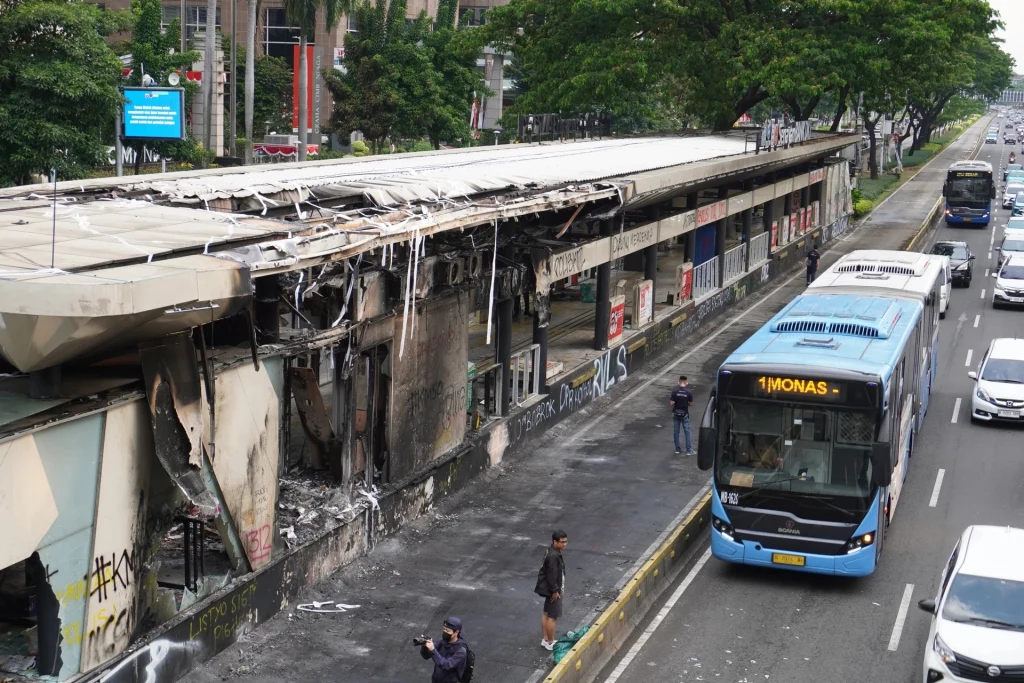
Structures including government buildings and bus stops have been damaged amid the protests across Indonesia. / Photo credit: Elisa Valenta, Business Times
Dedi Dinarto, lead Indonesia analyst and senior associate at public policy advisory firm Global Counsel, describes the protests as “the most intense” yet of Prabowo’s administration. “It’s a wake-up call for the administration to revisit its economic agenda and ensure resources are shared more fairly.”
Dinarto suggested that the administration reassess programs such as the free school meals initiative and redirect funds towards more immediate support for the poor and middle class.
Since taking office, Prabowo has set a target for 8% economic growth and pushed for budget cuts to finance his ambitious programs, including a multibillion-dollar initiative to provide free meals for children.
Yet in what many saw as a striking contradiction, Indonesia’s 2026 budget raised lawmakers’ salaries – a breaking point for public resentment. Protests in Jakarta erupted over their 50 million rupiah (US$3,033) monthly housing allowance, which is nearly 10x the city’s minimum wage.
Prabowo announced on August 31 that parliament would revoke hefty allowances and impose a moratorium on lawmakers’ overseas trips – measures that had previously sparked public anger.
This is not the first protest under Prabowo; earlier unrest over military roles in civilian affairs and local election laws tested his presidency. But the current wave, fueled by outrage over lawmakers’ privileges, may be the most serious yet.
Deja vu?
Analysts say the unrest goes beyond immediate economic pressures, pointing to a broader crisis of confidence in government institutions. They are also drawing uneasy comparisons with the 1998 protests that toppled Indonesia’s late authoritarian leader, Suharto.
“Policy direction isn’t clear,” observes Siwage Dharma Negara, senior fellow of the Indonesia studies program at ISEAS-Yusof Ishak Institute in Singapore.
He noted that in 1998, even as the economy was battered by the Asian financial crisis, the Indonesian government insisted conditions were stable and pointed to falling poverty and unemployment – claims the public largely rejected.
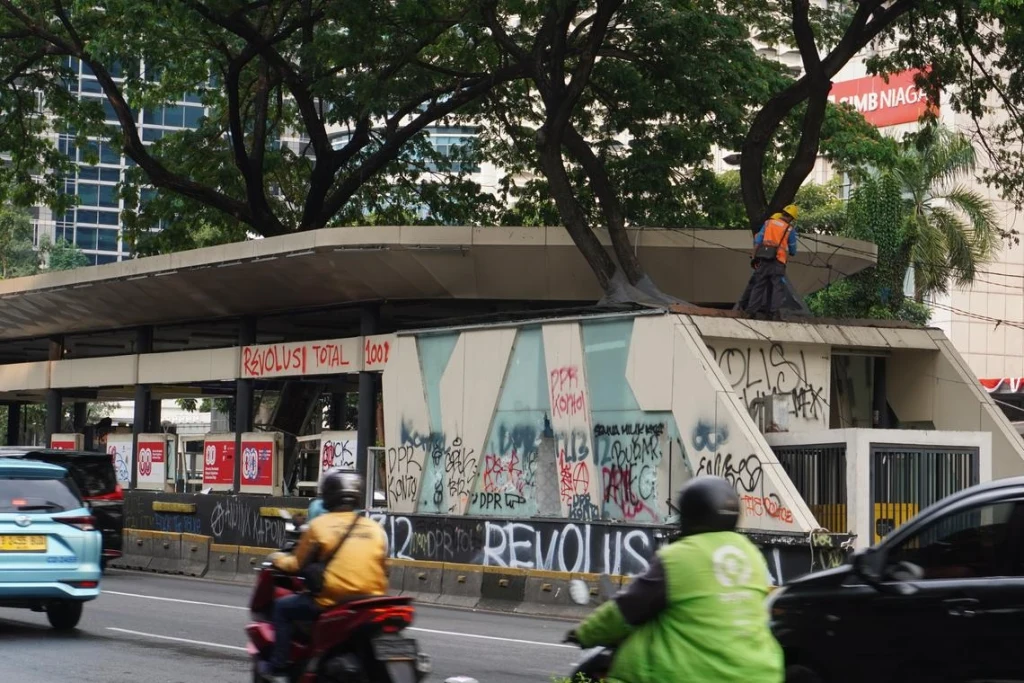
Photo credit: Elisa Valenta, Business Times
Spiraling into chaos
Adding more fuel to fire
Stay ahead in Asia’s tech landscape
This is premium content. Subscribe to read the full story.
Months of anger over rising costs, graft, and lawmakers’ pay hikes have erupted into the fiercest protests of President Prawobo’s tenure.
We know this is not ideal. ⌛ Sign up in 20 seconds. Cancel anytime.
Our subscriber community includes professionals from these companies:





Stay updated on the go with our mobile app.
Get latest insights with smoother, more personalized experience through TIA mobile app.









📅 Upcoming Events
22 October 2026
Payoneer x CSPN Summit 2026