
Welcome to The Offset! Delivered once a month via email and through the Tech in Asia website, this free newsletter breaks down the biggest stories and trends in greentech. Get it in your email inbox by registering here.
Hey there,
All’s fair in love and war, but not trade war?
Today’s Deep Read dives into tensions between China and Western governments over the former’s subsidies for cleantech. Taken at face value, it could read as if the European Union (EU) and the US were asking China to spend less on the green transition.
While of course it’s not that simple, try explaining to a five-year-old why it’s a bad thing that one of the world’s biggest economies is pumping cash into tech that could help keep our planet become livable for years to come.
— Peter
THE BIG STORY
SEA’s climate tech landscape: Energy solutions are making it rain
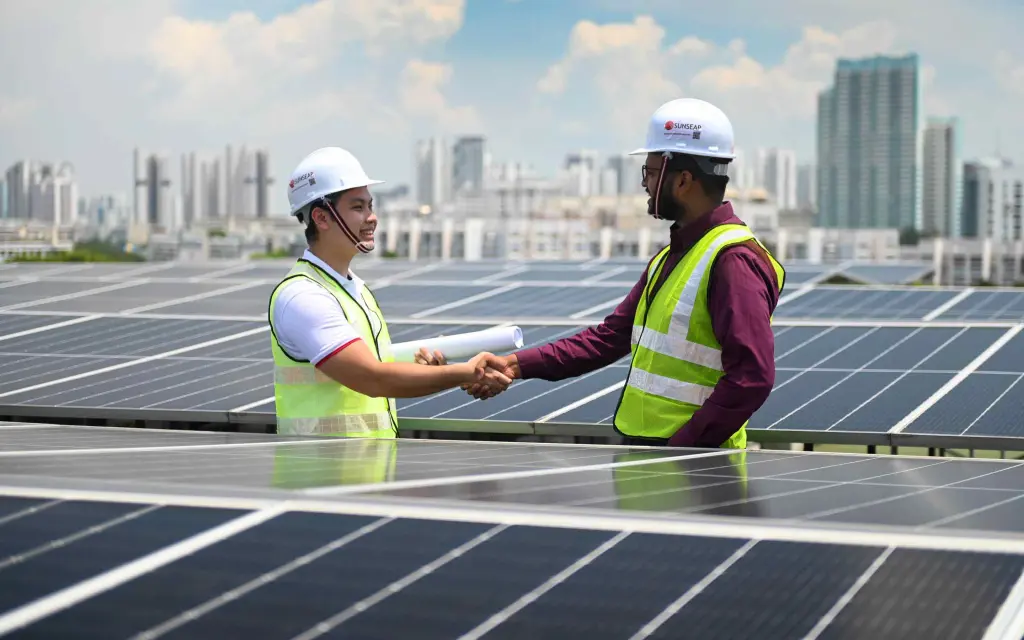
Photo credit: Sunseap
Ready for some good news? More and more Southeast Asian climate tech startups are getting funded as the years go by.
Tech in Asia data shows 41 regional climate tech startups raised funds last year, the highest figure since we started tracking. While the dollar amount dropped compared to 2022, there’s plenty more in the space to get excited about. This landscape report analyzes segments within this industry that are gaining more traction.
DEEP READ
Global trade: the looming tensions over China’s subsidies
China’s Commerce Minister Wang Wentao said the country’s “new three” industries – electric vehicles, solar energy products, and lithium batteries – hit a staggering export value of US$139.3 billion last year.
Instead of seeing this focus on greentech and cleantech as a cause of celebration, governments in the West are increasingly concerned about Chinese imports. The state subsidies these industries enjoy are a particular fear for the EU and the US, with both governments seeking to “de-risk” from China.
While Chinese authorities claim local companies’ innovation is why they dominate industries like EV manufacturing, Western officials complain about unfair competition. EV maker Nio, for example, received a US$1 billion state-backed bailout back in 2020.
It’s fair to wonder how a green transition can really happen if the world’s largest economies are at loggerheads over who benefits the most from it, rather than working together.

Image credit: Timmy Loen
TRENDING NEWS
Also check out Tech in Asia’s coverage of Asia’s greentech scene here.
1️⃣ ‘Silicon Bali’: Asia’s paradise for sustainability startups?
This piece digs into why Indonesian and foreign sustainability entrepreneurs alike have started flocking to Bali to set up shop. While the island lacks the access to capital that is available in Singapore and Jakarta, it may be a natural home for green businesses.
Why it matters:
Anyone who’s been stuck in a Bali traffic jam will cheer for anything that reduces the island’s dependence on tourism in favor of another industry. In addition, if Bali can illuminate a viable pathway to net-zero emissions, Indonesian authorities could replicate it elsewhere.
2️⃣ Indonesia’s flood of nickel sparks ‘Darwinian’ battle for survival among miners
Indonesia expanded nickel production by 30% in 2023 to 1.9 million tonnes despite global demand for the metal growing minimally. The metal, used in the production of EV batteries, saw its price fall by 43% globally in the same year.
Why it matters:
The significant increase in production led to a supply boom, hence pushing prices down and forcing unprofitable nickel mines around the world to close. Western nations are worried about Indonesia and China’s dominance, considering that firms from China have made vast investments in Indonesian nickel production. Global competition over a resource crucial to EV production is unlikely to benefit the environment in the long run.
3️⃣ Vingroup outlines Philippine expansion after visit from President Marcos Jr.
Vietnamese conglomerate Vingroup has announced its plans for expansion to the Philippines, with its EV manufacturer VinFast leading the charge. The firm plans to launch a network of EV dealerships this year.
Why it matters:
As with many governments around the world, the Philippines is encouraging investment in its EV industry. The question remains – will consumers get on board too?
4️⃣ Opinion: Future food tech funding needs a complete overhaul
Foodtech is one of the many sectors in the startup ecosystem that has been left feeling parched, as easy VC money of 2020 and 2021 dried up. This opinion piece argues that the “Silicon Valley VC model” doesn’t work for this sector and that different types of capital, such as patient capital or venture debt, make more sense for foodtech firms.
Why it matters:
VCs were right to be excited about foodtech firms a few years ago but for the wrong reasons. Bringing in investment that’s focused on the long term and being a social positive would be preferable to VCs focused on outsized returns.

Meatable sausage that’s one-third cultivated meat, two-thirds plant-based meat / Photo credit: Meatable
5️⃣ Clime Capital raises $127m in first close of new greentech fund
Clime Capital has finalized the initial round for its South East Asia Clean Energy Fund II, with US$127 million secured. The fund will provide early-stage, high-risk capital to help the region launch more low-carbon initiatives.
Why it matters:
Capital can be hard to come by for projects considered “high-risk,” even if their high reward is something like saving the planet. Ambitious greentech startups could greatly benefit from alternative sources of funds.
STARTUP WATCH
1️⃣ Ex-Grab exec’s new climate tech venture lands seed funding
Arkadiah Technology has raised an undisclosed amount of seed funding to improve its AI models, which are used to help restore degraded land. The round was led by Golden Gate Ventures, with the participation of global climate tech fund The Radical Fund and Money Forward Venture Partners, a Japanese corporate VC firm.
2️⃣ Yume’s platform helps manufacturers turn potential food waste into money
Yume, a circular economy startup, has secured about US$1.3 million in seed money from venture firm Investible’s Climate Tech Fund. The Australian firm works with manufacturers to redistribute excess packaged food to charities and businesses to stop it going to waste.
3️⃣ India’s Ecofy raises $10.8m funding from Dutch bank
The non-banking financial company works to tackle the last-mile climate finance gap in the country by offering loans to individuals and small businesses who want to reduce their carbon footprint. Ecofy has received US$10.8 million in new investment from FMO, the Dutch entrepreneurial development bank.
4️⃣ Cultured unagi: Forsea Foods unveils ‘world first’ cultivated eel with Tokyo eatery Saido
Eel is a key ingredient in some of Japan’s most popular dishes, but the fish has become a critically endangered species due to, among other factors, overfishing and pollution. Forsea Foods, an Israeli foodtech startup, is aiming to address that and has created the first prototype of its cultivated eel, with plans to launch commercially next year.
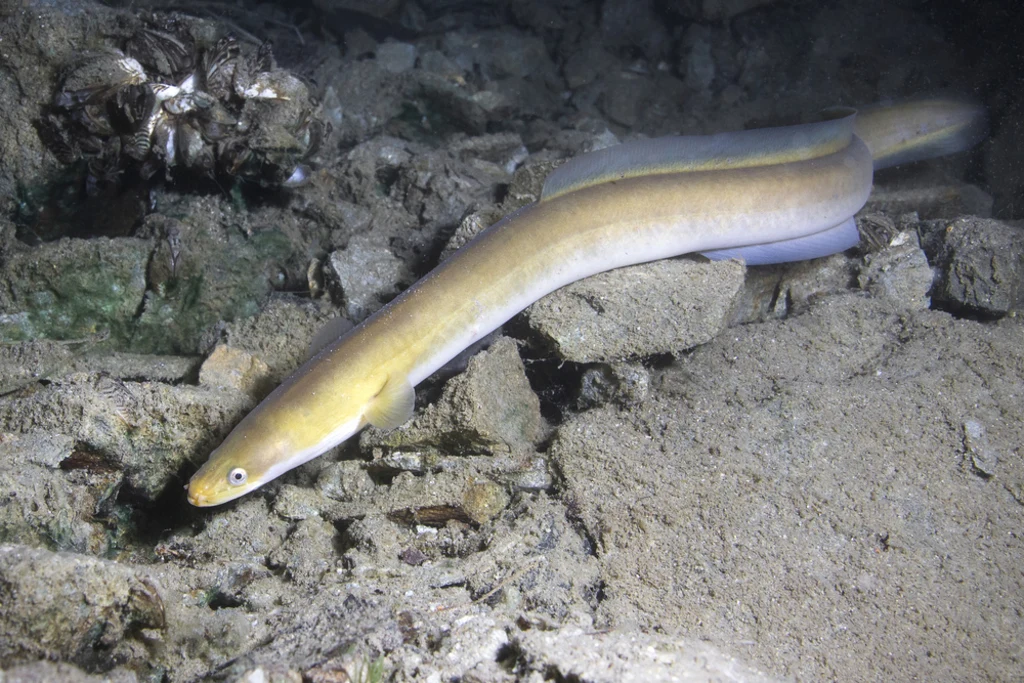
A non-cultivated eel in the wild / Photo credit: Rostislav Stefanek / Shutterstock
5️⃣ Australia’s Element Zero raises $10m in seed funding
Element Zero, a green materials platform company, has banked US$10 million in seed funding led by Playground Global, a VC firm based in the US. The Australian startup processes metal ores, such as iron and nickel, into pure metals with zero carbon emissions.
That’s it for this edition – we hope you liked it! Do subscribe to continue receiving The Offset.
See you next month!
The Offset is made possible thanks to Taiwan Mobile.
The company recently held its fifth Taiwan Mobile Sustainable Forum, where it introduced EV project MyCharge and a second-hand mobile phone initiative. Read more here.
Taiwan Mobile is on a mission to transition to 100% green energy by 2040.
Stay updated on the go with our mobile app.
Get latest insights with smoother, more personalized experience through TIA mobile app.
Recommended reads
 India’s Cactus Venture Partners closes first fund at $76m
 Unicorn watch: Keeping up with SEA’s startup stars
 Indian financial services firm rolls out $25m innovation fund
 OKX Ventures bets on Bitmap Tech to enrich bitcoin ecosystem
 Philippine startup raises funds to give used IT devices new life
 AC Ventures hits $210m in final close of fifth fund
 Flourish Ventures strengthens Asia investment team with key hire
 India’s companies thrive on public markets, but VCs are holding back
 Dutch investment firm closes $90m fund to back India, SEA VCs
 Indonesia’s Indika Energy invests in mobility-focused fund Shift4Good





Editing by Collin Furtado and Dhania Putri Sarahtika
(And yes, we’re serious about ethics and transparency. More information here.)





