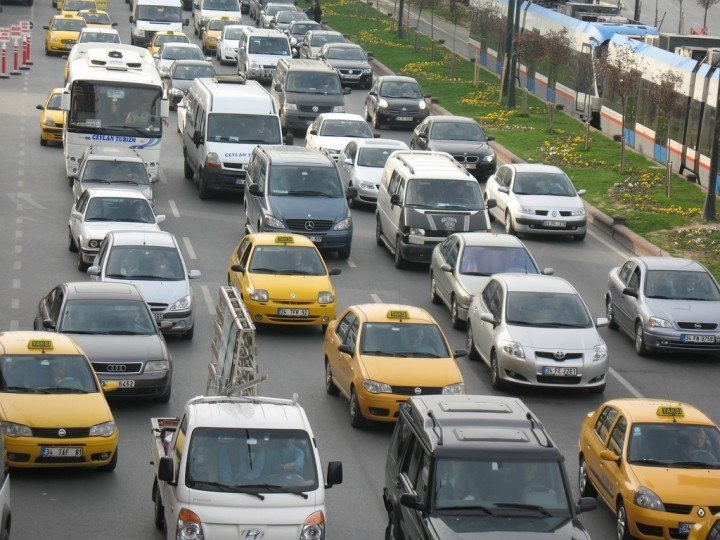
Traffic in Istanbul, a city of 15 million people, is a nightmare. Commuters are especially harried during the evening rush hour, with the average 30-minute drive often lasting over an hour. The Turkish urban metropolis has been ranked as the “most congested city in the world” with an estimated 125 hours wasted per person per year stuck in traffic.
And this is not a problem which can be solved by the construction of new roads and highways alone. Over 3 million cars ply the city’s roads, with an estimated 30,000 new ones joining the jams every month. Public transportation isn’t up to par with other urban megacities – the underground subway network in Istanbul covers only a sparse 138 kilometres and buses are frequently caught up in the jams.
For Ali Halabi, founder of Volt, the problem of traffic congestion irritated him constantly. “Two and a half years ago I was stuck in traffic. I was angry about paying all this money for gas, parking and then not being able to drive […]. I started counting all the cars on the road which had one driver like me and I realized eight out of ten cars had only the driver.”
“This is why we have traffic – everyone drives alone. A city of millions cannot move this way and that’s how the idea came to life,” he explains.
Hitching a ride
Volt is an inner-city ridesharing app with the vision of curing Istanbul of its traffic woes. It connects drivers with people going in the same direction. Passengers pay for the cost of the ride only. Ali stresses that Volt doesn’t allow drivers to turn this into a business model, the way Uber and Lyft operate, but it incentivizes people to pick up other passengers because costs such as maintenance and gas can be covered. He says this is a real problem in Istanbul because car owners spend, on average, approximately 18 percent of their income on their car, but only use it 4 percent of the time. This costs the Turkish government approximately US$2.2 billion in wasted resources per annum.
Just crossing the Bosphorous is really tough – that’s the problem I want to solve. Public transportation can take two hours, but at the same time there are many people going in private transport – why not connect them?

Trusting drivers
Volt, which first launched in October last year, currently has 17,000 users, with approximately 58 percent of those consisting of drivers. Ali explains one of the reasons they’ve been able to scale is their focus on residential communities and universities. “People trust each other if they share a common element. To validate the idea I tried hitchhiking inside a residential compound, and everyone offered a ride. Similarly, university students trust each other – if you have a campus ID you can join that particular community on Volt and it’s worked very well,” he says.
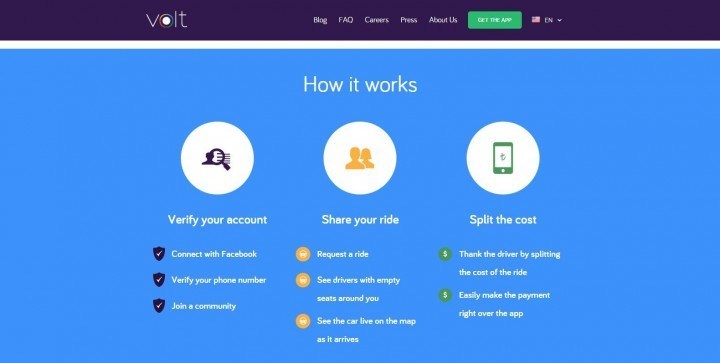
The app is fairly straightforward. When you launch it, it gives an option of viewing details in either “driver” or “passenger” modes. As a passenger, you can request a ride on the app and schedule a time – either now or for later. Once that’s done, you tap “find a car”, and the app gives you the location of cars close by in real time. Those within two kilometers of a passenger’s location will be notified. As a driver, all you have to do is simply, well, drive. If a passenger requests a ride, there will be a popup notification. You can choose to accept or ignore. If you choose to accept, a predetermined fare will be calculated by Volt, which the passenger will pay through his or her credit card.
Cheaper than UberGo





Stay updated on the go with our mobile app.
Get latest insights with smoother, more personalized experience through TIA mobile app.