 Terence Lee · · 4 min read
Singapore’s first Thiel Fellow kickstarts Haptix, a device that could replace the mouse
Darren has ambitious plans for Haptix.
Nineteen-year-old Singaporean Darren Lim flirted with science and innovation while studying in Chengdu, China. Together with fellow high schooler Lai Xue, they participated in a number of Intel Science Fairs, which turned his dalliance into a full-blown love affair.
As he became more interested in making gadgets rather than using them, he contemplated launching a startup. Towards the end of his National Service, a mandatory, two-year military stint for Singaporean males, he discussed ideas with Xue, a technical whiz who became an Intel engineer at age 18.
Darren felt the time was right to leave his “comfort zone”.
After working his way into startup accelerator The Iron Yard in South Carolina, he earned a place in this year’s 20 Under 20 Thiel Fellowship. The prestigious program provides mentorship and USD 100,000 in cash from PayPal co-founder Peter Thiel’s Foundation to pursue cutting-edge science and technology.
In a field dominated by American youths, Darren stands out as one of a few Asians born in Asia, and the only Fellow from Singapore. He’s now based in San-Francisco, but shuttles frequently to Shanghai to iron out manufacturing.
The team of five is throwing its hat into a hot area in the tech startup scene: 3D motion control. The company is called Ractiv, and its first product is Haptix, a device that converts ordinary surfaces into a multitouch user interface.
They believe 3D motion control is one of the keys that will unlock ubiquitous computing.
“Motion sensing and voice control could be a way to reduce distractions while using smartphones in cars,” said Darren, “they won’t replace the keyboard and mouse entirely, but they will become much more prominent.”
Truth be told, Haptix is similar to many projects out there. There’s the famous Sixth Sense prototype by MIT that went wild on TED. Researchers at Purdue University are using the Kinect to turn surfaces into touchscreens. A company called Ubi Interactive is trying to make this a commercial reality.
But none are mainstream yet.
Haptix brings a different approach to cracking the egg, and has today launched a Kickstarter crowdfunding campaign to broadcast its intentions.
Here’s the tersest — though imprecise — way to describe Haptix: It’s Leap Motion without the gorilla arm problem. Or at least that’s how it’s being positioned by the company.
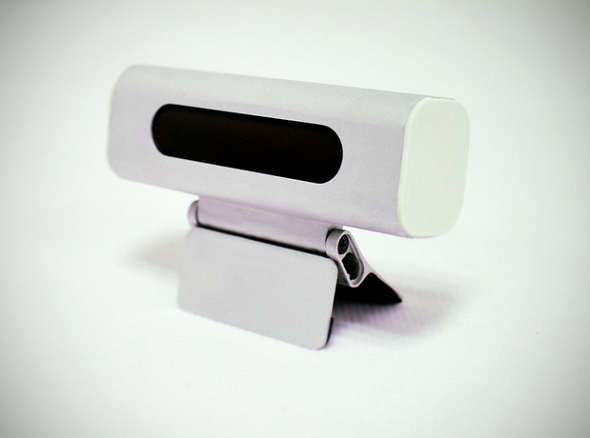
Both devices share many similarities on first impressions. They allow multi-touch gestures in three-dimensional space, are priced at under USD 80, involve using visual feedback to replace haptics, and even look the same: Silver metallic bodies with black ‘windows’ to the sensors.





Stay updated on the go with our mobile app.
Get latest insights with smoother, more personalized experience through TIA mobile app.










📅 Upcoming Events
22 October 2026
Payoneer x CSPN Summit 2026