 Peter Rothenberg · · 4 min read
4 of India’s top entrepreneurs explain how to be fearless
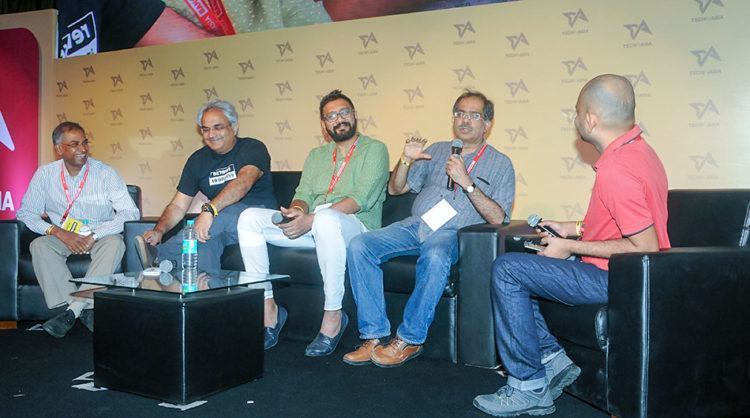
Left to right: K Vaitheeswaran, Mahesh Murthy, Aprameya Radhakrishna, Sharad Sharma, and moderator Prasanna Krishnamoorthy.
The only thing we have to fear is fear itself, but these four entrepreneurs are on another level. At Tech in Asia Bangalore today, a cloud of Scarecrow’s fear inhibiting gas overtook the stage in a no-holds-barred session covering everything from embezzling money to shutting down your startup.
Liars never prosper
“You have one life, one reputation. If you screw up no one is going to come back to you again,” emphasizes Mahesh Murthy, founder of SeedFund. He has made 35 investments over the years and caught two of his portfolio companies stealing. He fired the founder and took over the company for one-and-a-half years to maintain integrity.
Founders need to be honest to themselves, to their customers, to their investors, and to their employees. “Employees trusted us to do the right thing,” reflected Aprameya Radhakrishna on the selling of TaxiforSure to ride-hailing app Ola. “We agreed as founders to not step on employees for our own benefit when we started the company.”
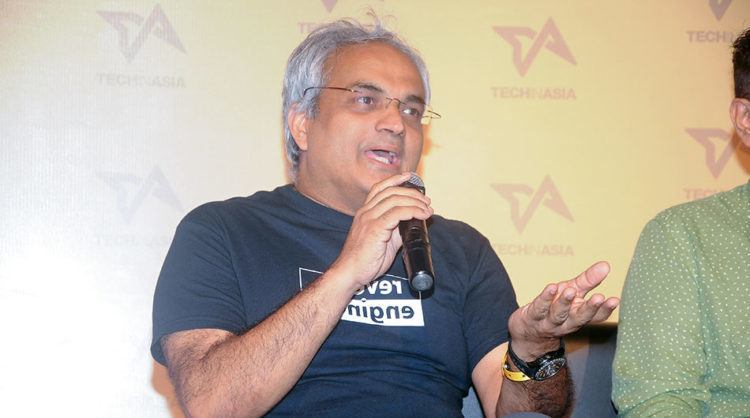
Mahesh Murthy of SeedFund.
This type of bond and openness is needed for success. Mahesh talked about the time he was running an education business and ran out of money. “I went out to them at their houses, their families, and talked to them.” He was looking to sell the business but things needed to keep running. The teachers supported Mahesh and agreed to take no salary until a sale was made six months later.
Hello from the other side

Sharad Sharma of iSpirt.
“Foreign investors have done damage to our ecosystem,” says Sharad Sharma, co-founder of non-profit think-tank iSpirt. He believes investors from outside India that don’t understand the market can cause startups to lose focus. Flipkart was all about customer service but investors made the founders put vanity metrics first.
Sharad says it’s everyone’s job to stop “dumb investors.” The think tank he co-founded, iSPIRT, refuses to accept money from multinationals, IT services, and venture capital firms to keep things focused and honest, he added.
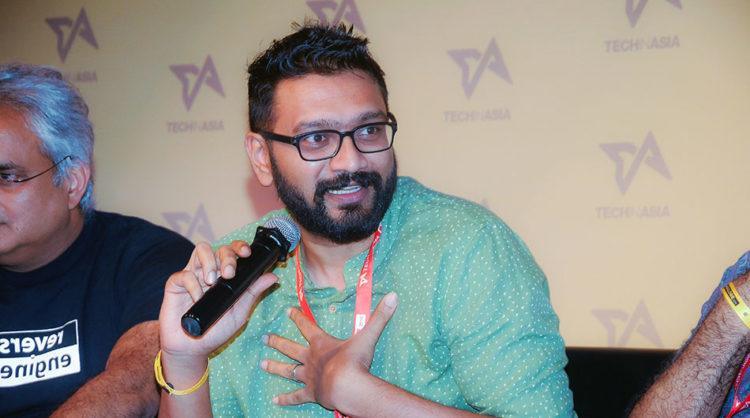
Aprameya Radhakrishna, founder of TaxiforSure.
Aprameya wants rules updated to match the technology of the times. During his time at TaxiforSure, the police commissioner threatened him with deportation. “We were breaking rules, yes,” he admits, “but the consumer was loving it.” The rules the company was not following were written 20 to 25 years ago and based on the technology available then. “They [the government] have a set of rules and just enforce them whether they are relevant or not.”
There appears to be a double standard for international versus Indian companies, they said.
“It’s easier for a foreign company to meet a minister and ask for forgiveness and not permission,” says Sharad. “We need to make it easier for a domestic company to ask for forgiveness.”
Celebrate failure
“We have an entrepreneur of the year, why don’t we have a failure of the year,” questioned K Vaitheeswaran. He nominated himself for the award next year for his failed ecommerce venture. “Why are we obsessed with the few entrepreneurs who are becoming popular?” he asked the audience, deliberately separating the word popular from success.
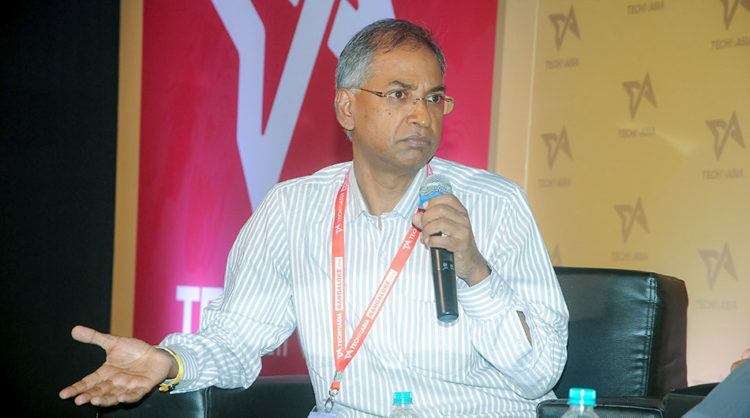
K Vaitheeswaran of FabMall and Indiaplaza.
Vaitheeswaran wants to see more respect for first movers, the pioneers who take the risk to create new markets. “You are taking a knife, walking into a forest, and trying to cut trees down. You make a pathway and move deeper into the forest for some time. Then while you are still using the knife you hear an obnoxious sound behind you. You turn around and watch people zipping around on cars on the pathway that you have created.”
Without these people, the startup ecosystem would not exist.
“Somebody has to take that first step on the moon.”
Stay updated on the go with our mobile app.
Get latest insights with smoother, more personalized experience through TIA mobile app.
Recommended reads
 For our loved ones who are never mentioned in our pitch decks
 500 Startups invests up to $150k each in 9 Vietnamese firms on its Demo Day
 Letter to readers: Ecommerce logistics heat up in Vietnam
 A guide to startups by a student who invests in fellow students
 Letter to readers: ‘Edfintech’ could shape Indonesia’s future
 Indian startup incubator launches program for entrepreneurs with disabilities
 Carousell co-founder backs $1m round of SG edtech firm
 India-based VC debuts seed fund with $100m corpus
 How Asia’s family offices could be a $1.9t play for tech startups
 Vertex Ventures’ approach to investment: ‘We build champions’





Editing by Nivedita Bhattacharjee and Steven Millward
(And yes, we’re serious about ethics and transparency. More information here.)




