- Premium Content It takes our newsroom weeks - if not months - to investigate and produce stories for our premium content. You can’t find them anywhere else.
 Terence Lee · · 13 min read
Reebonz has been facing cashflow problems and rising debt. It’s now plotting a comeback.
An ecommerce pioneer that entered the scene in 2009, Reebonz has been the poster child among Singapore’s startups.
Lately though, the company – which sells new and used luxury goods online – has been fending off a downward spiral caused by growing debt, a steep plunge in valuation, and cashflow problems, according to Tech in Asia’s interviews with multiple sources and an analysis of its public filings.
“This is obviously a challenging time for our business,” said Reebonz chief financial officer Nupur Sadiwala in an email statement to Tech in Asia. The company is now working towards recovery. “We are excited about our plan, and we are confident that we will emerge a much stronger and better organization.”

Reebonz co-founders Samuel Lim (left), Daniel Lim (right), and Benjamin Han / Photo credit: Reebonz
Like many internet startups, Reebonz has been in the red, reporting a negative operating loss and adjusted EBITDA as far back as 2013. While the good news is that its adjusted EBITDA margin – the gap it needs to close to become profitable – has been decreasing, 2018 appears to have been a blip.
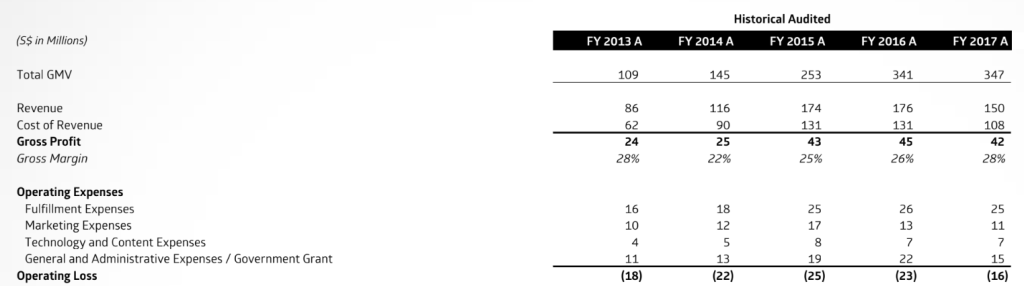
Reebonz’s income statement, which was released in late 2018.
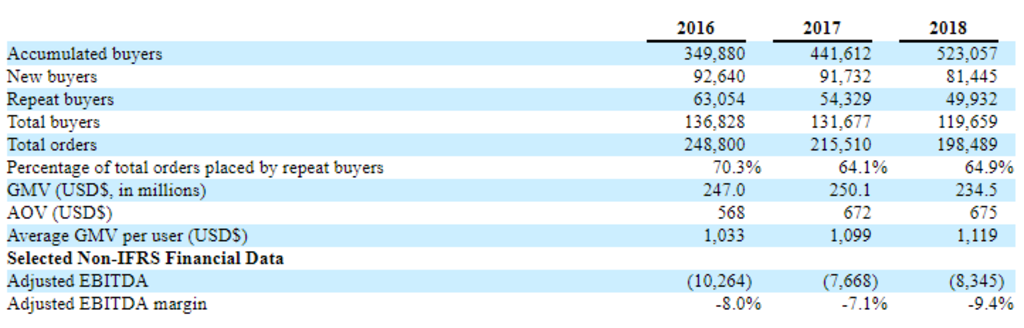
Reebonz’s metrics – EBITDA in US dollar, in the thousands.
Startups can stay afloat while bleeding money so long as they keep raising funds through painting a future of rapidly growing into market dominance. That’s exactly how companies like Uber and Grab have been operating.
For a while, Reebonz seemed like a magnet for investment. It raised a blockbuster US$40 million series C round in 2013 from a mix of investors with top-notch credentials and state backing – think GGV Capital, MediaCorp, Infocomm Investments, Intel Capital, and Vertex Ventures.
It hit some road bumps after that. Between 2015 and 2016, Reebonz cut down its marketing spending. While its gross merchandise volume (GMV) grew, its revenue stagnated, and it didn’t manage to trim operating expenses.
It turns out that the market was shifting under its feet, a source familiar with Reebonz tells Tech in Asia.
The company did well in its early days by serving a slice of the Asian market that craved luxury goods but couldn’t afford them. But as Asian consumers became more affluent, that market shrunk. It didn’t help that more luxury brands were selling directly in Asia to meet the demand, driving down the prices of their goods and hurting Reebonz’s margin, the source adds.
Suppliers affected
Sustainable growth is the only option
Stay ahead in Asia’s tech landscape
This is premium content. Subscribe to read the full story.
Reebonz has been a poster child of Singapore’s startup scene. But now, it’s fighting for its future.
We know this is not ideal. ⌛ Sign up in 20 seconds. Cancel anytime.
Our subscriber community includes professionals from these companies:





Stay updated on the go with our mobile app.
Get latest insights with smoother, more personalized experience through TIA mobile app.












📅 Upcoming Events
22 October 2026
Payoneer x CSPN Summit 2026