- Premium Content It takes our newsroom weeks - if not months - to investigate and produce stories for our premium content. You can’t find them anywhere else.
 Collin Furtado · · 4 min read
RedMart’s revenue revives after year of stagnation
Although the Covid-19 pandemic has decimated businesses worldwide, it seems to have revived Lazada’s online grocery delivery arm RedMart. The company saw its revenue rise by nearly 50% to US$307 million in the financial year ended (FYE) March 2021.
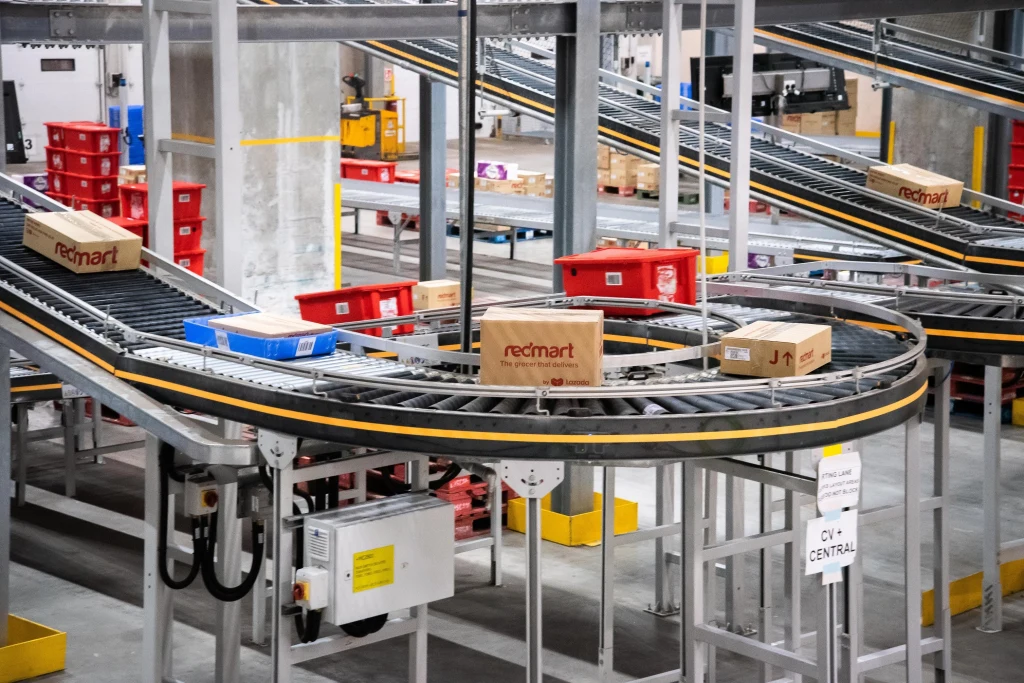
RedMart’s new 350,000 square feet West Fulfillment Center in Singapore / Photo credit: Lazada
The Singapore-based company, which just celebrated its 10-year anniversary in October, witnessed an immediate effect of the pandemic on its sales. In June 2020, RedMart reported that its sales grew 4x after the city-state introduced strict circuit-breaker restrictions in early April 2020. Just a year before, the firm was stagnating – its revenue for FYE 2020 grew by only 1.4%.
“In the last 18 months, the pandemic had led a dramatic shift in online purchasing behavior, and more households have turned toward RedMart for their weekly grocery needs,” Richard Ruddy, chief retail officer and head of grocery at Lazada Singapore, told Tech in Asia in an interview in September.
According to Ruddy, the company had been integrating into the Lazada app in Singapore since the start of 2019. As a result, parts of RedMart’s business have also shifted under Lazada, and these movements were not reflected in just one set of financials.
Lazada acquired RedMart in late 2016.
A rebound in revenues
For RedMart, the rise in its numbers is a return to the high growth levels it achieved years earlier (in FYE 2019, the company posted a 44% jump in its revenues).
See also: RedMart saw 3x income growth and better margins since Lazada buyout
At the beginning of 2021, Tech in Asia reported that RedMart’s pure-play model appeared to make more sense amid the pandemic rather than the traditional brick-and-mortar model of other players. RedMart’s approach is relatively more asset-light. It has only one fulfillment center in Singapore, which makes it easier for the company to maintain and manage its inventory.
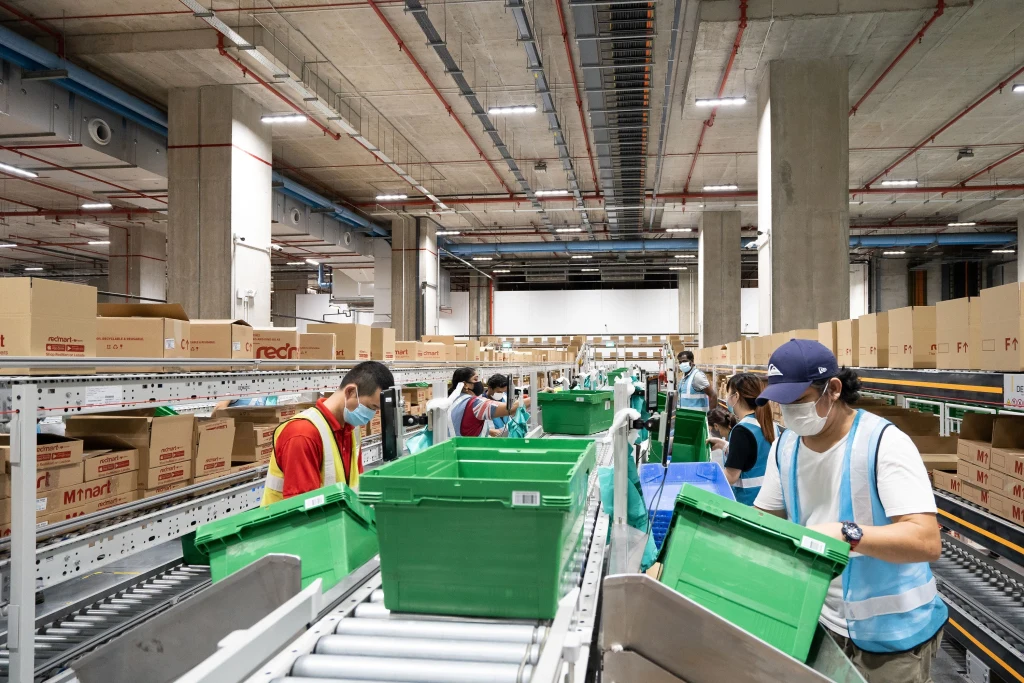
Workers at RedMart’s West Fulfillment Center / Image credit: Lazada
Its improved figures in FYE 2021 was mainly due to a 50% rise in its retail revenue from the sale of groceries through its online platforms – its mobile app and website. In the previous financial year, these numbers stood at US$191 million, which was roughly the same as a year before. As retail revenue continues to be the largest driver for the company – contributing to over 90% of total revenues over the years – this was a huge factor to its sluggish growth in FYE 2020.
Meanwhile, its marketplace revenue – which consists of commissions it received from acting as a third-party agent on the sale of goods – declined marginally by 9% in the latest financial year. Its “other revenues,” which include earnings from services like marketing, grew significantly by over 45%, though this segment is RedMart’s smallest source of revenue.
Back on the profitability path
Stay ahead in Asia’s tech landscape
This is premium content. Subscribe to read the full story.
The Covid-19 pandemic gave RedMart a boost in FYE 2021, but will it be enough to help the company bring in net profits?
We know this is not ideal. ⌛ Sign up in 20 seconds. Cancel anytime.
Our subscriber community includes professionals from these companies:





Stay updated on the go with our mobile app.
Get latest insights with smoother, more personalized experience through TIA mobile app.