Osman Husain · · 5 min read
His first two startups failed. But his third one is now worth $4m.
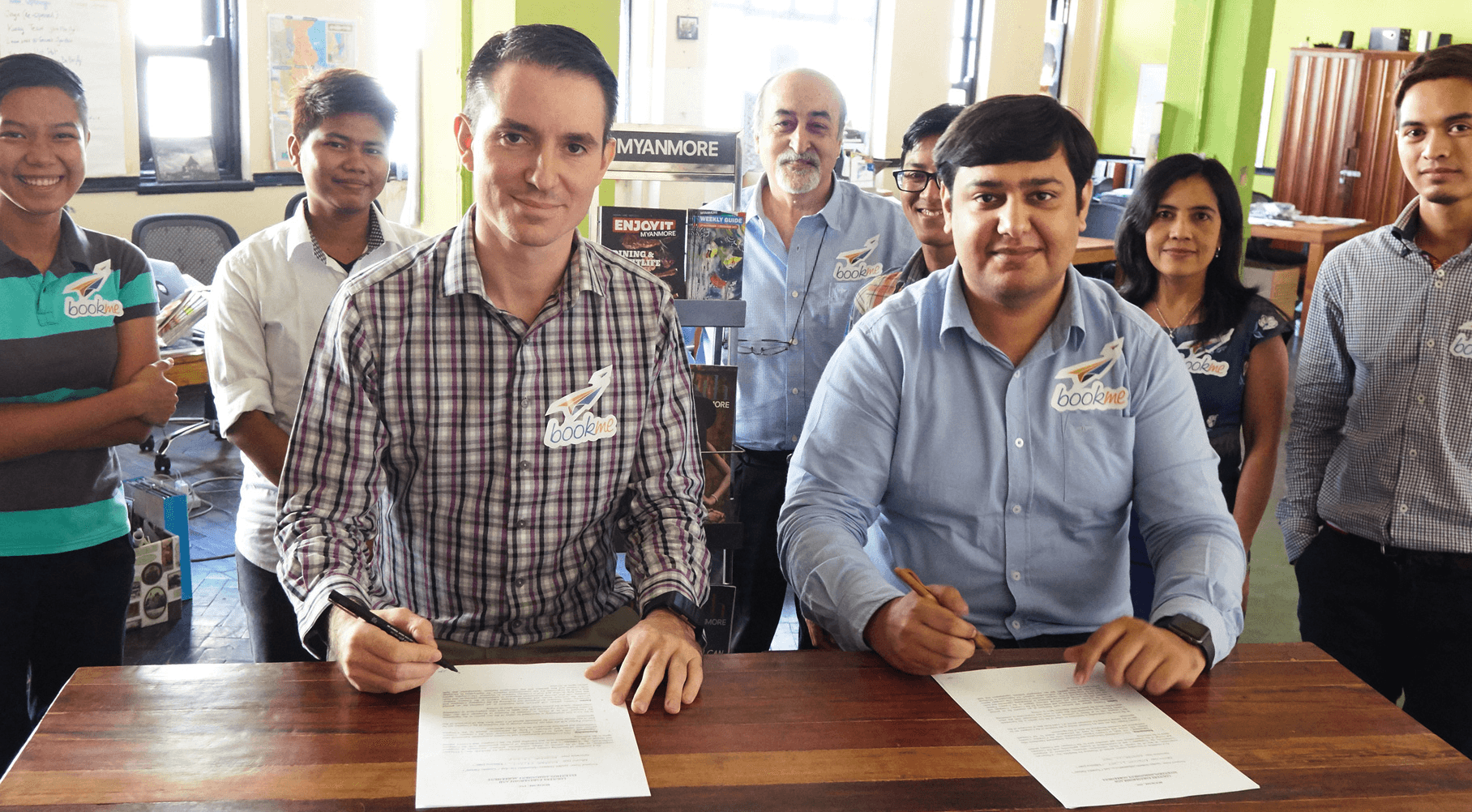
Faizan Aslam, founder of Bookme (right)
Faizan Aslam, founder of ticketing startup BookMe, was your typical college student. Idealistic, full of energy, eager to make an impact on the world, and periodically short of cash.
His first entrepreneurial endeavor was a simple printing business. Faizan, who shared his college dormitory with 2,500 other students, bought a basic Inkjet printer for approximately US$30 and started charging his peers a few cents for simple printing jobs. Alternative printing facilities were located a fair distance away and this rudimentary solution was cheap and convenient.
“It was sort of my first startup,” he laughs.
The other issue Faizan faced was his self-confessed problem of “not being able to live without the internet.” Unfortunately in the mid-2000s accessing the internet was a costly proposition in Pakistan. Despite improved cash flow due to his printing solution, Faizan was eager to earn more to be able to afford unfettered online access.
Luckily for him, a new internet service provider was setting up shop in Islamabad and was eager to cater to students. Faizan, at the time a college sophomore, visited their office and negotiated a special deal. He eventually signed on as a sales rep for the company and helped market the service amongst his peers, earning commissions on each sale.
In his first month alone he sold more than 500 modems, making a handsome profit of almost US$3,500.
Bitten by the entrepreneurship bug

Photo credit: Pixabay
Eventually sales hit a plateau but by now Faizan was hooked onto the entrepreneurial bug. He had successfully identified a market opportunity and reaped the windfall. He knew the internet was a great equalizer and wanted to leverage it further.
Faizan, a software engineer by training, roped in a friend and opened an account on freelance site Rent A Coder. He nabbed his first few projects almost immediately: designing websites and logos, and dabbling in data entry.
Within a few months the freelance assignments started picking up significantly, and by the time Faizan had graduated from college, he booked more projects than he could handle.
Sensing that this was a good problem to have, the aspiring entrepreneur decided to legitimize his business. Like most well-intentioned Asian families, Faizan’s parents initially resisted his plans. They couldn’t fathom how someone would want to earn their livelihood over the internet and implored him to change his mind. Faizan did his best to allay their concerns and proceeded with his plans. He registered a company, hired a team of programmers, and opened an office.
The new company, Makro Pak Solutions, no longer relied on freelancing platforms to source projects. Faizan’s roster of clients had grown to an extent that he was able to tap existing networks for outsourcing/consulting work. As he scaled up, his team grew to more than 30 people.
Learning from failure





Stay updated on the go with our mobile app.
Get latest insights with smoother, more personalized experience through TIA mobile app.