C. Custer · · 2 min read
Two reasons angel investors are rare in China, according to Xiaomi’s Lei Jun
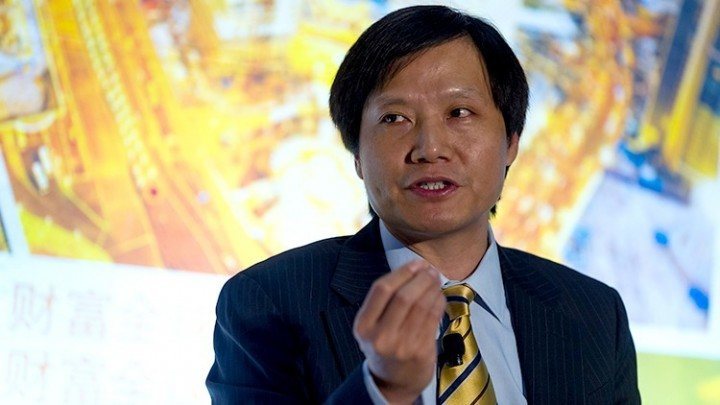
Xiaomi CEO Lei Jun, photo credit: Fortune Live Media.
It would be difficult to claim that there’s not enough investor money in China’s tech industry. After all, Chinese tech companies like Didi have spent the past year smashing global fundraising records. But that money isn’t distributed evenly across all stages of a startup’s growth, and according to Xiaomi founder and CEO Lei Jun, that’s a problem.
In remarks at the Tianjin Summer Davos, Lei Jun said that most of China’s startup funding was concentrated in later-stage private equity rounds, not in true risk-stage rounds like angel funding. “The angel round is the hardest for Chinese startups,” he said. “And it’s not easy for them to get bank loans, so really the only way forward is to find an angel round.”
But angel investors are scarce, Lei Jun said, for two reasons.
First, the obvious one: angel investing is a much bigger risk than jumping onto an established company’s series C, and the returns generally take longer to get to you. “When investing in a tech company [as an angel] it might take 10 or 15 years [to see a return]; six or seven even if it’s quick,” Lei Jun said. “Doing private equity is simpler, all you have to do is guess whether the company will be able to IPO or not, and when they IPO you’ll get a return of 5x or 10x.”
The second reason, Lei Jun said, is that taxes are too high. “For example, let’s say that your first 29 investments fail, and only on the 30th company do you make money. If you then have to pay 20 percent of your return in taxes, the investments just aren’t worth it.” Lei said he thinks that China’s tax structure should be adjusted to provide tax discounts for high-risk angel investors by factoring in their losses on previous ventures.
Even with the taxes, though, Lei Jun said that it’s possible to win big as an angel investor. He explained he personally has experienced a 1000x return as an angel investor he invested about US$600,000 for 20 percent of UC Web in 2007, and Alibaba bought UC Web in 2014 for US$4.3 billion. Assuming that he still owned his 20 percent, Lei turned his US$600,000 into US$860,000,000, a return of well over 1000x.
(Also: it may be worth noting that as a national representative at China’s “Two Meetings” legislative sessions each year, Lei Jun is actually in a better position than most Chinese investors to push for a change in China’s tax legislation. That said, China’s elected representative legislature is mostly a rubber-stamp body that exists to validate the policy decisions already made by higher-level authorities within the Communist Party.)





Stay updated on the go with our mobile app.
Get latest insights with smoother, more personalized experience through TIA mobile app.