 Masha Borak · · 3 min read
China’s public toilets now have facial recognition, thanks to Xi Jinping
Stand in the yellow identification area and bring your face close to the facial recognition machine. Three seconds later, exactly 90 cm of toilet paper will be dispensed. Then, you may go in and do your business – but not for too long, otherwise an alarm will sound off. The sensors inside the toilet evaluate the ammonium level and release a deodorizer if necessary.
Going to the toilet in China might not be quite what you’re used to.
Since the first toilet in Beijing’s Temple of Heaven Park got a face scanning machine in 2017, public lavatories across China are being transformed. Just this week, local state media praised two face scanning toilet endeavors for being “clean and convenient” and “reducing toilet paper waste.”
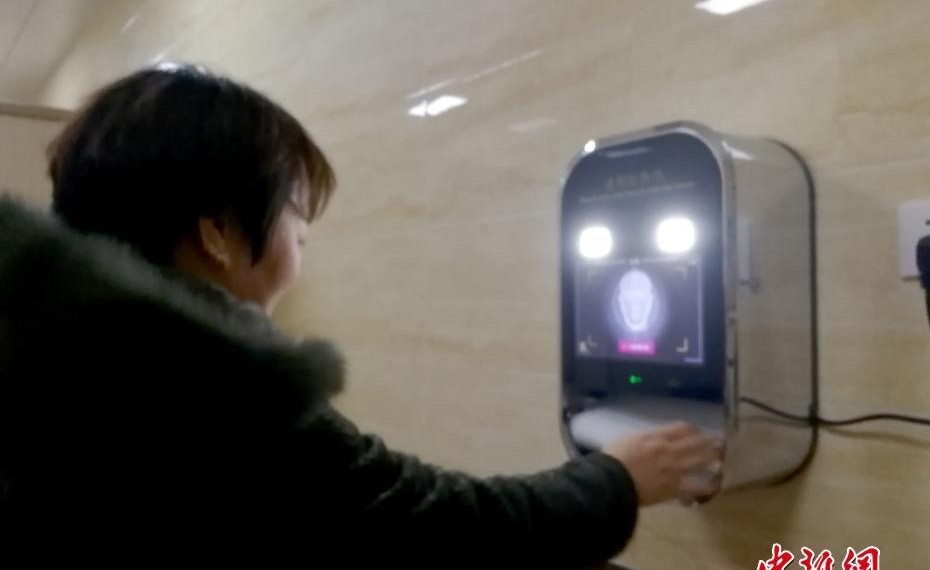
This facial recognition system installed at a public toilet at Jinan’s Baotu Spring Park was described by some as “unsettling.” / Photo credit: China News
However, there might be another reason why gimmicky toilet-related tech has proliferated so much in China: Xi Jinping.
In 2015, the president of China proclaimed the “Toilet Revolution.” The policy is aimed at improving infamously smelly and poorly equipped public toilets.
But it’s not just the residents who are enthusiastic about it. Aside from the state media, which have been regularly praising the fruits of the Toilet Revolution, local administrators have also embraced it.
“The Toilet Revolution has top-level endorsement from Xi Jinping, so it’s something that lower-level cadres recognize as a way to distinguish themselves and to get noticed by higher-ups in the government system,” said Neil Thomas, a research associate at MacroPolo, an in-house think tank at the Paulson Institute in the University of Chicago.
In some cases, the need to distinguish oneself from others can become a bit extreme. Although many tech implementations in public toilets have been very useful, including indicators that show whether the toilet is occupied, some of these paradise toilets have free wifi and mobile phone chargers.
Other toilet projects even suggest using fingerprint recognition technology. In Beijing’s historical Fayuansi hutong, the local government exhibited a design from Sponge Studio, which pitched public toilets that could ban unruly users from entering based on their fingerprint. If you’re already squeamish about the hygiene here, it’s a good time to let you know that the plan also envisions an iPad placed next to the toilet seat for public use.
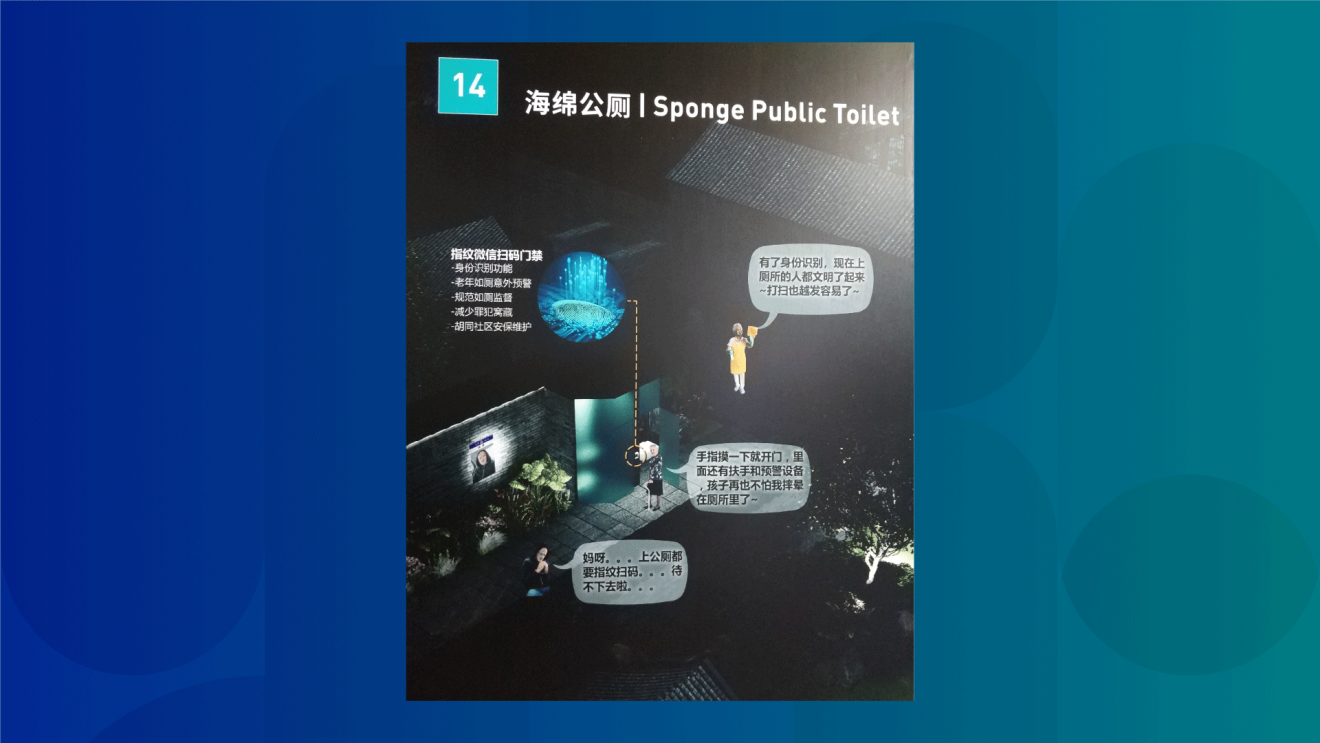
Sponge Studio suggested the people of Fanyuansi should register their fingerprints in order to use public toilets. Many residents in Beijing’s historical areas still do not have the luxury of indoor plumbing. / Photo credit: Masha Borak / Abacus





Stay updated on the go with our mobile app.
Get latest insights with smoother, more personalized experience through TIA mobile app.








📅 Upcoming Events
22 October 2026
Payoneer x CSPN Summit 2026