- Premium Content It takes our newsroom weeks - if not months - to investigate and produce stories for our premium content. You can’t find them anywhere else.
 Melissa Goh · · 7 min read
Razer’s payments platform is profitable a year from launch, has global ambitions
It was a bold proposal from the get-go.
Razer – a company known for its cutting-edge gaming hardware, software platforms, and virtual credit services for gamers – would build a unified digital payments solution for Singapore, CEO Min-Liang Tan tweeted in August 2017, to Lee Hsien Loong, the country’s prime minister – no less.
It might not have been immediately apparent, but the Hong Kong-listed company’s proposed payments platform could build upon its existing ecosystem, Li Meng Lee, Razer’s chief strategy officer, told Tech in Asia at the sidelines of the 2019 Singapore Fintech Festival.

Razer Fintech booth at the Singapore Fintech Festival / Photo credit: Melissa Goh
For one, it had already created an established offline network of merchants as part of its business-to-business solution, Razer Merchant Services. Today, the network includes a card processing gateway that supports over 110 payment methods and an offline payment system with over 1 million acceptance points. Fintech was the additional layer on top of it.
The esports brand also had an existing base of 70 million gamers worldwide, predominantly made up of youth and millennials, who were potential users for its digital wallet.
Tan’s promise to develop an e-payment solution “for Singaporeans by Singaporeans,” acquire one million customers, and turn the city-state into a cashless society within 18 months – all for S$10 million (US$7.3 million) – was laid out in Razer’s proposal, which sent waves through the tech community.
Where do things stand seven months after the 18-month deadline? Razer Pay, the company’s business-to-consumer digital wallet, has hit approximately 1 million registered users in Malaysia – its first pilot market – as of June 30 this year, though it’s still in beta phase in Singapore.
Razer Fintech, the firm’s online-to-offline payment network that consists of Razer Merchant Services and Razer Pay, is already revenue-generating and profitable this year, shared Lee. Its total payment value (TPV) was over US$828 million for the first six months of 2019, according to Razer’s unaudited financial results. That’s compared to US$1.4 billion in value that it generated for the whole of 2018.
Razer Pay lets users make mobile top-ups, buy virtual credits, and purchase music and streaming services. It was launched in Malaysia in July 2018, following the company’s acquisition of MOL, the operator of Malaysian e-wallet app One2Pay.
Malaysia was the logical choice for Razer Pay’s first market because of the company’s existing partnership with Berjaya Corporation Berhad, which came about with the MOL acquisition, said Lee. By teaming up with the Kuala Lumpur-headquartered conglomerate, which operates the 7-Eleven, Starbucks, and Krispy Kreme franchises in the country, Razer gained access to an extensive network of retailers, allowing it to hit the ground running.
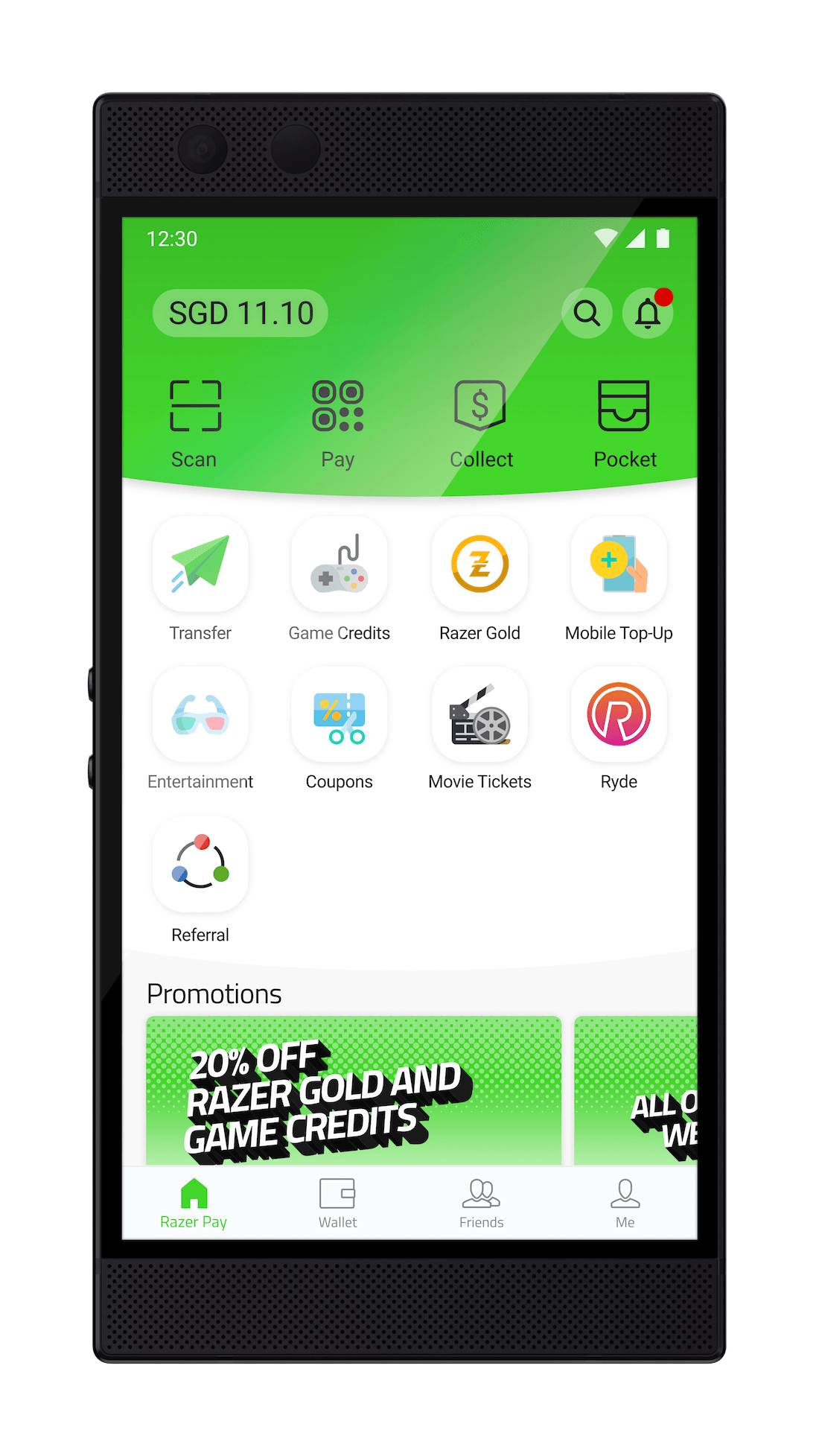
Razer Pay / Photo credit: Razer
However, Razer Pay’s long-awaited Singapore entrance is still underway.
Introducing interoperability
Global ambitions
Stay ahead in Asia’s tech landscape
This is premium content. Subscribe to read the full story.
It’s been 25 months since Razer CEO Tan Min-Liang’s proposed to build a unified digital payments solution for Singapore.
We know this is not ideal. ⌛ Sign up in 20 seconds. Cancel anytime.
Our subscriber community includes professionals from these companies:





Stay updated on the go with our mobile app.
Get latest insights with smoother, more personalized experience through TIA mobile app.








📅 Upcoming Events
22 October 2026
Payoneer x CSPN Summit 2026