 Nathaniel Fetalvero · · 5 min read
4 tips on how to choose the best office space for your company

It’s a well-known fact that we spend more time in the office than we do at home.
According to Singapore’s Ministry of Manpower, full-time employees in Singapore spent an average of 45.8 hours a week at work in 2018 – that’s more than nine hours a day! When the commute to and from work plus an average of seven hours of sleep are factored in, that leaves us with only about six hours – or maybe even less – to spend at home or on recreation and leisure.
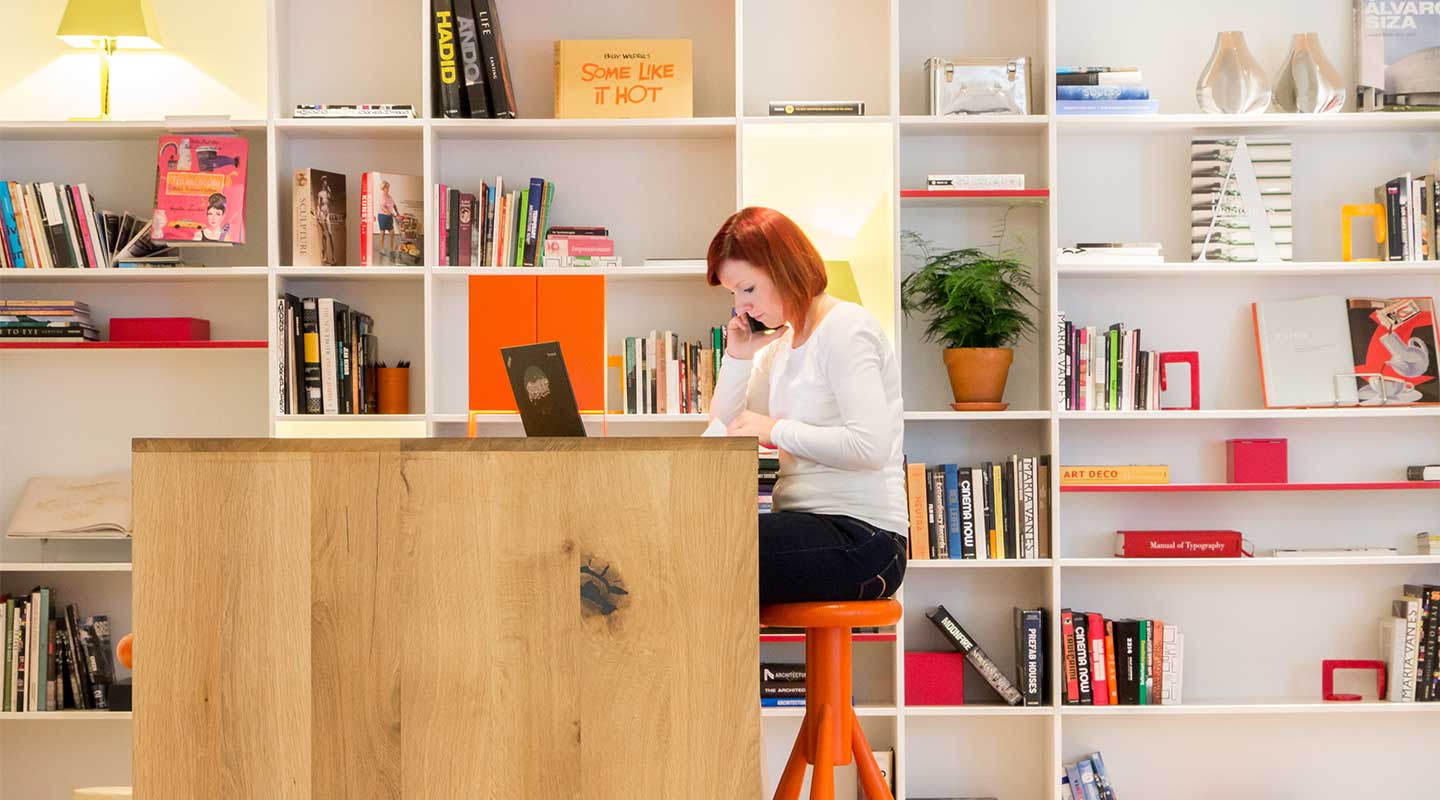
Photo credit: Spaces
Because we spend so much time in the office, it only makes sense that business owners put a lot of thought into choosing an office space. After all, a happy employee is a productive one, and a key component to happiness in the workplace is a good working environment.
With a long checklist for what makes a good office – from natural light and fresh air to the right kind of furniture – scouting for an office space can be a headache. To make that process simpler, here are some suggestions.
1. Location is everything
As an old saying goes, “There are three things that matter in property: location, location, location.” According to Jay Huang, CEO and co-founder of AI software-as-a-service startup Pulsifi, this also holds true for office spaces.
In the company’s early days, Huang and his co-founder worked from home. But when the duo started to expand their team, they soon found it was necessary to have a centralized office.
“We realized that for certain things that we do, when we’re physically together and side by side, it’s a lot more productive,” Huang recalls. “Because our team is all over Singapore, we knew that the office had to be in a central location.”
The team eventually settled down in an office they leased from workspace operator Spaces. This experience help Huang understand that finding the right location means more than just picking one within a reasonable distance from employees’ homes.
Pulsifi’s current office, explains Huang, is one of the few in the area that’s totally covered from the nearest train station to the building’s front door. “You don’t even need to cross a road or anything, so it’s really great if it’s sunny or raining.”
Access to a variety of food options, especially budget-friendly ones, around the area is also an important consideration, adds Huang.
2. Size matters
Contrary to popular belief, size really does matter – at least when selecting an office space. But that doesn’t just mean that bigger is better. Serene Wong, executive producer at content agency Across The Pond (ATP), says that a vital factor for picking an office is the size of your team.
As “employee number one” in Singapore at a London-based company, Wong says that she initially shared an office with another agency.
“When I first joined the team, I was sitting with an agency called JKR,” she says. “Someone in ATP was friends with the JKR owner and we decided that since it was just a one-man show, I could just sit with them.”
But the time soon came to grow the ATP Singapore team, so it transferred to a co-working space where employees had dedicated workspaces. But when the team started expanding further, the agency moved again, this time into a Spaces location where ATP now has its own private office. According to Wong, the team is in growth mode again and is in talks with Spaces to lease a bigger office.
However, there’s another reason why ATP moved out of the co-working space.
3. It’s all in the environment
Just as a house is not a home without those who live in it, an office is not a workplace without the people you share it with. In a co-working space, you share an office with a lot of different people. As such, the environment that your neighbors create around you can greatly affect your productivity.
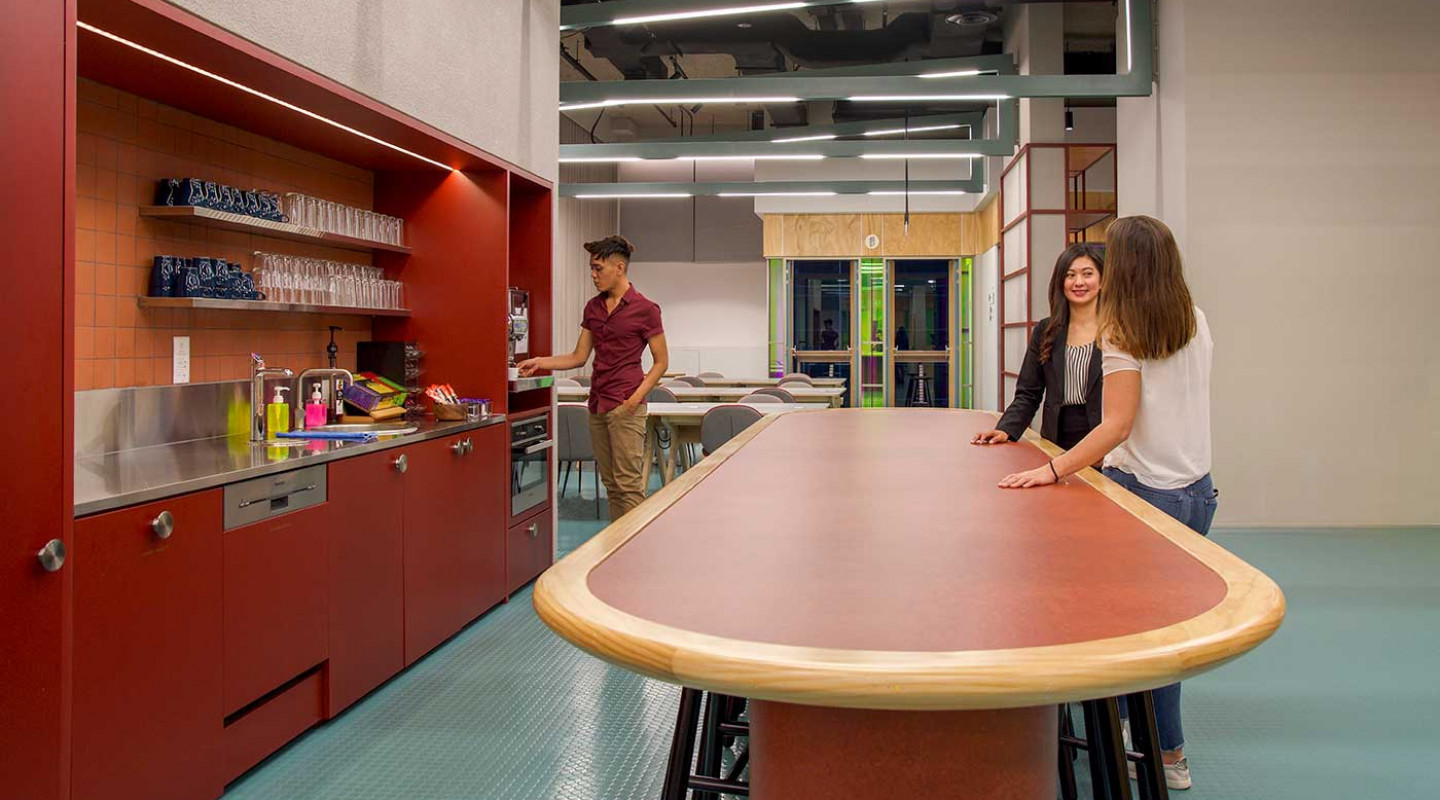
Photo credit: Spaces
“There was a ping-pong table and that was it for me,” says Wong, referring to her time in a co-working space. “I was talking to a client one day and the ball bounced to us. I thought, ‘No, this is not business-friendly.’ So we decided to look elsewhere that had a good mix of liveliness, but was still good for clients.”
Now that ATP is based in a Spaces office, she says the environment is far more productive and that the tenant mix provides the agency with good networking opportunities.
Huang had a similarly disruptive experience in Pulsifi’s early days, when he was trying out a co-working space that had “a super rowdy pantry around the free beer tap.”
“It was difficult for us because our work requires a fair amount of thinking,” he shares. “There are some co-working spaces with background music, like Taylor Swift. Why the hell would you do that? When we asked what we could do about the music, they told us to find a space further away from the speakers.”
4. Visit before you commit
Wong reveals that she didn’t check out the co-working space with the ping-pong setup before signing up for it.
“I didn’t really go over to get an impression. We just did a phone call where we figured out the price and that was it,” she says. “When we moved in, initially it was OK. Then it got really lively, and we were culture-shocked.”
She says that prior to moving into their current office in Spaces, she and her colleagues were strolling around the city when they saw a sign about available desks. So they walked in and were warmly welcomed and attended to by the community managers.
“It was a very positive experience that helped shape our decision. Because we know that if our clients walk through the doors, they’ll experience the same thing, and it sets the tone for when we talk to them,” shares Wong.
Photo credit: Spaces
Margot Vanderpoel, Spaces’ brand manager in the Asia-Pacific region, advises companies looking for an office to do the same. She even encourages to bring team members along when going on site visits.
“Spend some time there, really take in the environment,” she urges. “It helps identify the team’s needs and understand how they feel about the setup of the space.”
Because each person and company “works in their own way,” Vanderpoel thinks it’s equally important to look at an office’s surroundings and its facilities.
“That’s what we do at Spaces. We look at a company’s needs and facilitate that by delivering a unique work environment and an inspirational atmosphere,” she concludes.
Spaces offers creative working environments with a unique entrepreneurial spirit, redefining the way work is done by cultivating a community of thinkers, achievers, and imagineers. Its locations are characterized by a sophisticated European aesthetic punctuated by design classics, inspiring artwork, surprising details, inviting accessories, and witty signs.
Spaces currently has three locations in Singapore. To learn more, visit its website and apply for a tour.
Stay updated on the go with our mobile app.
Get latest insights with smoother, more personalized experience through TIA mobile app.
Recommended reads
 How Swiggy blitzscaled to 500 cities in under 2 years
 Letter to readers: Does Patrick Grove know something we don’t?
 Chinese real estate tech startup Juwai IQI says it has turned profitable
 Take a peek at how the managing director of a global firm works from both office and home
 Is JustCo Southeast Asia’s co-working unicorn?
 After his iProperty and Iflix exits, Patrick Grove starts new proptech venture in Malaysia
 Amazon India begins laying off 1,000 staff
- Why is Patrick Grove starting a new property marketplace?
 Trash, cargo, security: a profitable robot firm’s many interests
 Airbnb APAC managing director to leave post






Editing by Charmaine de Lazo and Eileen C. Ang
(And yes, we’re serious about ethics and transparency. More information here.)







📅 Upcoming Events
22 October 2026
Payoneer x CSPN Summit 2026