Erik Crouch · · 5 min read
The great design debate: Are apps like WeChat ‘fully featured’ or just a cluttered mess?
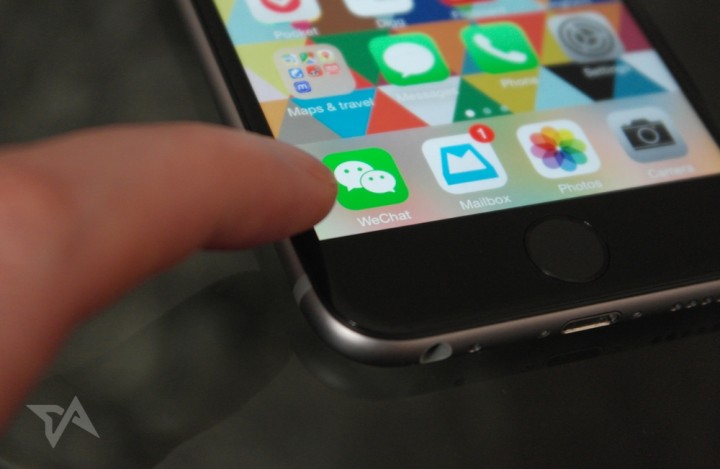
It’s not too much of an exaggeration to say “You can do everything in WeChat.” From buying train tickets to commissioning art to setting up a massage session, the app is nothing if not fully featured.
But all that functionality comes at a price: namely, a hopelessly cluttered interface. Want to buy movie tickets? Open WeChat. Leave any open chat window. Go to “Me.” Open “Wallet.” Scroll down to “Movie Tickets.” That’s just to get to the screen where you can select the movie you’d like, let alone the theater. Or the time. Or the payment method. And if you get a message from a friend during this time – hardly rare, if you’re going to a movie with someone – you have to exit the whole freaking thing to go back to your chat window, and then start from scratch.
See also: The amazing ways WeChat is used in China
Compare that to a dedicated movie ticketing app, where you’re just one or two clicks away from choosing a flick.
There is currently an argument going on in the world of app design – should apps cater to a user’s every possible need, or focus on one thing and do it well? On one end of the spectrum is WeChat, which is increasingly feeling like 10,000 apps crammed into one. On the other end is Facebook’s app suite, which has fractured into Facebook, Messenger, Groups, Pages, and more – each app designed with a single use case in mind.
Frog is a global design company that has worked with clients ranging from Nike and Microsoft to the United Nations. We asked several designers at the firm to answer this question: Is the future of app design cluttered and capable, or clean yet limited?
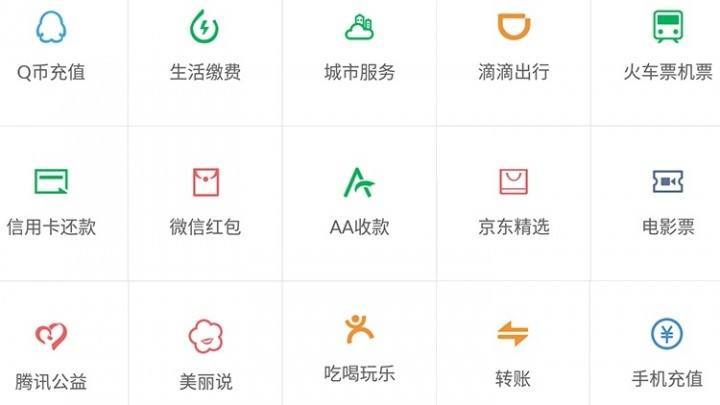
WeChat’s busy services page.
Cultural differences
“As a European [designing] for a Chinese market, my view on simplification is probably not going to stick,” says Simone Rebaudengo, frog’s senior interaction designer. “I just see the push of clients to add complexity not as a problem for people, but more for me as a designer.”
Look at many Chinese apps – and Japanese ones – and it will quickly become apparent that spartan design is not a top priority. It is bright colors, long menus, and plentiful features as far as the eye can see.
User expectations are different in East Asia than other places.
But that’s not a bad thing. User expectations are different in East Asia than other places, and busier designs can be seen as a sign of robust features, not of confusing excess.
“In both China and Japan, users tend to be comfortable with cluttered, high information density apps and sites,” says Alan Stafford, solution architect at frog. “I’ve heard it said that this is a hangover from the BBS-style portals in the early dawn of the Asian Internet.” (BBS stands for bulletin board system, the text-based social networks of the early internet.)
He adds, “That doesn’t mean users don’t appreciate simple intuitive design; case-in-point, Apple and Xiaomi.”
Tear down this wall
Simone calls this “avoiding the ‘home’ button.” Chinese designers in particular seem to be at war with the home button, and are doing everything they can to keep users within a single app instead of hopping between programs.
China’s secret weapon: a killer app





Stay updated on the go with our mobile app.
Get latest insights with smoother, more personalized experience through TIA mobile app.