 C. Custer · · 8 min read
How China’s biggest smartphone brands are waging war in India
Photo credit: Oppo
The following article is an abridged, adapted translation from this article written by Xuan Chuang for Zhidx.
China’s smartphone makers have been busy in the domestic market this year. The top four – Huawei, Xiaomi, Oppo, and Vivo – have been busy pushing out things like bezel-less screens, AI photography, AI apps, and other new tech. But despite all the activity, [data shows](https://www.counterpointresearch.com/china-smartphone-market-declined-fourth-consecutive-quarter-q2-2018/) that China’s smartphone sales have dropped 10 percent year-on-year.
But China’s smartphone makers aren’t slowing down – because as the Chinese market cools, the battle is simply shifting to India, where smartphone sales volume is up 30 percent.
According to IDC data, China’s big four – Huawei, Xiaomi, Oppo, and Vivo – shipped a collective 16 million smartphones in India in Q2, accounting for nearly 55 percent of India’s smartphone market. Compare that to Apple, which didn’t even manage to sell one million phones in India over the first half of this year. India’s fast-growing market looks ripe for the taking, and Chinese smartphone companies even beyond the “big four” are coming to India to do battle.
The strategic importance of India
The most appealing aspect of the Indian market is that it has what China used to have: a very high total population and a relatively low smartphone penetration rate. At more than 1.3 billion, India’s population is quite close to China’s, but China’s smartphone penetration in 2017 was 96 percent, whereas India’s was just 22 percent.
Photo credit: Oppo
That means there are over a billion potential customers in India who don’t own a smartphone yet. And while India’s now sees about 300 million smartphones snapped up per year, about 500 million are sold each year in China, meaning that in the long-term an annual market of around 200 million smartphones is likely up for grabs.
But India’s market is structurally different from China in one crucial way: it’s extremely polarized. Whereas China’s smartphone market is largest for mid-range phones, with tapering interest in the extreme high-price and low-price ends of the market, India’s market is the exact opposite: there’s little interest in mid-range offerings, with the wealthiest interested in high-end phones and the rest of the consumer base looking for budget options. And since regular consumers are the ones driving India’s smartphone market growth, that means that for Chinese firms operating in India, the low-end market is key.
Xiaomi is currently winning that battle, with an estimated 29.7 percent of the Indian smartphone market in Q2, according to IDC.
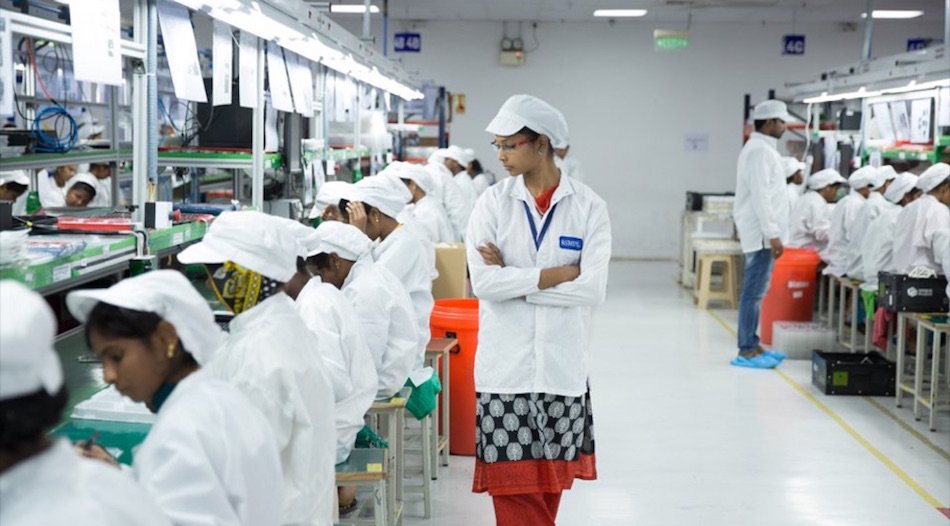
Inside a Xiaomi factory line in India. Photo credit: Xiaomi
But Samsung is hot on its heels with 23.9 percent, and Chinese rivals like Vivo (12.6 percent) and Oppo (7.6 percent) are starting to carve out footholds in the market as well.
Challenges for China
How Chinese brands are taking on India
Who’s likely to emerge victorious





Stay updated on the go with our mobile app.
Get latest insights with smoother, more personalized experience through TIA mobile app.








📅 Upcoming Events
22 October 2026
Payoneer x CSPN Summit 2026