- Premium Content It takes our newsroom weeks - if not months - to investigate and produce stories for our premium content. You can’t find them anywhere else.
 Melissa Goh · · 3 min read
Quobly bags $134m, taps SG to develop quantum use cases
Quantum computing company Quobly has raised 115 million euros (US$133.9 million) in a series A round led by public investment bank Bpifrance and semiconductor firms SEALSQ and STMicroelectronics.
Half of the funding will be allocated for R&D and industrialization efforts, while the other will support commercialization and international expansion, Quobly co-founder and CEO Maud Vinet told Tech in Asia ahead of the announcement.
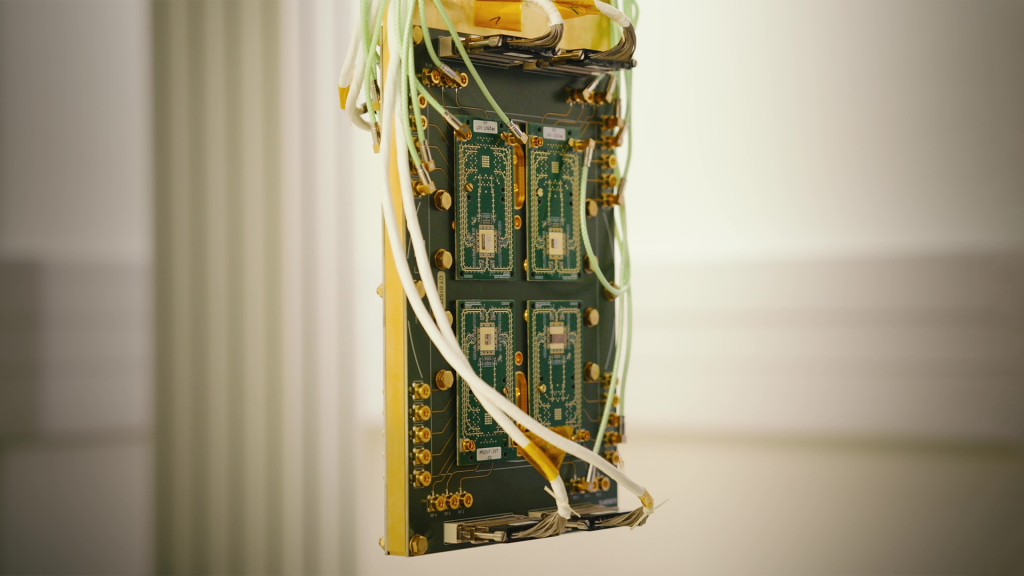
Inside a Cryostat, a large refrigeration system used to cool Quobly’s quantum chips to ultra-low temperatures to preserve the quantum properties of its silicon qubits / Photo credit: Quobly
Headquartered in Grenoble, France, the startup plans to bring its first commercial product – a quantum computer – to market by year-end.
Customers of France-based OVHcloud and US-based qBraid will be the first to gain access to these quantum computers, which will be made available in data centers in 2027.
Quobly’s Singapore office will support its R&D and business development efforts in Asia and is targeting a headcount of 10 employees by 2027, according to Vinet. The company, which also has a presence in Canada, set up the subsidiary in October 2025.
The firm does not have any employees in Singapore yet, but it will soon relocate two quantum application developers from France to the city-state.
Quobly is also hiring a “quantum engineer experimentalist” who can support its efforts to co-develop applications with firms targeting local use cases.
Singapore’s role
Quobly is developing silicon-based quantum computers that can deliver large-scale processing power at a size that’s compatible with present-day data centers. The startup also provides software that allows the development of applications using its hardware.
In Singapore, one potential use case of quantum computers is in the maritime sector, where they can optimize shipping routes faster and across more variables than traditional computers can. This can save shipping firms time, fuel, and other raw materials, which in turn can lower costs and reduce the industry’s environmental impact, Vinet said.
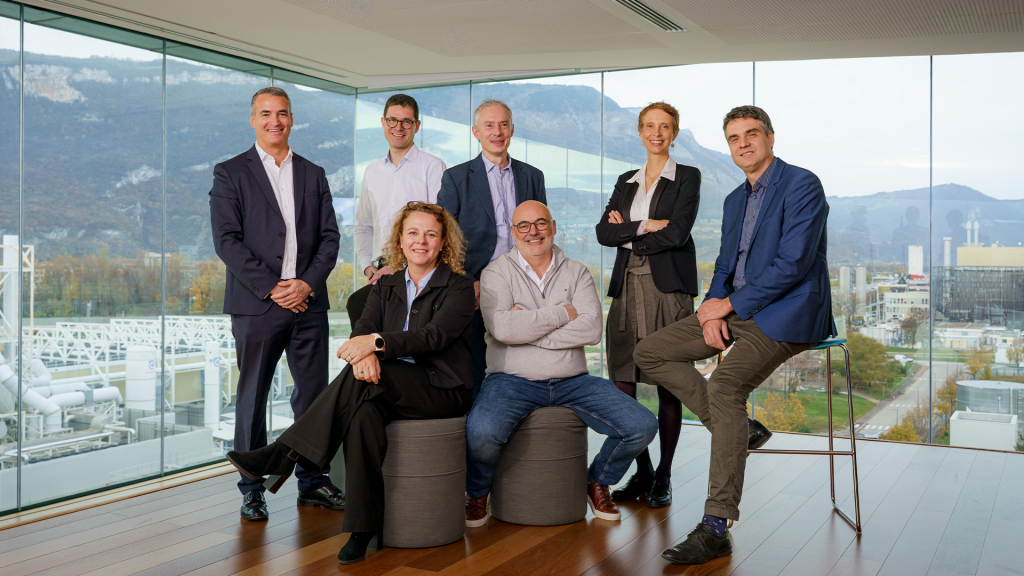
Quobly’s leadership team / Photo credit: Quobly
Another application is in the financial sector, where quantum computers can speed up mathematical calculations, optimize portfolios, and cut the time it takes to execute trades.
Vinet noted that the city-state has “expertise in software development” and an ecosystem of startups focused on software and development, complementing the quantum hardware Quobly is developing.
The race to industrialization
Stay ahead in Asia’s tech landscape
This is premium content. Subscribe to read the full story.
Find out what this French quantum computing firm is doing differently to make its machines fit into existing data centers.
We know this is not ideal. ⌛ Sign up in 20 seconds. Cancel anytime.
Our subscriber community includes professionals from these companies:





Stay updated on the go with our mobile app.
Get latest insights with smoother, more personalized experience through TIA mobile app.











📅 Upcoming Events
22 October 2026
Payoneer x CSPN Summit 2026