 Michael Tegos · · 5 min read
How fintech startup Coins more than tripled its users in under a year
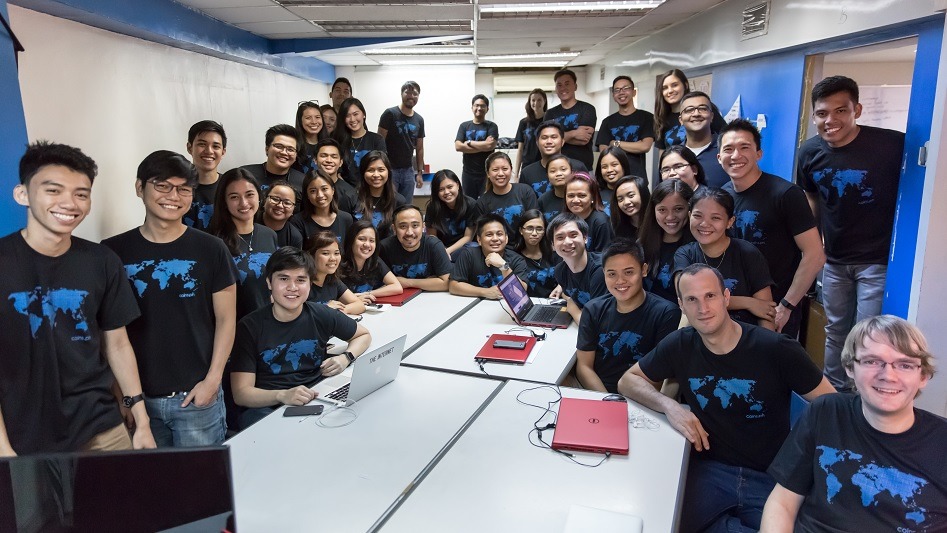
The Coins team / Photo credit: Coins
When Coins launched in the Philippines in 2014 to cater to the island nation’s unbanked, blockchain was not the buzzword that it is now.
Earlier this year, the startup announced a milestone of five million customers – quite a big jump from around 1.5 million at the end of 2017.
Coins CEO and co-founder Ron Hose knew that blockchain technology could have a significant impact on how people deal with money, especially in markets where they can’t easily access traditional financial services.
“There’s no reason why sending money should cost more than a WhatsApp message,” he tells Tech in Asia.
Coins enables users to send remittances via its mobile wallet. Its app makes it easy to top-up the wallet, send money, and withdraw funds without having a bank account or even having to visit a bank. The startup has engaged offline partners, from local small businesses to other users that could act as makeshift ATMs.
Word of mouth
Hose says this growth has been largely due to the stickiness of the service and the way people use it every day to remit money.
“[Peer-to-peer] remittances are free and instant on Coins. When users remit money back to their family, they’re doing it from their phones. That is the core thing driving retention for us.”
This constant usage has resulted in organic growth for the platform. Marketing helps raise awareness, but Hose says it’s Coins customers sharing their experience that has made a bigger impact.
Coins was able to tap into a genuine need for Filipino users. The Philippines was the third-largest recipient of remittances in the world in 2017, according to the World Bank, with transfers worth US$33 billion flowing into the nation. This is expected to rise to US$42 billion by 2023, despite remittance costs soaring globally.
These payments from more than 10 million Filipinos working overseas make up around 10 percent of the country’s gross domestic product.
Moreover, around 77 percent of the population is still unbanked, according to a survey by the Bangko Sentral ng Pilipinas. The reasons vary – from not having enough money to lack of awareness on how to open a bank account. The central bank research also found that 70 percent of the people surveyed value convenience in accessing financial services, which presents an opportunity for tech solutions.
That’s why Coins is focusing its efforts on its home market for now, even though it also has an office in Thailand and is working to scale operations there.
Hose declines to share financial details like revenue or transaction volume. But he says that Coins wants to reach 20 million customers by 2020.
The next 20 million
Dealing with scale
Serving the unbanked





Stay updated on the go with our mobile app.
Get latest insights with smoother, more personalized experience through TIA mobile app.










📅 Upcoming Events
22 October 2026
Payoneer x CSPN Summit 2026