
Photo credit: C.K. Tse.
The good thing about failures and risky bets is that they provide plenty of lessons to learn from. According to data from the Tech in Asia database, investor excitement in India is still alive and kicking – it’s just become a bit more wary since the country’s initial startup funding craze.
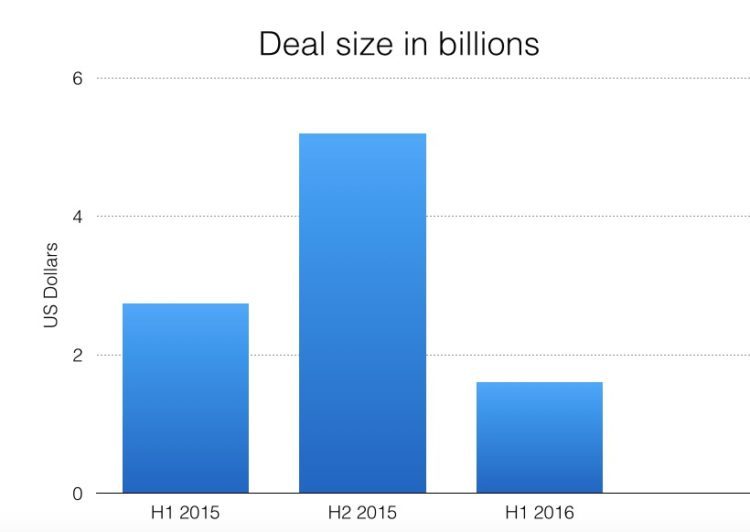
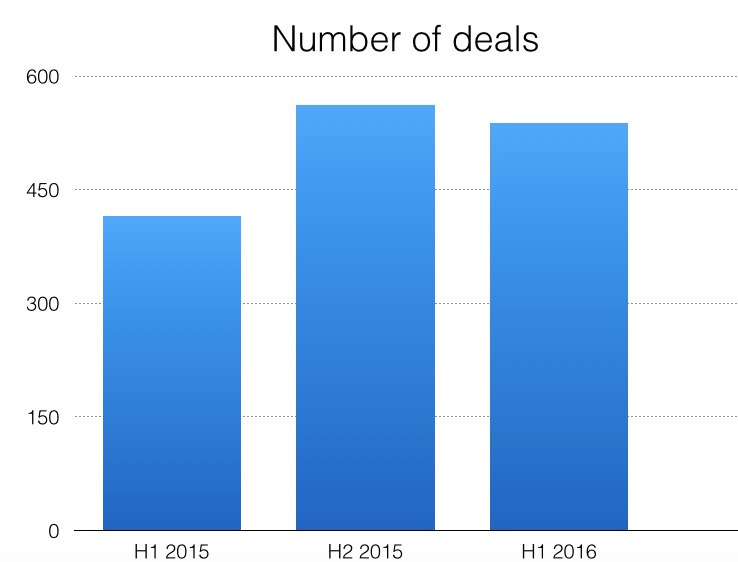
The total amount of money invested dropped from US$5.2 billion in the second half of 2015 to US$1.6 billion in the first half of 2016. The number of deals didn’t change too much, decreasing from 562 to 528, meaning investors are making smaller bets on more startups.
An interesting detail: 67 startups were acquired for a total sum of just US$15.6 million. During the last half of 2015, 79 were acquired for a total of US$408.6 million.
That might mean a few things. First, the many small startups that dot India have trouble scaling past their initial stages, so perhaps their ideas and talent are getting noticed and acquired before they fail. It might also signal something more alarming – a lot of startups are getting really low valuations and are forced to sell out their companies so investors can get some semblance of returns.
Other habit changes bring up more questions about investor attitudes in India.
A bridge round is generally closed by existing investors who want to pump a little more money into a startup before it tries to raise money for its next round. This strategy has gotten some criticism – some believe that it’s a way to pump life – and publicity – into a startup before it heaves its dying breath.
37 bridge rounds were conducted during the first half of 2016, at a total of US$20.3 million. 36 of those happened in just Q2 – April, May, June – at a total of US$19.8 million. Only two bridge rounds were conducted in the second half of 2015 for undisclosed amounts of money. Although the first half of 2015 saw 22 bridge deals for US$22.96 million, the total sum was significantly higher, which means smaller bridge rounds have gained popularity in 2016.
There’s a more positive angle to it, though. In an ecosystem that’s changing fast and experiencing growing pains, it’s a way for a startup to take time and fine tune itself to fit with the changing environment before it plans for its next round.
Editing by Malavika Velayanikal and Steven Millward





Stay updated on the go with our mobile app.
Get latest insights with smoother, more personalized experience through TIA mobile app.









📅 Upcoming Events
22 October 2026
Payoneer x CSPN Summit 2026