 Nadine Freischlad · · 4 min read
Geeky doctors use tech to help people in Indonesia get their prescriptions
For some inexplicable reason, pharmacies in Indonesia have missed the train to the 21st century. Neighborhood pharmacy outlets – usually part of large retail chains – are notoriously understocked. Try pre-ordering? The pharmacist will dutifully scribble down your request on a piece of paper, along with your phone number. You’ll never hear back. There’s no online system that tells pharmacists about the availability of medicines in partner pharmacies, or when they can be expected to arrive. If you depend on prescription drugs, this unreliability can be life-threatening.
Enter ProSehat, a local startup on mission to solve this problem. The basic idea is an online marketplace for pharmacies. Patients request their medicine online by including a photo of the doctor’s prescription. The request is matched up with a pharmacy that can provide the right drug. It is then packaged and delivered to the patient.
Straight outta med school
Gregorius Bimantoro is not only the co-founder and CEO of ProSehat – he’s also a qualified medical doctor. He and his co-founders are part of a group of geeky med students who began building websites and innovating in the realm of medicine, media, and tech in their university days.
Long before ProSehat took its current form, Gregorious and his friends launched medical Q&A site Tanyadok. “A Quora for doctors,” Gregorious calls it. The content was provided by lecturers and graduates, since at the time Gregorius and his friends had not yet earned their degrees.
“Tanyadok gets almost one million visitors a month. It’s still growing, there’s still a team creating content,” says Gregorius.
A health-marketing agency
But Tanyadok was never planned as a business, and Gregorius prefers to see it as a charity project. He went on to found Atoma instead, a health-marketing agency which specializes in creating digital content and applications around health issues.
Gregorius learned that the agency model was limiting and hard to scale. After a year, the company was on the verge of shutting down because it had to chase one project after the other. Gregorius knew he had to change something about his approach to make the business sustainable.
“I wanted to learn how an IT company like ours can grow. That’s how I finally found out about startups,” Gregorius says. “After my agency almost went bankrupt, I realized that I can’t only work with my friends, I need mentors. I asked my [high school] alumni network for help. I got mentors from the media and telco industry. I learned that the future might be in mobile health, and what digital healthcare can look like,” he explains.
Gregorius and his team then joined Telkom’s Indigo incubator program where they floated many e-health ideas, but found none satisfactory. “After one semester, we quit,” Gregorius says.
Finding a fit
He then joined the Founder Institute’s program in March. “It was back to the drawing board,” says Gregorius.”I was getting hit with their tough curriculum. We started with 40 people, but only seven graduated.”
Gregorius was one of the seven, and it paid off to tough it out. He tested out many ideas and finally came out with ProSehat. The rest if the team, meanwhile, kept things running at the agency.
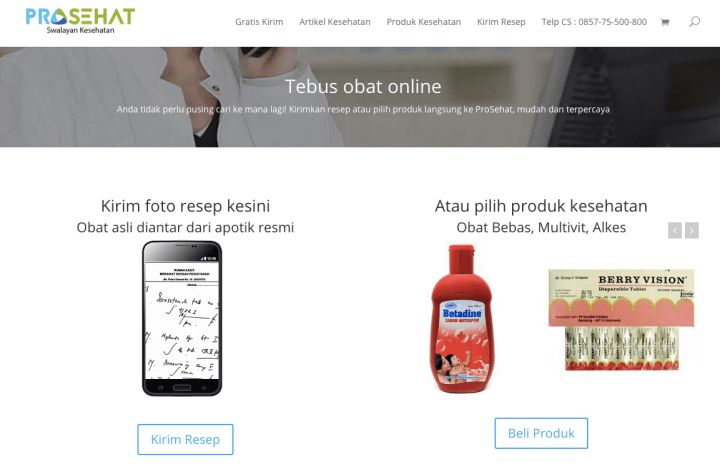
By July, the team had a minimum viable product (MVP). Beyond the core pharmacy marketplace idea, ProSehat has larger goals. Step one will be to add a subscription function to make it easy for patients who rely on the availability of their medicines continuously. In the long run, ProSehat wants to help upgrade the health care system by making a strong push for e-prescriptions. This, Gregorius says, will also significantly lower the risk of fraud with prescriptions. At present, confirming the validity of patients’ photographed prescriptions is a bottleneck.
Indirect and direct competitors





Stay updated on the go with our mobile app.
Get latest insights with smoother, more personalized experience through TIA mobile app.










📅 Upcoming Events
22 October 2026
Payoneer x CSPN Summit 2026