- Insights This article was written by a TIA community member. Insights pieces undergo the same rigorous editorial process that newsroom-produced articles have.
 Hans Tung · · 5 min read
After WeWork deal, Naked Hub founder now wants to solve a problem for teachers

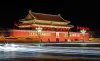
WeWork + Naked Hub pop-up at Rise conference 2018 / Photo credit: Naked Hub
This article is part of Tech in Asia’s partnership with GGV Capital’s 996, a podcast about tech and entrepreneurship in China hosted by Hans Tung and Zara Zhang. This is heavily revised from the original show transcripts. For the full interview, go here. You can also listen to the 996 Podcast by searching “996” in any podcast app.
Today, we have Grant Horsfield, whose Chinese name is Gao Tiancheng (高天成). He is the founder of Naked Group, which includes the luxury sustainable resort brand Naked Retreats (裸心度假村) and the co-working space Naked Hub (裸心社).
Grant is from South Africa and first came to China in 2005. In 2007, he started Naked Group with his wife, Delphine Yip-Horsfield. The company pioneered the concept of ye she (野奢) in China (or “wild luxury” in English), a concept of combining raw nature with high-class hospitality.
In 2015, Grant and Delphine started the co-working business Naked Hub, which now has more than 10,000 members and 50 office locations in Shanghai, Beijing, Australia, Hong Kong, and Vietnam. Recently, Naked Hub and WeWork China announced that they would join forces to support the co-working business in China and throughout Asia.
Let’s hear more from Grant.
Why did you move from South Africa to China?
When I was doing my MBA, a teacher shared with me a crazy entrepreneurial story about a guy who brought chicken feet to China and made a lot of money in six months. The interesting part of the story was about selling in China because nobody at that time was thinking about that. Everything was about buying from China.
So, I came here thinking, “Well, let me come and explore this place and maybe something will catch my eye.” I constantly searched for a product, as I thought there was something from Africa that I could bring to China.
After a year, I realized that what was missing here was lifestyle. I was trying to look for something else to do other than going out to bars or restaurants and live life a little bit better.
How did you get funding to start the first business?
We started small in China. Our first resort wasn’t very big—it had 21 rooms—so we just needed a few million dollars. But we did use some help from friends to invest in that first resort. That was the first time I realized that I would never want other people’s money again. They kept asking me, “So, how’s it going? What’s the performance? Are you going to give me a report?” And I would say, “No. It’s going fine, and that’s good enough.”
So, when we built the resort Naked Stables, I decided not to get any investors. I used debt as the primary source of money. The company became a success, even though I took a massive gamble. I always knew that if I finished the product, it would work. I learned later that, in the hotel business, scale is very important, and that I just had to survive long enough. That has always been my mantra to being an entrepreneur.
What are a few things you had to get right to make Naked Hub better?
The most important thing is letting your members connect with each other without being invasive. How do you create the common areas where people feel comfortable to come together and meet each other?
Essentially, a co-working environment should have five shared spaces: the kitchen or coffee area, the living room, meeting rooms or workshop spaces, hot desks, and the wellness spaces. We use about 30 percent of the floor area for the shared spaces, and that’s about double of what most companies globally do.
The second part was the technology to allow people to connect outside of the physical space. How can I promote my business? How can I promote who I am? How can I connect with the other members?
Did you take outside money this time to scale quicker?
What made you agree on the merger?
What is now the third product that would pique your interest?
What would be your top advice for non-Chinese entrepreneurs who want to start a business in China?





Stay updated on the go with our mobile app.
Get latest insights with smoother, more personalized experience through TIA mobile app.