 Jonathan Chew · · 7 min read
Privacy or safety? These startups’ fall detection solution can ensure both

Picture this: Your elderly parents live by themselves.
Concerned for their well-being, you install several cameras with fall detection software in their house. One day, you get a frantic call from your mom, saying that your dad had a bad fall.

Image generated with Midjourney
“Why didn’t the cameras catch it?” you think, until she tells you that it happened in the toilet, where privacy takes precedence.
Scenarios like this are all too common – studies conducted in Asia found that in a given year, at least 20% of adults above 65 years old would experience a fall. In Singapore, 63% of those incidents occur at home.
“My mom was always very healthy until one day, she had a stroke and fell down when no one was around. She never recovered from that,” says Hasan Gadjali, COO and co-founder of Meridian Innovation, which develops thermal imaging solutions.
“This is a very personal and important issue, which is why we wanted to prevent these mishaps with the right solution.”
Straddling the privacy line
According to Gadjali, many fall detection solutions are often regular cameras that can’t be used in the bedroom or toilet. Other products like necklaces or bracelets have sensors to detect falls, but they’re susceptible to false positives – accidentally knocking it could send a false alert. Products with buttons wouldn’t make sense either, as the user could be incapacitated, he adds.
Zhao Zhihe, who is CEO and co-founder of IoT startup ThingX and Gadjali’s partner in producing the solution, adds that even “with cameras, many cases are hard to judge even with your own eyes.”
How did Meridian end up partnering with ThingX? After meeting at a smart aging workshop in 2023, Gadjali’s and Zhao’s respective colleagues introduced the co-founders to each other.
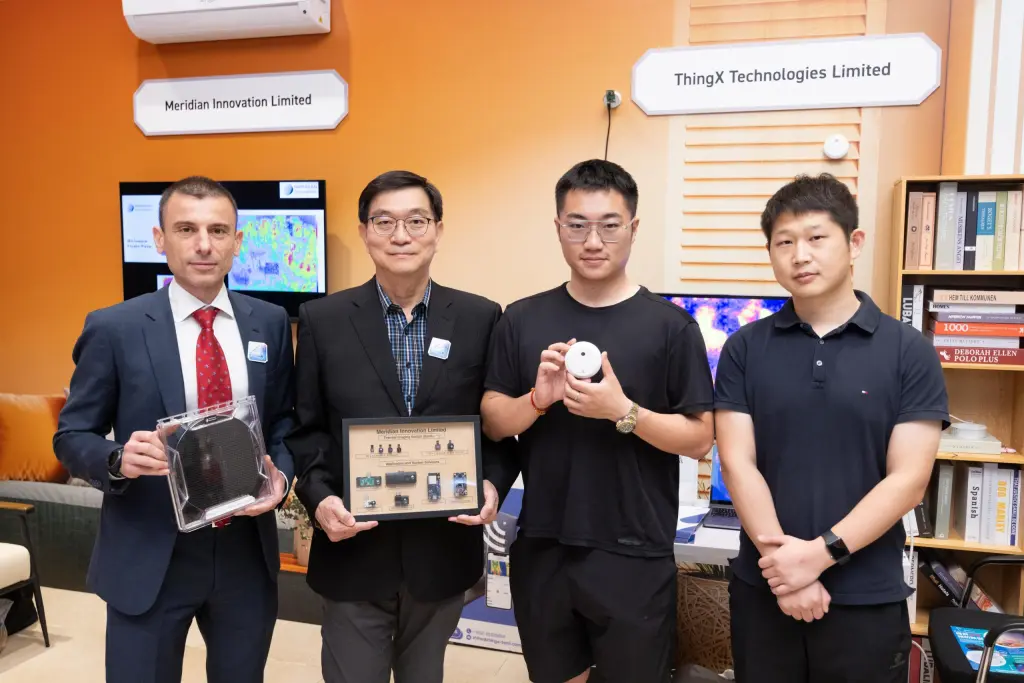
Hasan Gadjali, COO and co-founder of Meridian Innovation (second from left), and Zhao Zhihe, CEO and co-founder of ThingX (second from right) / Photo credit: HKSTP
During their conversations, Zhao discovered that Meridian’s thermal imaging sensors could be produced not only in high quantities, but at a low cost too. The pair quickly realized it was the right time to develop a new solution for fall detection using the technology.
“By using a sensor that displays only 5,000 pixels, the camera is intentionally restricted to only see the person’s rough thermal signature like their head, hands, and body shape to identify if they’ve fallen,” Gadjali explains. “That way, we can maintain both fall detection and user privacy.”
An impossible hurdle
The two companies were off to the races – ThingX would manage overall product development and develop the fall detection algorithm, while Meridian would provide the sensors.
It took Meridian seven years to get its sensor technology up to the standard needed for the fall detection solution while remaining affordable, Gadjali says.
“Our goal was to get the cost down to around US$10 as we wanted a design for mass market applications,” he adds.
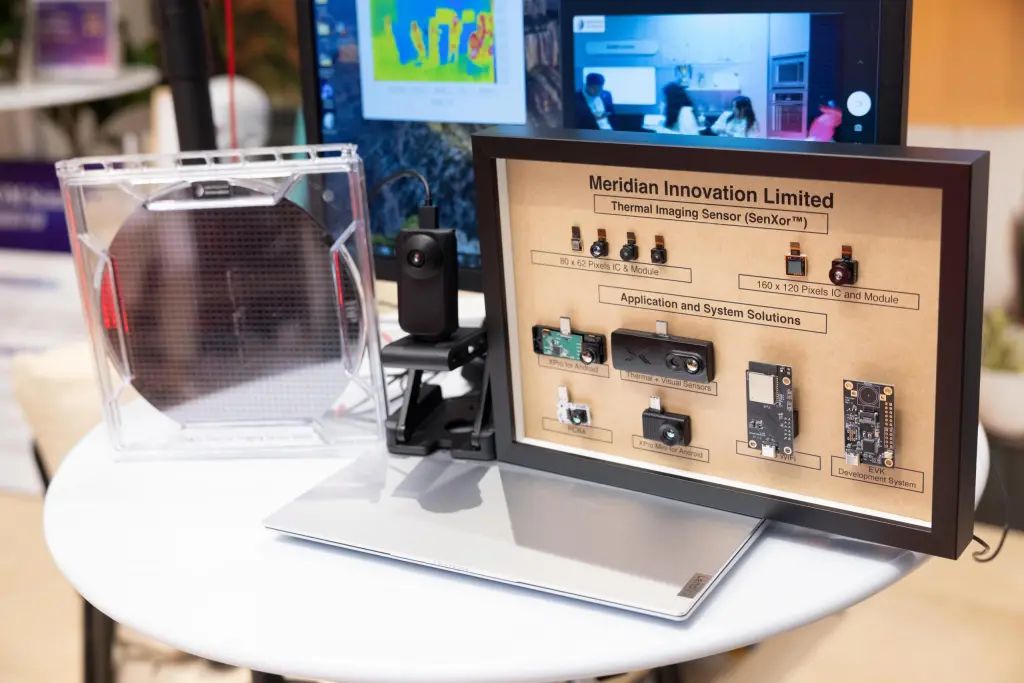
The sensor components developed by Meridian / Photo credit: HKSTP
To that end, much of Meridian’s R&D had to be done in a cleanroom, but these facilities are usually prohibitively expensive – the cost of a roughly 1,000 sq ft cleanroom would set the company back by millions of dollars. The equipment would end up almost doubling the overall cost, not to mention more than US$100,000 per month in utility bills.
“How can a startup build this kind of facility from day one? It’s impossible,” Gadjali says.
Fortunately, Meridian was part of the Hong Kong Science and Technology Parks Corporation’s (HKSTP) Incubation program from 2017 to 2020, and lo and behold – HKSTP has the exact facilities it required.
“Our thermal imaging sensor was one of the first innovations we worked on with the help of HKSTP,” Gadjali says.
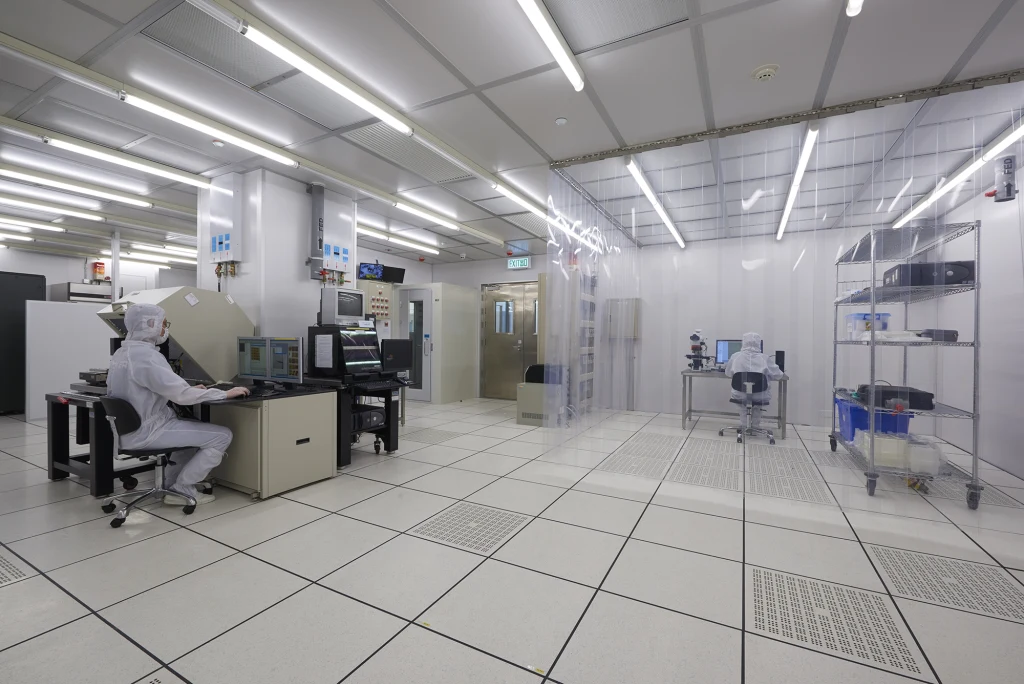
The cleanroom facility at HKSTP / Photo credit: HKSTP
Through HKSTP, Meridian also got in touch with another company based in the park, Arrow Electronics, a global technology company which offers a wide range of electronics, engineering, and manufacturing-ready supply chain solutions. As part of Arrow’s partnership with HKSTP to drive innovation in Hong Kong, it runs a facility at the park compound called Hardware Lab, which provides tools, resources, and a network of experts for microelectronics and electronic engineering R&D.
“We’re excited to see how Meridian and ThingX have benefited from our engineering know-how, supply chain expertise, and access to a global network of electronics suppliers in their idea-to-prototype-to-market journey,” says Jacqueline Leung, president of Arrow Electronics’ Greater China components business.
“Arrow’s commitment to fostering innovation perfectly aligns with HKSTP’s mission to nurture entrepreneurship and develop the information and technology ecosystem in Hong Kong, especially in terms of commercializing research results,” Albert Wong, CEO of HKSTP, adds.
With Arrow’s help, Meridian improved the amount of components produced per unit of raw material, bringing down production costs.
The search for data
Meanwhile, ThingX started by obtaining several sensor modules from Meridian for experimentation. Once the concept was validated, ThingX began designing prototypes and added more functions, such as connecting it to the cloud to alert emergency services.
One of its biggest development challenges was not having enough data to train the algorithm.
“Videos filmed by regular vision cameras can easily be found online, but we couldn’t really find public datasets for thermal imaging videos,” Zhao says.
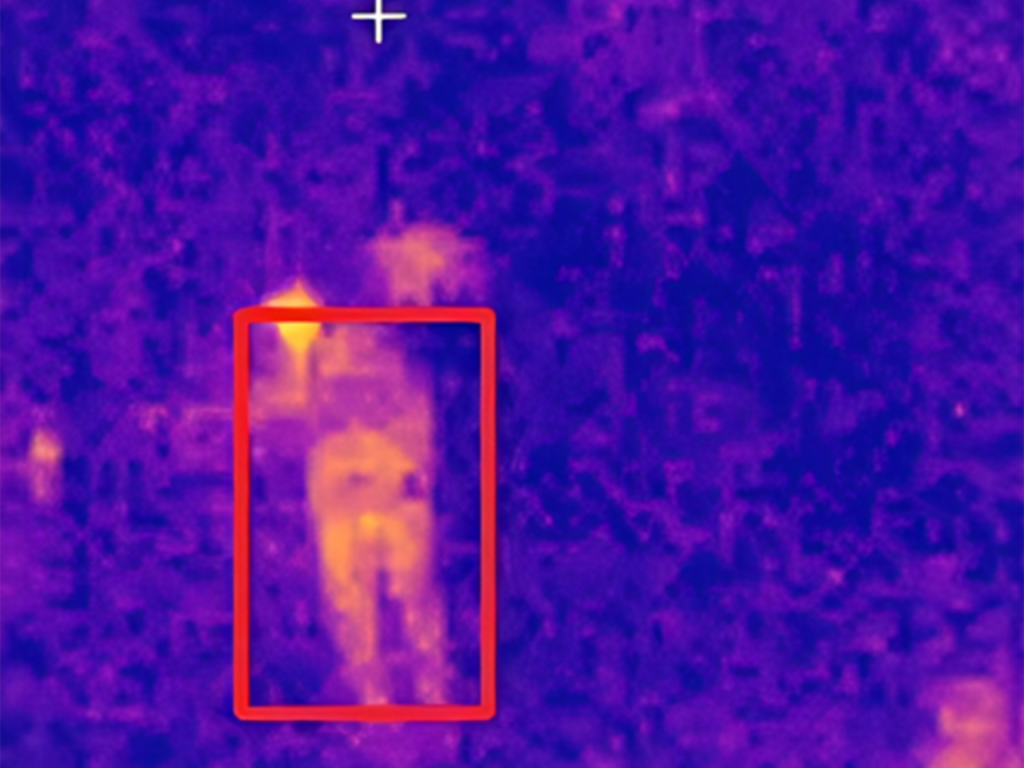
A thermal image of a person who’s fallen and has been detected by ThingX and Meridian’s solution / Photo credit: HKSTP
To overcome this, ThingX translated data from regular cameras into usable datasets. To account for edge cases, ThingX used AI to generate thermal imaging sensor data for specific situations – such as if the user had only one leg.
Additionally, the company set up prototypes in its employees’ houses to collect more thermal imaging data and sent out test products to nursing homes in Hong Kong.
Through these tests, Zhao discovered users could only choose between placing cameras on the ceiling or wall due to the internal fall detection software’s requirements, hence limiting their options.
In response, ThingX implemented a special sensor so that its cameras could support multiple installation methods, allowing users to install the product based on their personal preferences.
“It comes down to ensuring the best user experience. It’s like phones, you know? Some people just like how an iPhone feels in their hand,” Zhao says.
Generations down the line
In just five months, Meridian and ThingX went from an idea and algorithm to a working product, called the Collie R1. As of today, ThingX has sold several hundred sample units of the Collie R1 across Asia, and is making final tweaks to the product’s design before mass production gets underway.
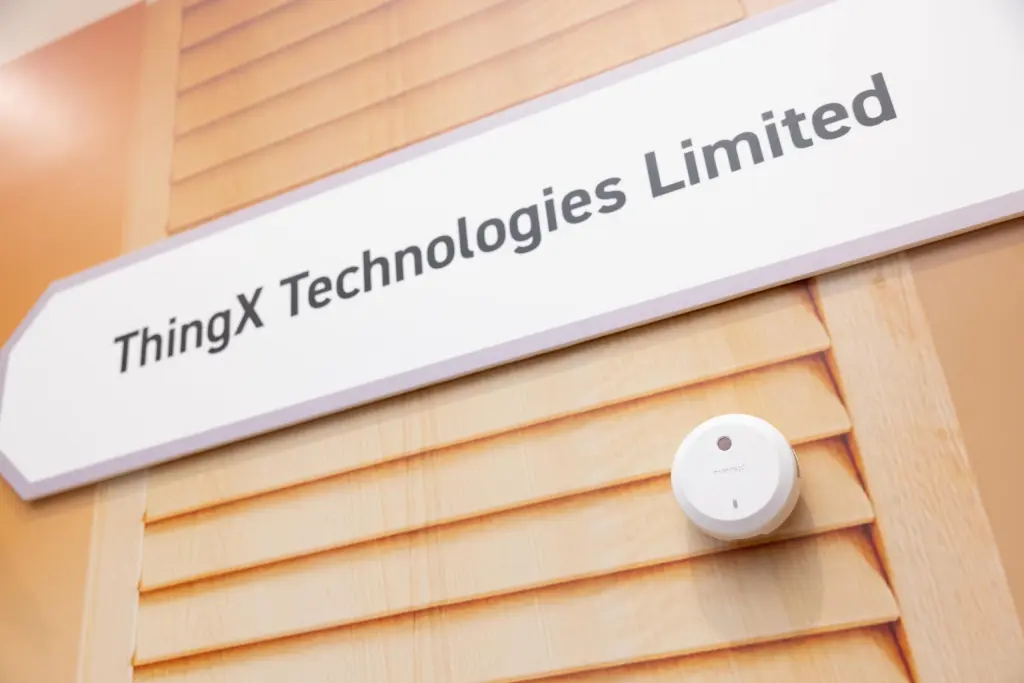
The Collie R1, ready to go / Photo credit: HKSTP
Down the line, Zhao and Gadjali say that there’s tons more use cases for thermal imaging apart from fall detection, especially in areas where privacy is non-negotiable. For example, it could be used in hospitals to monitor if patients are wandering around out of bed, or as occupancy sensors in homes, offices, or hotels.
“The idea is to create a core line of products that can use privacy-preserving sensors for human analytics – this is just the first generation and first step for both the hardware and software,” Gadjali says.
As one of the largest innovation and technology ecosystems in Hong Kong, HKSTP is home to over 2,000 technology companies and aims to develop Hong Kong into an international hub for innovation. The organization is committed to building a world-leading microelectronics ecosystem. It has an extensive network of microelectronic hardware infrastructure such as Hardware Lab, the Sensor Packaging and Integration Laboratory, as well as the Heterogenous Integration Lab.
If you’d like to find out more about HKSTP’s microelectronics ecosystem, click here.
This content was produced by Tech in Asia Studios, which connects brands with Asia’s tech community. Learn more about partnering with Tech in Asia Studios.
Stay updated on the go with our mobile app.
Get latest insights with smoother, more personalized experience through TIA mobile app.
Recommended reads
 Flipkart’s costly late push into quick commerce and food delivery
 Inside Singapore’s government team that kills its own products
 Once an IPO hopeful, SCI Ecommerce nears collapse
 SEA financials tracker: Funding Societies grows revenue by 24%
 Who’s betting big on ChatGPT ads? Not Asian brands
 VC tracker: Granite Asia launches US$50 million fund
 GCash trims IPO ambitions to meet market realities
 Igloo CEO eyes global M&A: ‘We have an appetite to grow more’
 Why SBI paid a premium for Ajaib amid a tough market
 OpenAI warns building for today will cause technical debt





Editing by Stefanie Yeo, Winston Zhang, and Jaclyn Tiu
(And yes, we’re serious about ethics and transparency. More information here.)








📅 Upcoming Events
22 October 2026
Payoneer x CSPN Summit 2026