Peter Cowan · · 5 min read
Is the price right for a discount war in SEA’s ecommerce sector?
Sign up for the Daily Newsletter, sent exclusively to our premium subscribers. We break down the big and messy topics of Asia’s tech and startup community. Get the newsletter in your inbox everyday with a premium subscription.
Hello reader,
The English pop band Frankie Goes to Hollywood famously sang about what happens when two tribes go to war and how the end result is never good. But what about when several ecommerce players are entangled in a price war?
It seems like we’re about to find out in Southeast Asia. Today’s featured story looks at how Alibaba’s new platform Choice is going head-to-head with Shopee, TikTok Shop, and Temu, with cheaper prices as the main weapon in its arsenal.
Consumers may benefit from discounts for now, but in the long run, this price war could have any number of unintended consequences – for the market and the combatants.
Today we look at:
- How a regional ecommerce price war could shake out
- ByteDance appears unlikely to sell TikTok despite US regulatory pressure
- Other newsy highlights such as Binance facing a ban in the Philippines and Japanese investors eyeing up Southeast Asian firms via Helicap deal.
Premium summary
Battle lines drawn in SEA’s ecommerce price war
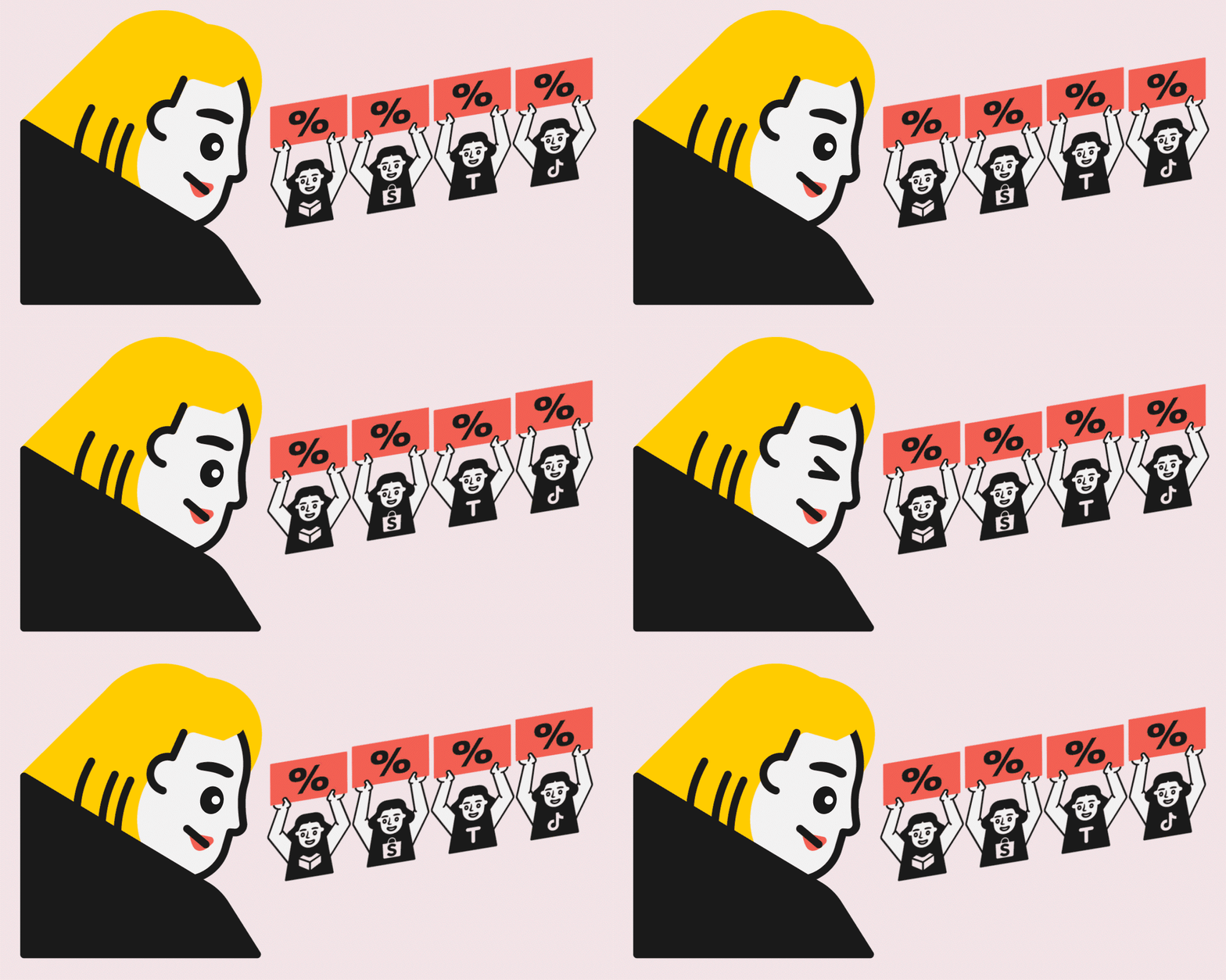
Image credit: Timmy Loen
Chinese tech titan Alibaba has quietly been rolling out its new Choice platform across its Southeast Asian markets over the past year or so, aiming to emulate low-cost platforms Temu and Shein.
And just last month, little known Singapore-based ecommerce firm Qoo10 scooped up US discount retailer Wish for US$173 million.
These moves may signal the first salvoes in a price war in Southeast Asian ecommerce.
- Deals on deals: Choice, accessed via the Lazada app, offers ultra-low prices, as well as shipping and bundle discounts for customers who order three or more items. The timing of its launch somewhat coincided with the entry of Temu into Southeast Asia in August 2023. Temu, which uses a model where the company takes care of everything from warehousing to customer service, allowing it to dictate pricing on behalf of Chinese manufacturers. This model is known as “fully managed” in the ecommerce world.
- Downward pressure: While Temu has been spending more heavily on marketing in the US and the European Union, industry analysts believe it and other discount players can still put pressure on Shopee and Lazada to keep prices low. Joe Zhang, founding partner at Chinese ecommerce consulting firm Sailer Partners, notes that it’s difficult for marketplace platforms to compete on pricing since fully managed players can control the supply chain.
- Holy grail: Profitability may prove elusive for companies competing solely on price, as substantial sales volume is required to make the economics work. For instance, Temu suffers a loss rate of 30% to 35% on orders in the US, according to a December 2023 report from Tech Buzz China. Shein claims to have reached profitability, but this has been largely driven by the US market. With consumer spending in Southeast Asia lower than in the West, that may prove a success difficult to replicate.
Read more: Southeast Asia’s ecommerce players go low to get ahead in price war
No deal
What’s Tech in Asia doing on May 30?
Quick bytes





Stay updated on the go with our mobile app.
Get latest insights with smoother, more personalized experience through TIA mobile app.