- Premium Content It takes our newsroom weeks - if not months - to investigate and produce stories for our premium content. You can’t find them anywhere else.
 Terence Lee · · 6 min read
WeWork’s IPO prospectus: an initial analysis
WeWork (or The We Company as it prefers to be called) has just released its IPO prospectus. The firm is one of the biggest and most prominent co-working space operators in the world by virtue of its seemingly limitless backing from Japan’s SoftBank.
In Southeast Asia, it competes with fellow co-working space providers JustCo, CoHive, and Found – just to name a few.
The prospectus offers a rare look at the numbers beneath the company’s co-working model and hints at what its competitors’ cost structures might look like.
There’s a lot of intrigue regarding the unusual ownership structure and conflicts of interest, but we’ll not go into that here.

This is just an initial analysis to kickstart a deeper discussion. We might do a more substantial follow-up piece if there’s an appetite for it.
Do share your thoughts in the comments section below or reach out to me via email. If you have first-hand experience running a co-working business, I’d especially love to chat with you.
It’s unclear how WeWork’s so-called tech advantage has helped
The firm claims that it’s the cheapest option for companies and workers compared to a standard office leasing arrangement.
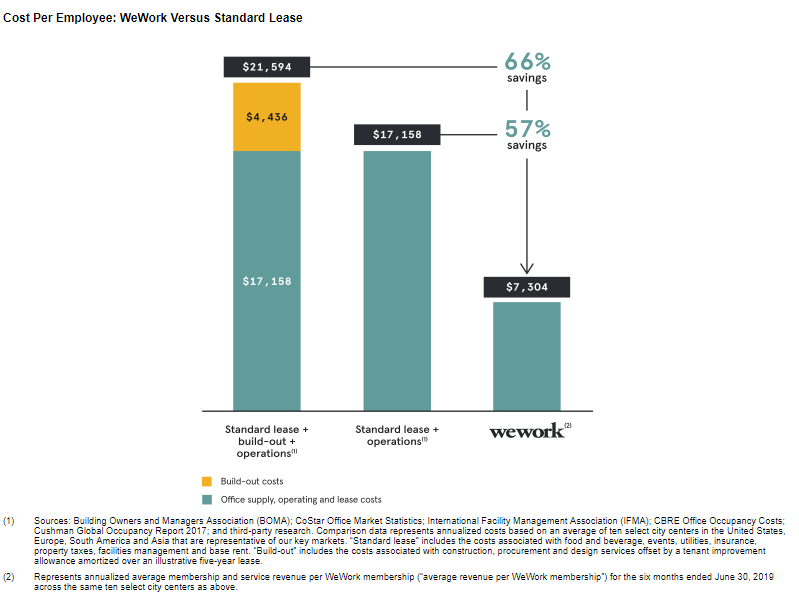
How did it achieve such cost savings? It explains:
Our purpose-built technology and operational expertise has allowed us to scale our core WeWork space-as-a-service offering quickly, while improving the quality of our solutions and decreasing the cost to find, build, fill, and run our spaces. We have approximately 1,000 engineers, product designers, and machine learning scientists that are dedicated to building, integrating and automating the complex systems we use to operate our business.
But a look at WeWork’s actual cost structure paints a different picture:
A lot of WeWork’s spaces have not hit maturity, and that impacts revenue
WeWork is not Uber
Where does this leave the other co-working space players?
Stay ahead in Asia’s tech landscape
This is premium content. Subscribe to read the full story.
If coworking operators can’t prove that they’re much more than millennial-friendly shared offices, they might be in trouble.
We know this is not ideal. ⌛ Sign up in 20 seconds. Cancel anytime.
Our subscriber community includes professionals from these companies:





Stay updated on the go with our mobile app.
Get latest insights with smoother, more personalized experience through TIA mobile app.