- Premium Content It takes our newsroom weeks - if not months - to investigate and produce stories for our premium content. You can’t find them anywhere else.
 Putra Muskita · · 5 min read
Bukalapak’s dilemma: pivot or play it safe?
Bukalapak’s breakup with physical goods, announced in January, was controversial. But so far, signs point to vindication.
Share prices, while still far below IPO levels, closed at 152 rupiah in mid-February – its highest in about a year. The firm also turned net profitable in Q1 2025, its first earnings since the physical goods shutdown.
Bukalapak’s still-fat cash balance means the company has a myriad of options. But a closer look at its numbers hints at a mixed picture.
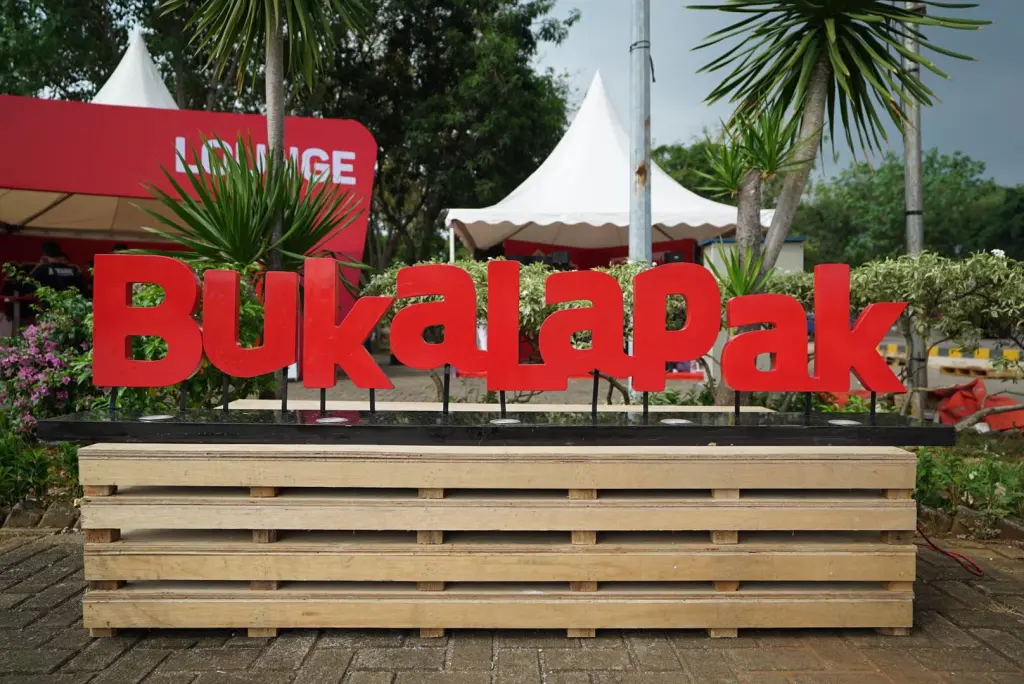
Photo credit: Bukalapak
Parking those funds gives Bukalapak valuable interest income, which has helped it cover operational expenses. Then there are the current downbeat economic conditions – having money stashed away has never felt better.
However, there are risks to sitting on a pile of cash instead of putting it to work. The company may stagnate or miss out on opportunities – things that have killed tech giants in the past.
For the one-time unicorn – the company’s market capitalization now stands at around US$830 million – the dilemma remains: pivot or play it safe?
Even as Indonesia’s tech champions underperform on the public markets, their every move can make or break an entire industry.
No shelf life for digital goods
Bukalapak had two approaches for physical goods. One was its consumer marketplace, where merchants sold directly to customers, while the other was its online-to-offline service Mitra Bukalapak, where it helped supply fast-moving consumer goods to small retailers.
Agung Bezharie’s startup Warung Pintar, which ecommerce enabler Sirclo acquired in 2022, had similarities with Mitra Bukalapak’s business. He calls operating in the sector a “race to the bottom.”
“It’s a game that can make for big GMVs, but the unit economics are very difficult,” explains Bezharie, who is now a partner at VC firm Antler. “Now that capital is expensive, it doesn’t make sense anymore.”
Digital goods have their advantages. They don’t have a shelf life, meaning the inventory doesn’t “shrink,” and requires less overhead – for instance, physical goods need warehouses for storage.
But margins are thinner. Perhaps tellingly, Bukalapak’s gross profit margin shrank to 9% in Q1 2025 – its first quarter without physical goods – compared to 18% in the same period for 2024.
The company itself acknowledged as much in its results presentation.
A big pile of cash
Would-be acquirers welcome?
Stay ahead in Asia’s tech landscape
This is premium content. Subscribe to read the full story.
Indonesia’s first unicorn to IPO is at a crossroads. Staying conservative has its perks.
We know this is not ideal. ⌛ Sign up in 20 seconds. Cancel anytime.
Our subscriber community includes professionals from these companies:





Stay updated on the go with our mobile app.
Get latest insights with smoother, more personalized experience through TIA mobile app.