- Insights This article was written by a TIA community member. Insights pieces undergo the same rigorous editorial process that newsroom-produced articles have.
 Jay Kim · · 6 min read
How this guy left Apple and built a hardware accelerator in Hong Kong
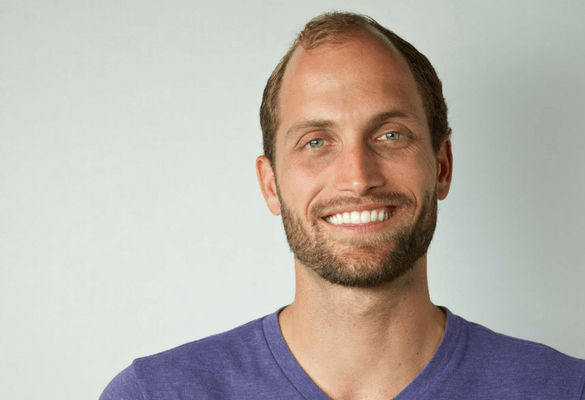
A photo of Bay McLaughlin.
This article is part of Tech in Asia’s partnership with The Jay Kim Show where we publish the revised transcripts from the show’s podcast interviews with top entrepreneurs. This is heavily revised from the original show transcripts. For the full interview, go here.
Brinc is a global hardware accelerator based in Hong Kong, with offices in Shenzhen, Guangzhou, and London. In this episode, I sat down with its co-founder, Bay McLaughlin, who muscled his way into Silicon Valley before realizing the opportunities in the hardware space in China. He decided to quit his job at Apple and moved halfway around the world to Hong Kong to start his company.
In this interview, McLaughlin shares his experience at Apple and in Silicon Valley, some pieces of advice for young entrepreneurs, and how Brinc exactly works.
Who is Bay McLaughlin?
A lot of people call me BetaBay. It’s mainly because I really do think that you should be experimenting and trying things at all times.
I’ve been in tech for about 12 years and I started out in Silicon Valley. I was originally from Virginia Beach in the US. My parents were in the military and were teachers, with no real tech background. But I drove across the country after I graduated from college and got myself into tech in Silicon Valley. I loved it, and it’s where I found my passion in tech, building companies, and supporting founders.
How did you get into Silicon Valley?
I heard about this program where Apple would hire kids in college. They called it the Apple Campus Rep Program, where you help do the promotion, evangelism, and sales on campus. I knew that was something that I’d be passionate about, but they didn’t have a role in my region. So, I had to fight tooth and nail and find a way into the company. I told them that whether they give me a business card or not, I’m going to do the job regardless.
I was fortunate enough to get enrolled with them in college. But they weren’t very good at transitioning their college “farm team,” if you will, where they were breeding and incubating all of us to the actual mothership in Cupertino. So, I couldn’t find my way in. I thought that well, if they’re not going to let me in, I’m going to show up.
So, I drove across the country but did not get the job that I wanted to interview with at Apple. I was interviewing at Google, Facebook, and other places like small startups. I didn’t know anyone and I was sleeping on the couch of a friend of a friend. I finally found my way into a small never-heard-of startup. I got into pretty good debt on credit cards and such at this time because I just kind of knew in my head that I had to be there. I just had this feeling that I was going to be in tech for the rest of my life, and that I just had to go to the mecca.
Then, I was able to dig myself out. The company folded in a year, but that’s actually a really good experience to go through early on. Certainly, one of the things I can recommend to people is to have both corporate and startup experience.
But I think it’s really good to start in a small business right out of school because you’ll be forced to wear so many hats. You’ll be given so much responsibility at a young age. In corporates, you have to specialize quite early and won’t generally get much responsibility.
I went to startups, then back to Apple, a big company, then back to startups. I highly recommend that kind of transition process. Start in a small company to cut your teeth, then go to a corporate later to learn some bigger skills.
What was your experience at Apple like?
I went back to Apple in 2008 where I was involved in building the small to medium business division. This helped me learn not only how to lead at a company like Apple but also the ability to build a division and deal with VCs and tech companies as your customers. A lot of them became my friends and mentors, and, obviously, I’m still very close to a lot of them today.
I left Apple when I was around 28 years old, and this is when a lot of my family members and friends were scratching their heads. Everything was going well with me at Apple. I had the number one reporting team globally in my division. I was living in Silicon Valley, my favorite place in the world. I loved my team and customers. I was making the most money I’ve ever made. Apple was on the rise.
How did the idea for a hardware accelerator come about?
What do you guys do at Brinc exactly?
What trends in hardware excite you now?





Stay updated on the go with our mobile app.
Get latest insights with smoother, more personalized experience through TIA mobile app.