Christopher Quek · · 6 min read
Real-life advice we all need to hear on making family businesses work
The ties that bind the family run deep, where trust and loyalty are always prioritized over other considerations. This is a core value that many family-run businesses take to heart. In a DBS and NUS Business School study, 60.8 percent of SGX-listed companies were family firms, outperforming their non-family counterparts on ROA by 2.8 percent.
On the flip side, there are those who advise against mixing family with business because of the complexities that may strain family relationships. In fact, there are many stories of family businesses collapsing due to irreconcilable differences.
So how does one find success in business, balancing the strengths of family ties and yet ensuring differences are kept to a minimum?
I asked three generational family firms for their insights.
Management style
What structure do families use in managing their businesses, given the need to balance the roles of different members and ensuring a smooth decision-making process?
Segregating roles in management and parent-child mentoring
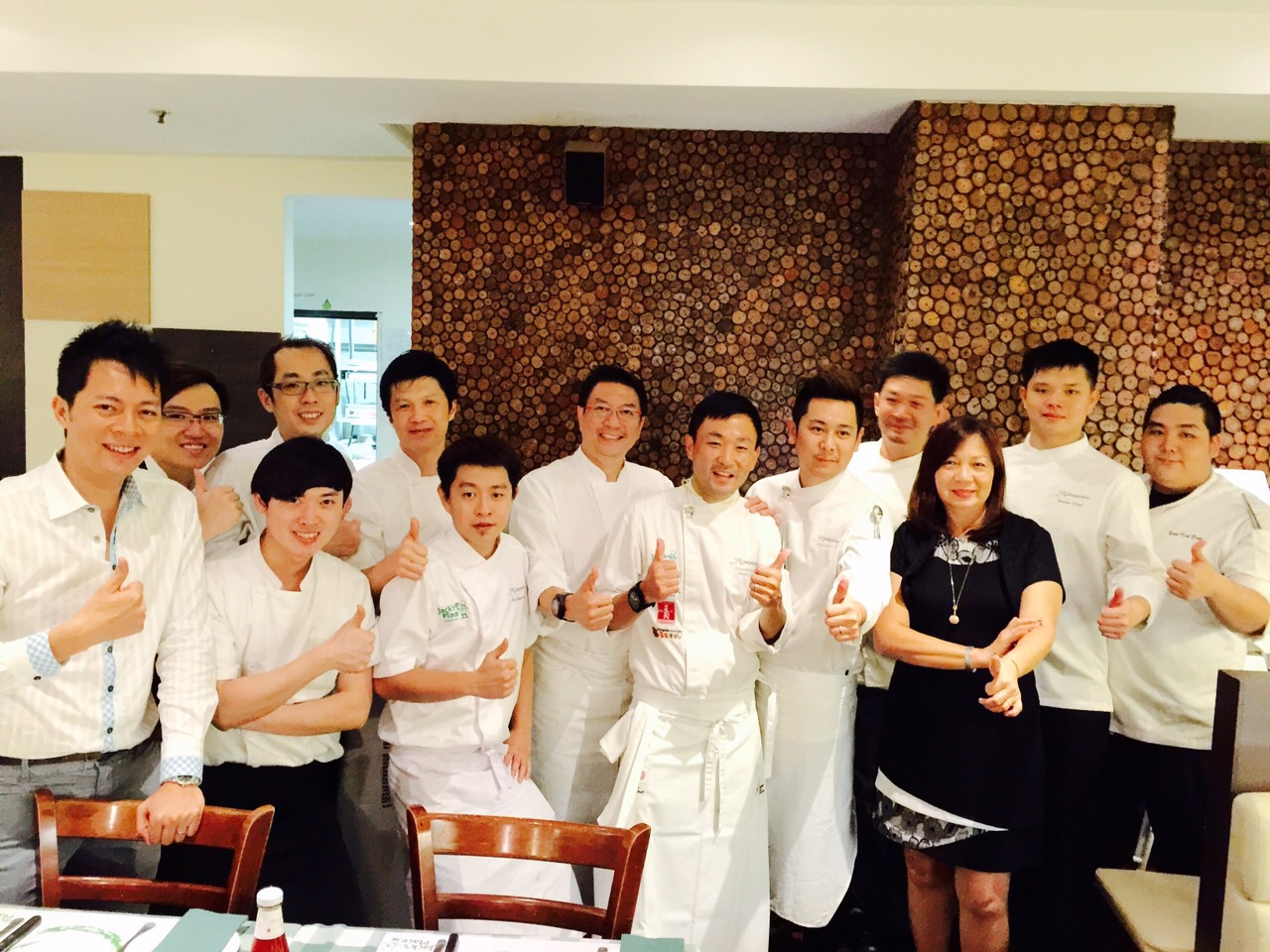
Jerry (far left) and his mother Susan Say (in black) with their team.
Jerry Lim, a third-generation entrepreneur, runs the JP Pepperdine Group together with five other family members.
JP Pepperdine is most known for Jack’s Place Steakhouse, a Singapore family food joint open since 1966. The family-run business has since expanded beyond its many restaurant brands to include two other divisions: Central Kitchen and the Support Centre.
Jerry explains, “We liken ourselves to a football team: the striker role (our restaurants) to score and bring in the revenue, the midfielder role (Central Kitchen) […] to support the restaurants’ needs, and the defender (Support Centre) […] to be the financial gatekeeper, human resources recruitment, and [facilitate] learning and development requirements.”
Jerry and his two cousins, Alvin Say and Jason Ong, are the respective COOs of the restaurant chains, Central Kitchen, and the Support Centre. They are each mentored by their respective second-generation parents, who provide business guidance and knowledge.
By making their job roles clear, it helps to demarcate the boundaries and authority of each family member. The mentoring process provides succession planning and the sharing of experiences.
Placing family as advisors and management

Building and keeping external talent
Resolving differences and conflict resolution
Ending thoughts





Stay updated on the go with our mobile app.
Get latest insights with smoother, more personalized experience through TIA mobile app.