 Jonathan Chew · · 6 min read
Fundraising is time and resource-intensive. This company wants to lighten the load

The term “bootstrapping” has come to mean building a business from scratch with little to no outside help or funding. But in the 1800s, the saying “to pull yourself up by your bootstraps” actually suggested that a task would be impossible to achieve. After all, someone can’t literally pull themselves up by their bootstraps.
That’s why companies have turned to fundraising rounds to fuel their growth.
Akarsh Dhaiya, managing partner of corporate finance advisory firm Rocket Equities, describes the fundraising process as something “close to my heart,” but he admits that for companies, the journey is often not a smooth ride.

Akarsh Dhaiya (right), managing partner of Rocket Equities, with Mark Del Rosario (left), Dhaiya’s partner at the firm / Photo credit: Rocket Equities
Having formerly worked in mergers and acquisitions as well as in the venture capital industry, Dhaiya personally saw the gaps between companies and the capital investments they needed.
“It starts with the strain fundraising takes on the management team itself,” he says, pointing out that many companies don’t have the resources and time to undertake the intensive fundraising process.
This, coupled with the fact that most companies don’t have negotiation experience and might not be ready for the due diligence process, could lead to “detrimental” results – potential backers might end up investing in a company’s competitor instead, he adds. These competitors would scale up faster than them, and subsequent fundraising becomes a challenge.
He continues: “Success breeds success. Not raising capital at the right time is absolutely detrimental to every company.”
Launching Rocket Equities
To help companies overcome these challenges, Dhaiya teamed up with a former partner, Mark Del Rosario, in 2018 to found Rocket Equities.
The pair decided to place their focus on tech and tech-enabled companies in Southeast Asia, having spotted the market’s strong growth potential. By 2030, the region’s rising population growth rate is expected to contribute to a 34% increase in consumption, and Southeast Asia’s growing tech startup scene could see its overall valuation jump by more than 3x by 2025.
The duo spoke with several founders, and what these tech companies wanted in a financial advisory firm was a team with domain-specific expertise, Dhaiya says. This was something that Rocket Equities was well-placed to provide, as many of its members have education in tech or previously worked for tech companies.
“During the fundraising process, companies have to trust our expertise if they want to work with us, and we also have to trust our clients’ business model execution,” he explains.
A great deal for Great Deals
One tech company that turned to Rocket Equities for help was Great Deals, an ecommerce enabler in the Philippines.
Earlier this year, Rocket Equities helped the platform raise US$30 million by gathering all the necessary company information and data it needed to present to an advisor’s network of more than 300 investors in Southeast Asia, China, India, and the United States.
After some investors expressed their interest in the company, Rocket Equities acted on behalf of Great Deals to negotiate the terms of an investment.
“Transactions are like a roller coaster. One day the deal is closing, the next day it could be crashing,” Dhaiya says. “[The] negotiation process is a black box out there, and only people who do it day and night for a living would know [what to do].”
It was during this period that the financial advisory firm’s domain knowledge in areas such as ecommerce, online logistics, fintech, and other tech verticals came through. Knowing the needs of a Southeast Asian ecommerce giant like Great Deals helped Rocket Equities understand the exact pros and cons of each potential investment offer in order to advise it on the best one to accept, he adds.
Great Deals eventually decided to accept the offer from private equity firm CVC Capital Partners, Philippine-based logistics company Fast Group, and Manila-headquartered private equity fund Navegar.
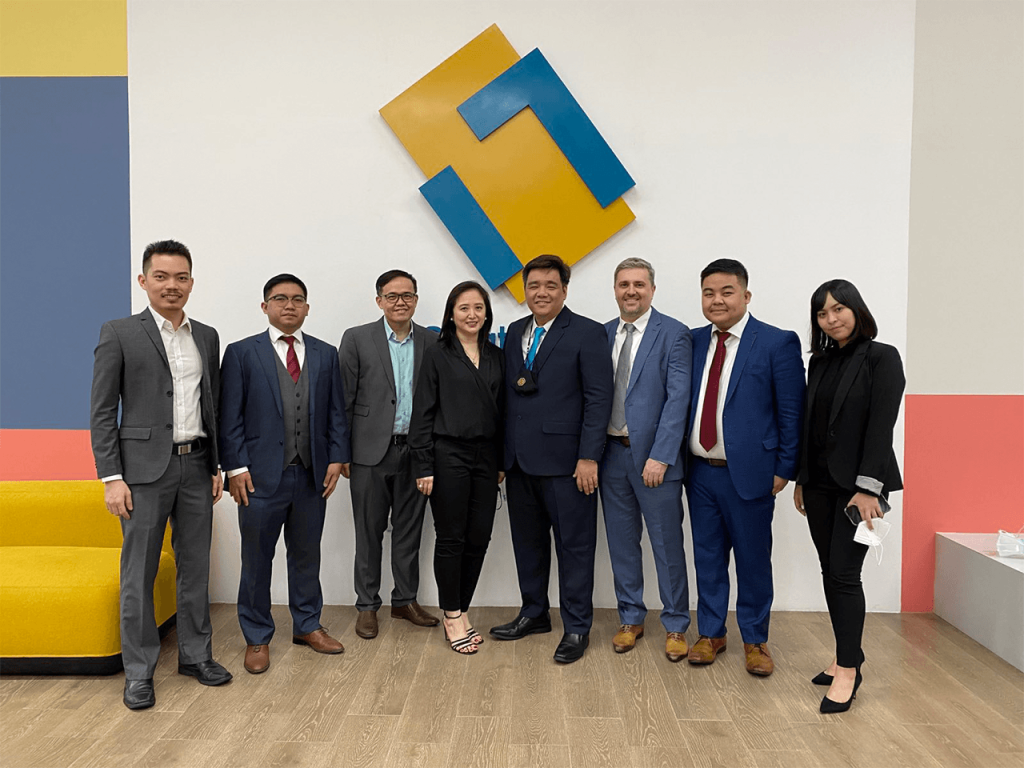
The Rocket Equities team closing out Great Deals’ Series B funding / Photo credit: Rocket Equities
According to Dhaiya, Rocket Equities recommended CVC Capital Partners as the private equity firm has expertise in taking companies public. At the same time, Navegar had experience investing in companies that provided outsourcing for tech-heavy business processes similar to Great Deals.
The addition of the Fast Group, which has an extensive logistics network, would also be a significant boost to Great Deals’ efforts in scaling, he adds.
During the closing stages of the process, Rocket Equities also acted as an intermediary to help Great Deals submit its due diligence requirements, which were to be checked by multiple agencies that were searching for potential loopholes or problems within the platform itself.
“We have to make sure the management [team] was able to run their business while going through these conundrums at the same time,” says Dhaiya.
Dhaiya adds that with this investment, Great Deals is poised to be the Philippines’ first unicorn.
Taking off
This deal was the second time that Rocket Equities helped Great Deals secure capital, with the ecommerce firm having raised US$12 million from Navegar several months before.
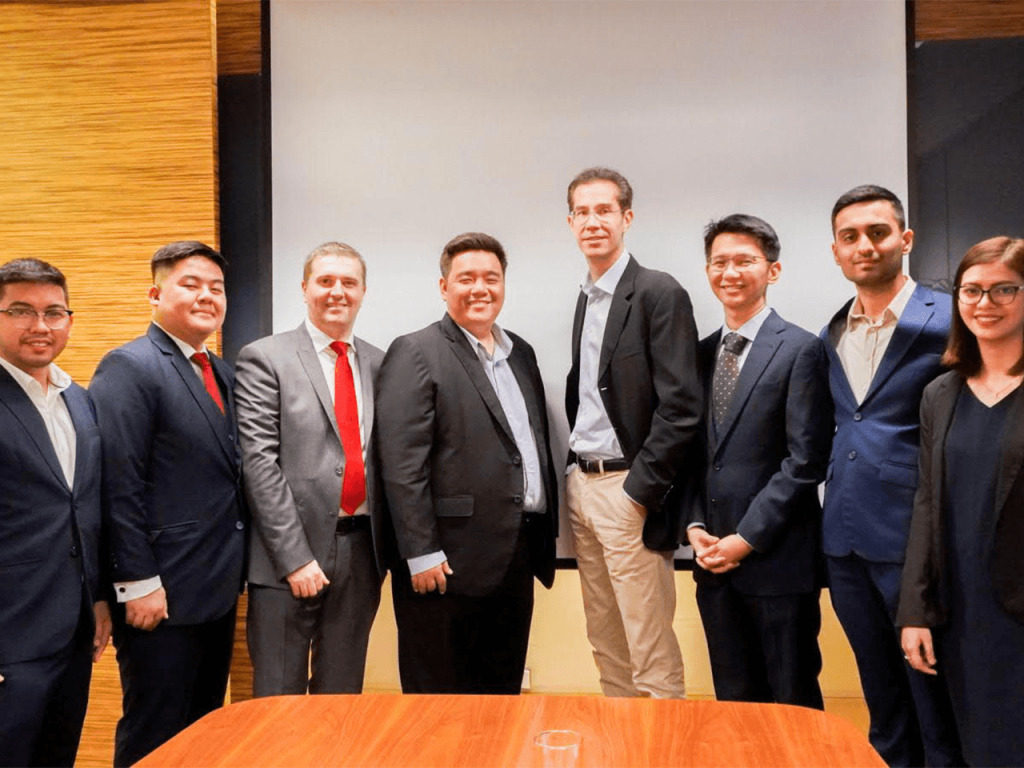
Great Deals’ Series A secured US$12 million from Navegar earlier this year / Photo credit: Rocket Equities
Apart from the ecommerce enabler, Rocket Equities recently helped Mineski, one of Southeast Asia’s largest esports organizations, secure US$10.6 million in its series A funding round. Dhaiya notes that helping Mineski land this investment, which was led by Mizuho Asia Fund, was of particular significance because the esports scene in Southeast Asia is still considered niche and in its nascent stages.
Having success locking in deals like these, the total aggregate value of potential investments that Rocket Equities is advising its clients on has reached more than US$500 million.
Branching out
While the firm has held a steady flow of equity deals like the one it achieved with Great Deals and Mineski, such arrangements usually come with much higher return requirements, often in the range of 25% to 40%.
To help provide its clients with more options for capital, Rocket Equities has since begun branching out into providing debt services, which typically have much lower return requirements than private equity deals.
According to Dhaiya, this figure usually varies per country, but it usually hovers between 8% to 12%.
By lowering return requirements, the financial advisory firm enables companies to use the remaining capital to focus on business development efforts instead, he adds.
In the long run, Dhaiya hopes that Rocket Equities’ efforts will position it at the forefront of corporate financial advisory to tech and tech-enabled companies in Southeast Asia.
The firm also wants to have a positive impact by creating a more transparent and level playing field among investors and businesses in the region.
He says: “We want to enable fair play by holding the hands of entrepreneurs to help them become market leaders.”
Rocket Equities is a Southeast Asia-focused financial advisory firm with a focus on tech and tech-enabled companies. Leveraging its network of 300+ professional investors composed of VCs, PEs, Corporates, and CVCs in APAC, the firm helps companies raise capital in debt & equity markets, acquire competitors locally and regionally, and create an exit for founders.
To find out more about Rocket Equities, visit its website.
This content was produced by Tech in Asia Studios, which connects brands with Asia’s tech community. Learn more about partnering with Tech in Asia Studios.
Stay updated on the go with our mobile app.
Get latest insights with smoother, more personalized experience through TIA mobile app.
Recommended reads
 Indonesian AI startup goes global
 Forrest Li on scaling Sea, building smarter bots, and founder grit
 An AI assistant that joins sales calls and scores team skills
 Beyond the check: Why VCs need more than capital
 SGX’s CEO says it doesn’t need a unicorn to win
 SMEs want AI too, but not the kind Big Tech is selling
 Oatside’s alt-milk rise hits a profitable gear
 Alibaba’s financial health in 12 charts
 Asia’s telcos bundle AI into mobile plans. Will it pay off?
 M-Daq chases bigger clients as revenue falls, losses grow





Editing by Nathaniel Fetalvero and Jaclyn Tiu
(And yes, we’re serious about ethics and transparency. More information here.)



