- Insights This article was written by a TIA community member. Insights pieces undergo the same rigorous editorial process that newsroom-produced articles have.
 Anu Hariharan · · 10 min read
How Pinduoduo’s success serves as a model for the rise of social ecommerce
This article was co-authored by Nic Dardenne.
With Covid-19 forcing us to remain confined in our homes, we’ve modified our social practices. Beyond the social networks we already know and use, we continuously find new ways to integrate social experiences into our online lives.
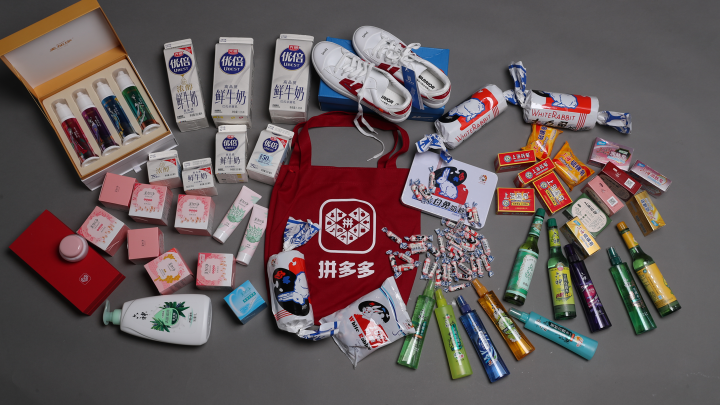
Photo credit: Pinduoduo
At Y Combinator, we are considering what this might mean for the future of ecommerce. For several years now, we’ve had our eye on Pinduoduo. As China gradually recovers from the pandemic’s impact, the company, with its social shopping approach, seems well-poised to fully capture the offline-to-online transition in commerce.
A bit of background
Pinduoduo’s success in China suggests there is a huge opportunity for social commerce platforms to emerge in other regions.
When it launched in 2015, there was little room for a new ecommerce platform. Two major players, JD.com and Taobao/Tmall (both sub brands of Alibaba), were already dominating China’s online commerce, much like how Amazon now dominates the US. In fact, the two companies generated a combined gross merchandise value of US$433 billion that same year.
Five years later, Pinduoduo is defying expectations, skyrocketing from a startup to a company worth US$$93.4 billion. Its active buyer base, which numbers 585 million, has generated a gross merchandise value of over US$144 billion within the last twelve months. In 2020, it became China’s second-largest ecommerce platform on an active user basis, just behind Alibaba.
Pinduoduo found room in the ecommerce space, not as a competitor to search-based websites like JD.com, but as a new ecommerce platform focused on interactive and digital social shopping experiences.
While social shopping online may seem like a new concept, the reality is that shopping, whether online or in the physical world, is meant to be interactive and fun, with purchases informed by friends and family. But ecommerce platforms like JD.com, Alibaba, and Amazon don’t account for this; instead, they focus on efficiency, conversion funnel, and purchase rates.
Pinduoduo, on the other hand, has tried to mimic the offline shopping experience by building communities with their team purchase model, driving engagement through interactive games and rewards, and offering personalized experiences and value via recommendations.
Consumers’ desire for social engagement while shopping is highlighted by sales projections within different categories in online shopping: Only 29% of apparel, 11% of health & personal care, and 3% of food & beverage purchases were expected to happen digitally in 2020 in the US, compared with the books/music and computer electronics categories, which come in at 55% and 43%, respectively.
These numbers reveal that social shopping is particularly important in categories where consumers seek feedback or recommendations from friends.
In our view, Pinduoduo’s rapid success in social commerce will be replicated by others globally – a trend that will continue to drive commerce in social-driven categories online.
Creating communities via team purchase
The core of the Pinduoduo experience is the concept of team purchase, where buyers form a group in order to receive discounts from suppliers.
Daily check-ins
Price chop
Card program
Mini games
Creating value by offering personalized recommendations
The future of global ecommerce





Stay updated on the go with our mobile app.
Get latest insights with smoother, more personalized experience through TIA mobile app.