- Premium Content It takes our newsroom weeks - if not months - to investigate and produce stories for our premium content. You can’t find them anywhere else.
 Nicole Jao · · 10 min read
Explaining Pinduoduo, and whether the model can work in Southeast Asia
The growing popularity of social ecommerce in China has created a wave of disruption that changed ecommerce for good. Upstarts like Tencent-backed Pinduoduo have become a serious threat to Chinese ecommerce heavyweights Alibaba and JD.com.
This new form of ecommerce has captured a sizable portion of the market. It’s also generating buzz in Southeast Asia, with prominent players like Shopee and Lazada as well as startups like Ezbuy testing the waters.

Photo credit: Getty Images
Since startups around the world now draw inspiration from China, it raises the question of whether the Pinduoduo model could work in Southeast Asia.
The region’s untapped potential is appealing, but startups need to navigate challenges such as logistic hurdles and low digital payment adoption in remote areas.
The rise of social ecommerce
Over the past 20 years, China has seen impressive growth in the ecommerce sector. But Pinduoduo and other newcomers such as the Little Red Book and Shihuituan are challenging the traditional business-to-consumer model.
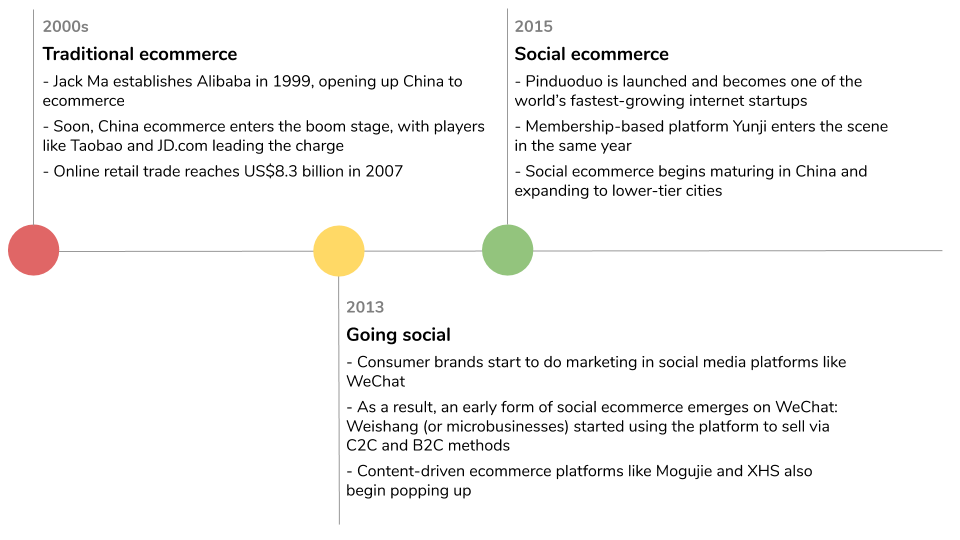
China’s shift from traditional to social ecommerce
Pinduoduo’s business thrives on bulk sales of discounted products – sometimes up to 90% off – and taps social media and messaging apps to boost traffic. The platform offers special pricing to customers who do the legwork, such as user acquisition and marketing. It also encourages social sharing by giving a better deal to users who share the code with others.
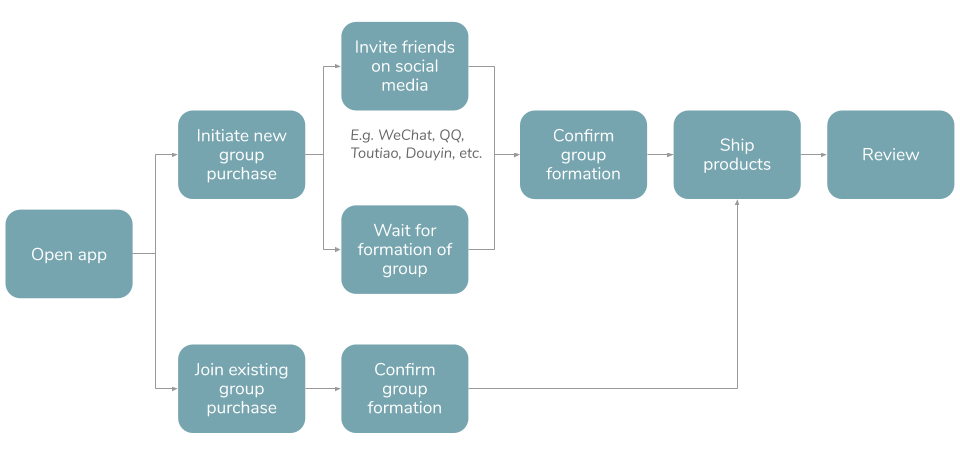
How Pinduoduo works
However, the model has yet to achieve cost efficiency, and industry watchers have been skeptical of how the company runs up losses to lower the prices of products. And yet, Pinduoduo has shown its ability to not only survive but thrive in the cutthroat ecommerce market.
The company went public in July 2018 on Nasdaq, just three years after its founding. In the fourth quarter of 2019, it had 481.5 million average monthly active users, up 77% from the same period last year.
Major Chinese online marketplaces have also copied Pinduoduo. JD.com launched a group-buying app called Jingxi last year. In January, Alibaba rolled out a new feature within the Taobao app called Taoxiaopu, which pays users a commission if they convince others to buy the products.
The C2M model
Fertile ground for social ecommerce
Potential barriers
Can WhatsApp be the WeChat of Southeast Asia?
Social ecommerce for Southeast Asia
Gunning after groceries
Stay ahead in Asia’s tech landscape
This is premium content. Subscribe to read the full story.
C2M, the business model behind the social ecommerce app’s rise, might be harder to implement in Southeast Asia.
We know this is not ideal. ⌛ Sign up in 20 seconds. Cancel anytime.
Our subscriber community includes professionals from these companies:





Stay updated on the go with our mobile app.
Get latest insights with smoother, more personalized experience through TIA mobile app.








📅 Upcoming Events
22 October 2026
Payoneer x CSPN Summit 2026