- Premium Content It takes our newsroom weeks - if not months - to investigate and produce stories for our premium content. You can’t find them anywhere else.
 Emmanuel Samarathisa · · 6 min read
How tech destroyed Astro’s dominance in Malaysian pay TV
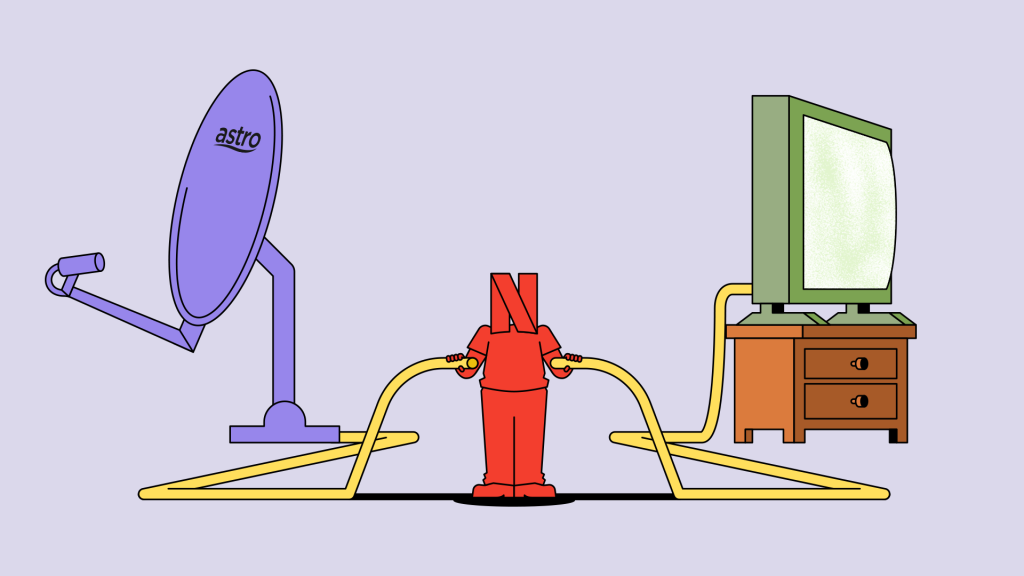
Image credit: Timmy Loen
Astro is Malaysia’s “largest content creator.” That’s according to the group’s CEO, Euan Smith, in the firm’s July 28 bourse filing. What followed wasn’t the usual chest-thumping of higher sales or record-breaking profits but the announcement of a retrenchment.
Competition in an “increasingly borderless and digital world” is “relentless,” Smith said at the time, “especially in a challenging economic landscape.” He added that the layoffs were purely voluntary.
Astro didn’t respond to requests from Tech in Asia on the specifics of the exercise.
Did the move come as a surprise? Kuala Lumpur-based media analysts we spoke to say no. The media giant provides a wide range of content across different media and languages, including a 24/7 news channel. But competition has long been the “antithesis of Astro’s business model,” says one analyst – the company had a 20-year monopoly deal on satellite pay TV in Malaysia.
When its license to operate as a monopoly ended in 2017, Astro’s revenue stood at 5.6 billion ringgit (US$1.2 billion). By 2023, this had declined to 3.8 billion ringgit (US$831 million).
Cutting the cord
While Netflix and other streaming platforms can be blamed for the struggles of companies like Astro, the analyst says that consumers themselves began shifting their appetite for pay TV in 2016.
Viewers became “cord-cutters,” the previous analyst says, referring to the term used for consumers who canceled multichannel pay TV services for content streamed on the internet, which is either significantly cheaper or free.
Netflix exploded in 2016 when the company declared that it would reach every market by the end of that year. When it made that announcement on January 11, Astro’s shares fell 7.2%.
This forced traditional media players, including the Malaysian company, to adapt. Astro’s management in June this year told Malaysian equity analysts that it had pivoted to video-on-demand services with the launch of Sooka. The streaming platform targets younger viewers and cord-nevers, referring to a group of viewers that have never used commercial cable or satellite TV.
Astro claims that two-thirds of new Sooka customers are under the age of 40.
The company also made two significant changes to its business model. First, it decided to be a so-called super aggregator, offering Netflix, Disney+, and other services to its viewers. It hoped that by hiking the overall price of its bundled services, it could stay afloat.
The logic was that while viewers could access these streaming platforms easily – and even if they’d be paying more to Astro – the cost to subscribe to all of these services would be higher than Astro’s bundle price.
Second, the firm is offering broadband packages tied with its TV packs. To execute this, Astro has partnered with another dominant player: telecommunications firm Telekom Malaysia. This gives Astro access to more than 6 million homes nationwide, according to estimates from analysts we spoke to.
Troubles, ahoy
Going private?
Stay ahead in Asia’s tech landscape
This is premium content. Subscribe to read the full story.
The media giant had a 20-year monopoly but is struggling to adapt to competition.
We know this is not ideal. ⌛ Sign up in 20 seconds. Cancel anytime.
Our subscriber community includes professionals from these companies:





Stay updated on the go with our mobile app.
Get latest insights with smoother, more personalized experience through TIA mobile app.