
KPMG and CB Insights today released the Pulse of Fintech, a quarterly report on the state of fintech across the world.
According to the report, 218 deals worth a total of US$4.9 billion were closed across the globe between January and March – more than double the US$1.9 billion that was invested into fintech startups during the previous quarter.
That spike has a lot to do with what’s been going on in Asia. In terms of investment money, the continent alone closed US$2.6 billion worth of deals, beating the global total raised in the fourth quarter of 2015. That’s also more than five times the US$500 million closed in Asia last quarter.
The deals weren’t equally spread out, though. The numbers are skewed by a few big investments that took place in China, namely Lu.com, which raised a series B round of US$1.21 billion, and JD Finance, with a round of US$1.01 billion.
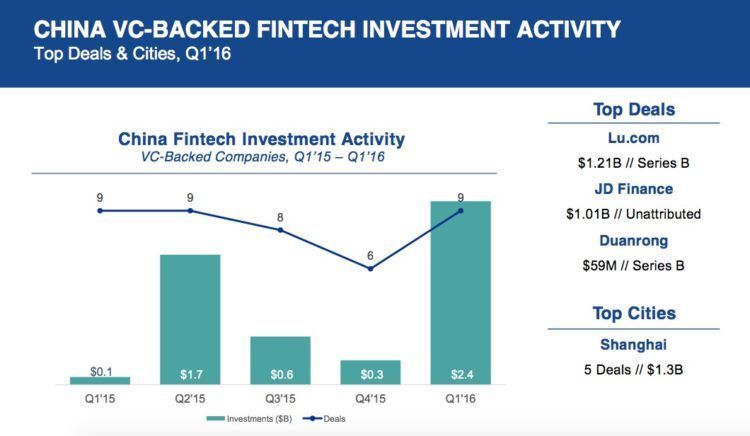
In total, Asia witnessed 36 deals across its shores – which is only a sixth of the total that took place across the globe. Nine deals were struck in China, and 15 in India, which seems to be trying out a different strategy altogether.
India is investing small but in many
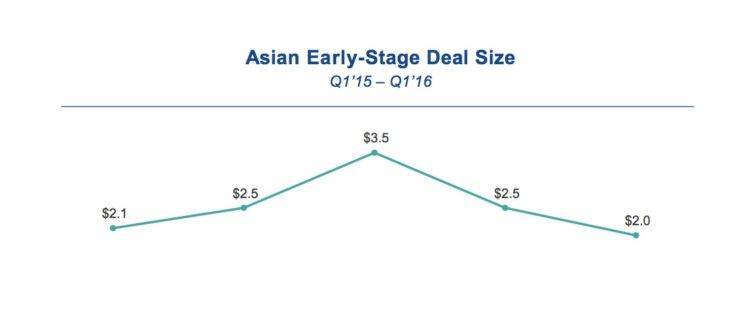
While the number of early stage investments in Asia grew from 15 percent in the fourth quarter of 2015 to 39 percent in the past quarter, their average size dropped to US$2 million, a 5-quarter low. It’s definitely not China bringing in those small numbers – five of its nine fintech deals were later stage and ranked amongst the highest in the world.
Singapore brought in a few small deals, like Call Levels which secured an undisclosed pre-series A round in February.
But with 15 closed deals totaling just US$73 million, India’s fintech investments have been bearing the weight of Asia’s smaller deals.
The last time India closed this many investments was in the third quarter of 2015. At that time, however, the total was US$836 million, more than ten times the amount that went into fintech startups this quarter.
Asia as a whole





Stay updated on the go with our mobile app.
Get latest insights with smoother, more personalized experience through TIA mobile app.