Terence Lee · · 4 min read
Personalization-as-a-service is the new thing in ecommerce
Herald the rise of Alibaba as much as you’d like, there’s no disputing Amazon is still the gorilla of the ecommerce world, at least revenue-wise.
Being a giant has its perks. You can invest in technology your competitors can only dream of. One such tech is personalization, that is, utilizing personal data to modify a person’s experience of using the site with the aim of making him buy more stuff.
Building such capabilities from scratch doesn’t just need web development knowhow. You need to be well-versed in data analytics and consumer behavior. These things are out of reach of small online retailers and offline brands venturing online.
But startups are now rushing in to fill this gaping hole. One of them is Linkcious, a Singapore startup founded by serial entrepreneur Weichang Lai (disclosure: Lai owns a tiny amount of equity in Tech in Asia) and computer engineering fresh grad Jason Tan. Both own an equal stake in the company.
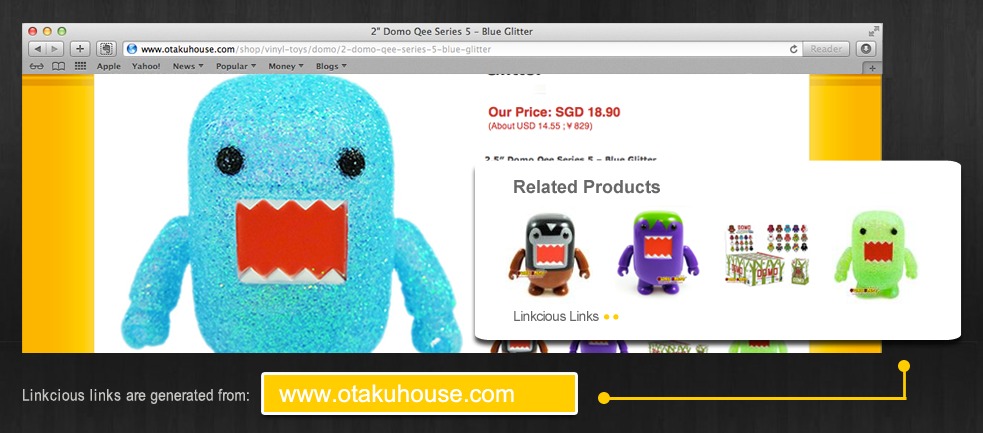
Linkcious offers users a product recommendation widget which users can embed onto their websites. It allows online retailers to save thousands of dollars in development costs and drastically shorten deployment time.
The product promises to boost a user’s bottom lines through contextual recommendations. In other words, it crawls the content on the page you embed the widget, and then recommends products based on that. Soon, it hopes to factor in user interactions, such as which ads they click on.
Lai developed the product to meet his own business needs. He runs Otaku House, an online and offline retailer selling Japanese toys and oddities. And like many ecommerce companies, he ran into a brick wall.
“There was no way for small merchants to show related products beyond putting them into categories. So we built one in-house. It works very well, and it dawned upon me that we can spin this off. That was two years ago, and we took our time to develop this,” says Lai.
Linkcious has received a small grant from the Singapore government’s iJAM program to speed up development and prove the concept. It’s now beta testing with a few businesses ranging from a few hundred stock-keeping units (SKUs) to hundreds of thousands.
Welcome the competition
It needs to move fast. At least a couple of other startups in the region are also launching their own personalization engines. In Malaysia, Predictry has begun running trials and raised US$230,000 in seed funding from the Malaysian Development Corporation (MDeC).
While some firms are charging US$30,000 to implement recommendation widgets, Predictry founder Seng Teong Chua, who did global business development at Rebate Networks, contends that he can do it for much less, since older players have sunk a lot of money into legacy infrastructure and as a result need to charge more to recoup costs.
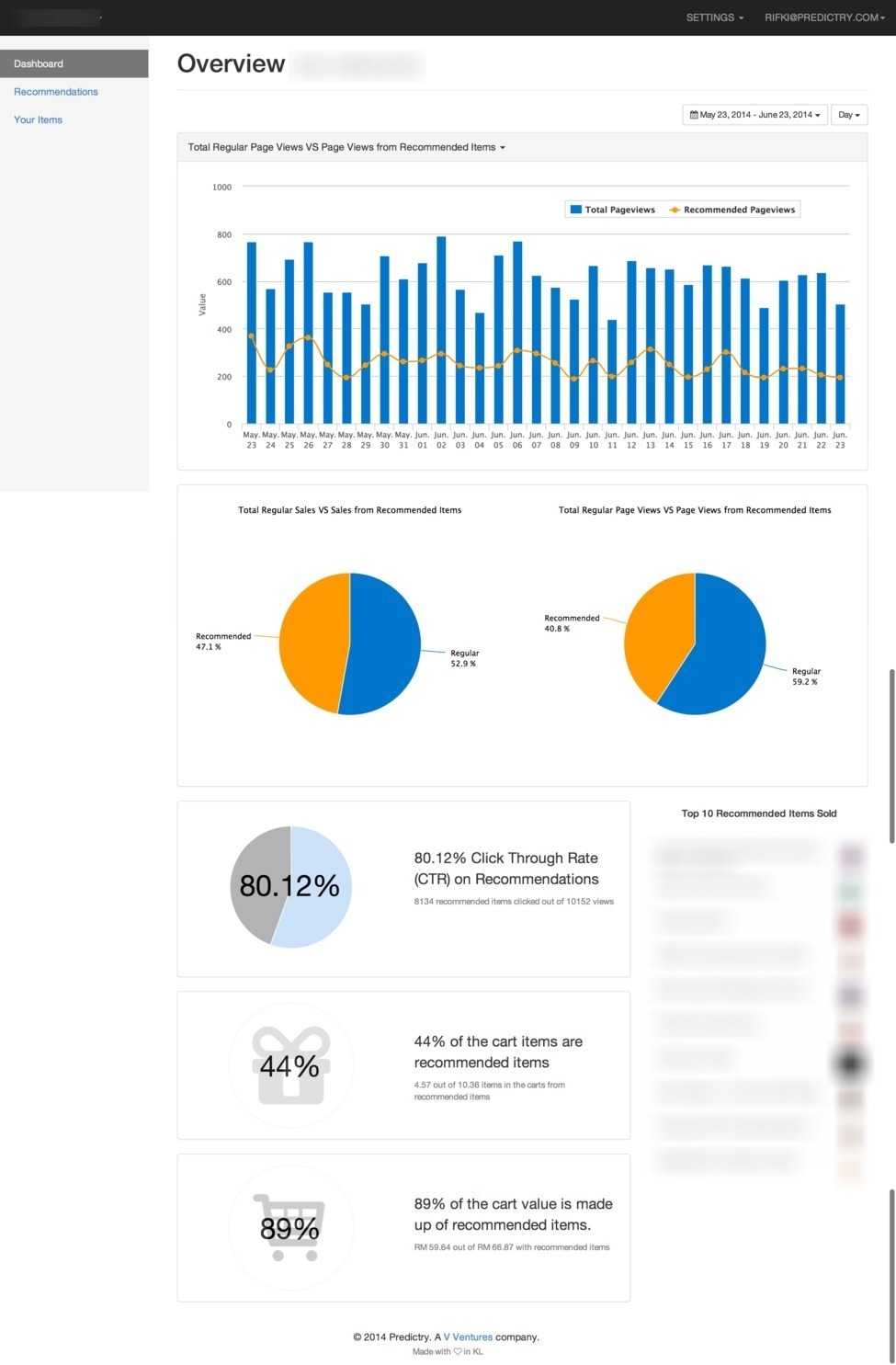
Predictry’s dashboard





Stay updated on the go with our mobile app.
Get latest insights with smoother, more personalized experience through TIA mobile app.