
Image credit: Extreme Reality
Half a decade ago, motion sensing was a bit like the virtual reality (VR) of its time – it was revolutionary, exciting tech that promised to radically change our entertainment. Granted, the scope of motion sensing tech was much narrower than VR’s, but the teething pains were quite similar. There wasn’t a clear enough use case, quality content was scarce, and the dedicated hardware was expensive or a chore to install and operate.
Motion sensing failed to impress audiences and subsequently died an untimely, lonely death.
As far as Extreme Reality is concerned, though, that is not dead which can eternal lie. The company has created a software development kit (SDK) that enables developers to turn any type of device-integrated camera – like your webcam or your phone shooter – into a motion-sensing device.
According to the Israeli startup, the software allows any kind of camera-enabled device to analyze a person’s body in 3D and perceive that person’s movements, enabling motion sensing and control for “any computing device or operating system.”
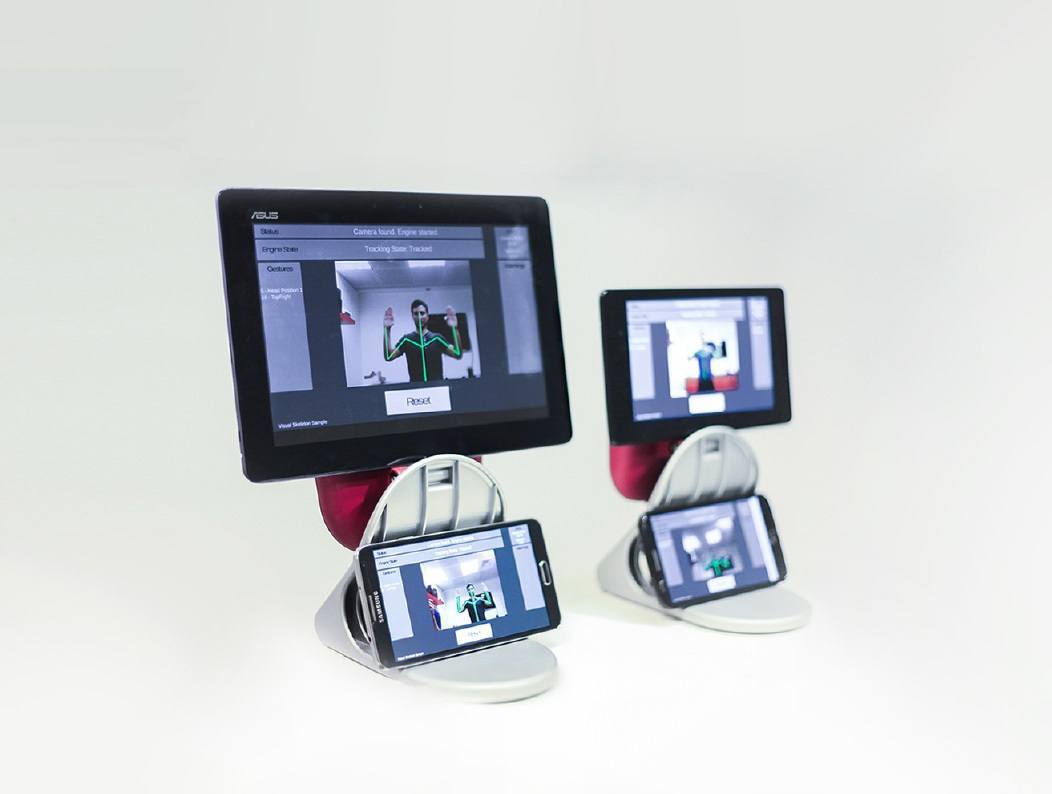
Image credit: Extreme Reality
Extreme Reality highlights some diverse applications of its technology. Game developers X-Tech and Kokonut Studio have used it to enable motion control features in their mobile games, Snowball Effect and Sky Hero respectively. The player can simply place the phone or tablet on a table, step back, and control the games with their body.
It may not sound like the most attractive proposition – motion control games never did quite manage to bridge functionality and fun, and I haven’t tested this particular game to say for sure if it works or not. However, it’s impressive because just a few years ago, you had to buy an Xbox console with the Kinect accessory to do something like that.
Possible applications include education, marketing, and more.The Technology Research Center at Finland’s Turku University has put the tech to use in research for exercise applications for the elderly. Titled Perceptions of the elderly users of motion tracking exergames, the research (PDF link) used Extreme Reality’s technology instead of spending money on expensive 3D cameras and sensors.
Other possible applications include education, marketing, and more, the startup says.
Extreme Reality was founded in 2005 and has so far raised US$18 million in funding. It currently holds 26 patents worldwide for its technology.
Israel actually has some history with this kind of tech – compatriot company PrimeSense, acquired by Apple in 2013, was behind the technology that went into the original Microsoft Kinect.





Stay updated on the go with our mobile app.
Get latest insights with smoother, more personalized experience through TIA mobile app.












📅 Upcoming Events
22 October 2026
Payoneer x CSPN Summit 2026