Sarah Dai · · 3 min read
Alibaba’s tech brain trust sees new big trends in 2020
As the new year settles in, concerns remain about the protracted trade and tech war between the US and China, the world’s two largest economies.
Still, that situation has not deterred the science and technology innovation brain trust of ecommerce giant Alibaba Group Holding from dusting off its crystal ball to predict the top tech trends for the first year of this new decade. New York-listed Alibaba is the parent company of the South China Morning Post.
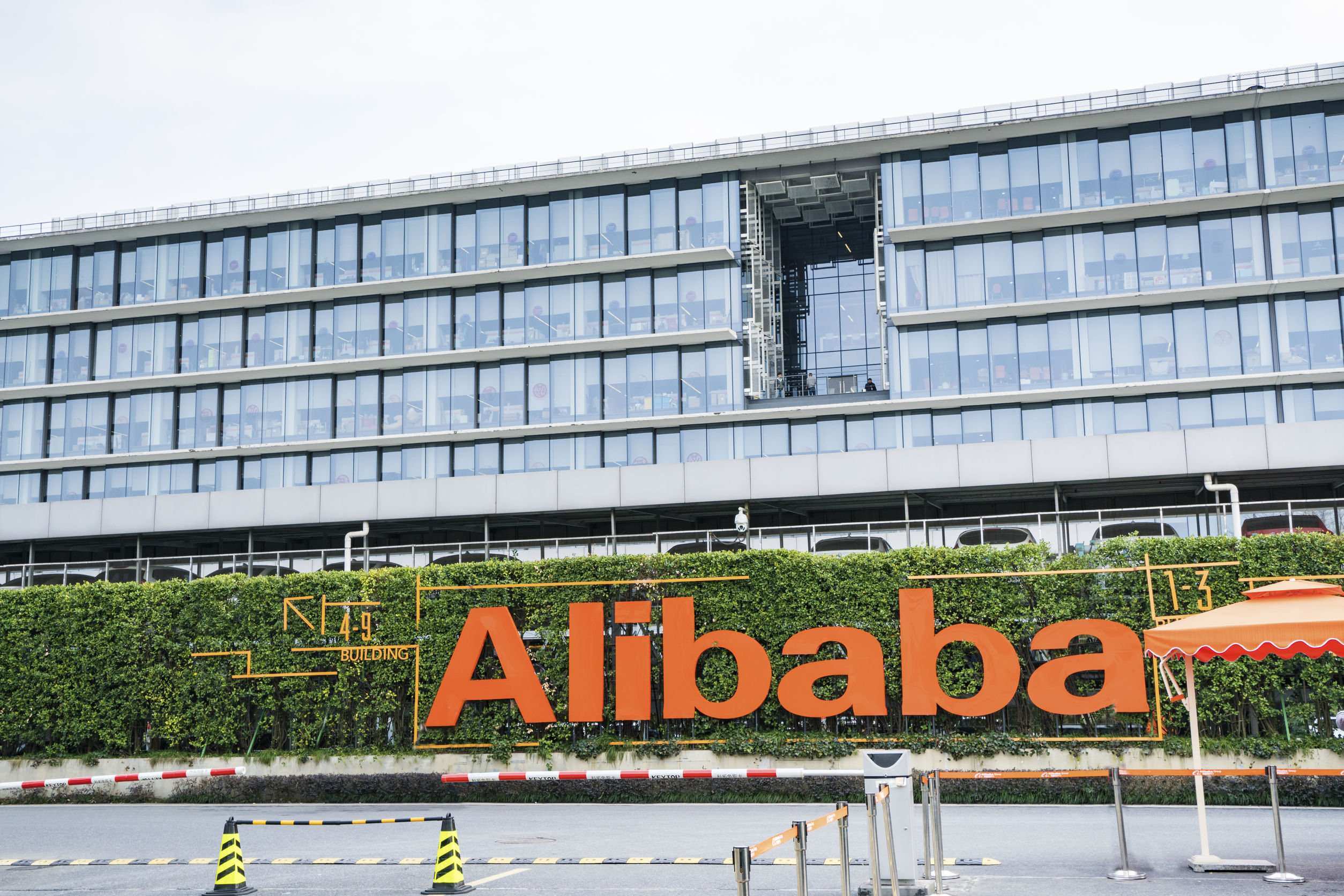
Photo credit: caoyuan73 / 123RF
The forecasts made by the Alibaba Damo Academy, which has facilities in seven cities across Asia, the Middle East, and North America, mainly revolve around the rapid advances expected in the field of AI and the industrial internet of things.
Whichever way the US-China conflict pans out, the next 12 months are likely to continue to be challenging for the global tech industry. Here are some of the highlights from the academy’s predicted trends for this year:
1) AI development will take a leap to so-called cognitive intelligence. Recent AI advances have seen machines surpass humans in the areas of speech-to-text and natural language processing as well as video analysis. The Alibaba Damo Academy predicts those feats in perceptual intelligence will be overtaken by the progress in cognitive intelligence.
Deloitte has defined cognitive intelligence as software programmed to augment human cognitive functions, which are mental processes that enable people to carry out any task. For enterprises, cognitive systems can be used to automate predictions and optimize operational processes.
“These make machines to understand and utilize knowledge,” the Damo Academy said.
It said that the next major advance in AI will tap into fields such as cognitive psychology and human social history, while combining techniques like causality inference and cross-domain knowledge graph.
2) In-memory computing to push forward next-generation AI systems. With the rapid development of data-driven AI algorithms in recent years, it has come to a point where the hardware becomes the bottleneck in the exploration of more advanced algorithms, according to the Damo Academy.
In-memory computing moves data, which has traditionally been stored in database software hosted on hard discs, into random access memory. That exponentially speeds data, according to Hewlett-Packard Enterprise, because RAM-stored data is available instantaneously, while data stored on discs is limited by network and disc speeds.
3) The industrial IoT will power digital transformation. When 5G mobile services are more widely available this year, manufacturing enterprises are expected to get smarter as the next-generation wireless technology helps them realize IoT’s full potential.
IoT envisions a self-configuring, adaptive, and complex network that interconnects physical objects, each containing embedded technology to communicate, gather data, and interact with mobile applications or other networks.
Industrial IoT links together three key elements – intelligent machines, advanced analytics, and people at work – whose data are gathered by connected IoT devices. The processed information would help companies pursue higher levels of efficiency, productivity, and performance.





Stay updated on the go with our mobile app.
Get latest insights with smoother, more personalized experience through TIA mobile app.