C. Custer · · 3 min read
Here’s why that stunning web traffic from that Chinese startup is probably bullshit
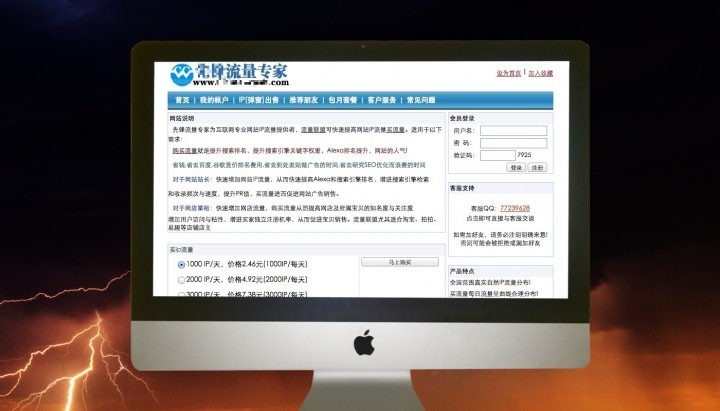
If you’re looking to get your ads onto Chinese websites and expose your product or service to the Chinese market, or if you’re looking to invest in a Chinese startup, consider this a warning: those traffic numbers you’re seeing might not be real. Here’s why:
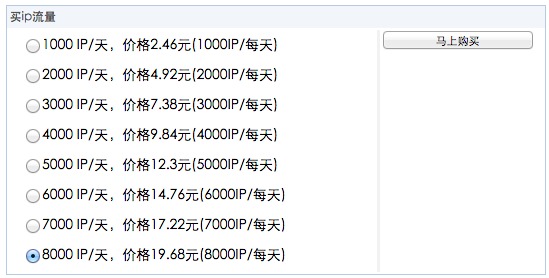
That’s a screenshot from a Chinese website that’s selling web traffic. The cheapest option, visits from 1,000 unique IPs per day, will run you just RMB 2.46 (US$0.40) a day. 8,000 visits a day costs just RMB 19.68 (US$3.22). The site in question, which we won’t link to as we don’t wish to contribute to the site’s business, is something that Tech in Asia found easily by searching Baidu, and it claims that it can even help webmasters increase their Alexa ranking.
And that’s just one example. Our cursory search turned up numerous other Chinese sites selling traffic, some at prices even lower than those listed above.
The buying and selling of web traffic is a global phenomenon, of course, and it makes sense to be skeptical of pretty much any traffic numbers you see. But in China, buying traffic is so cheap that anyone can afford it. I checked a number of global traffic sales sites, and none of them could match the Chinese site’s prices, especially given that the Chinese site claims to be providing Alexa toolbar visitors.
And if you think Chinese companies aren’t using these services frequently, you’re mistaken. It’s likely primarily small companies and startups partaking – an established company likely wouldn’t need to bolster its numbers in such a backhanded way – but buying traffic in China is pretty common. In a China Youth Daily report on the subject, one Chinese entrepreneur told the paper: “To do any website well you need to buy traffic. This is something that everyone in [China’s] internet circles understands.”
There are lots of reasons to buy fake traffic, but among the biggest ones: to hoodwink potential advertisers and investors. Both advertisers and investors are looking for sites with a significant following that will help them secure a return on their investment, after all. Showing them inflated numbers can help startups and other small companies that don’t have enough legit traffic to seal the deal.
And while tricking advertisers and investors into thinking your site has more users than it actually has is certainly immoral, it’s not entirely clear whether or not it’s illegal in China. Li Yi, the secretary general of a Chinese internet industry group, told China Youth Daily that at present, regardless of the regulations on the books, there aren’t really any legal avenues for companies that have been tricked by fake traffic. “It’s very difficult for [these cases] to get into the legal system, and there’s no channel for lawsuits, so everyone just leaves the matter unsettled,” he told the paper.
(Source: Sina Tech)





Stay updated on the go with our mobile app.
Get latest insights with smoother, more personalized experience through TIA mobile app.