- Premium Content It takes our newsroom weeks - if not months - to investigate and produce stories for our premium content. You can’t find them anywhere else.
 Putra Muskita · · 7 min read
SEA founders warm up to venture debt as tech winter lingers
Thu Huong Le and Collin Furtado contributed to this report.
Y Combinator co-founder Paul Graham recently gave a stark warning to startup founders: “Don’t take venture debt unless you have no other choice.”
“Talked to yet another founder whose company was killed by venture debt. I asked why they took it. He said they just tacked some onto the end of one of their funding rounds. It seemed like free money,” he posted on X (formerly Twitter).
As Southeast Asia’s tech winter lingers, many of the region’s startup founders are coming to terms with having little to no choice. Some are even starting to “think about what else [they] can do to basically get more capital buffer and grow sustainably or at a cheaper price,” says Paul Ong, a partner at Singapore-based InnoVen Capital.
Venture debt is a type of loan designed for startups and growing companies, especially those backed by venture capital. To raise money or fund growth, founders can take on venture debt instead of giving up more ownership or equity in their company. This option is often used to extend a company’s runway or to bankroll expansion between funding rounds.
In this tech winter, it’s evident that many startups need extra funds.
Tech in Asia’s database shows that in 2022 and 2023, startups in Southeast Asia raised over 200 equity bridge rounds – the highest in five years. VC firms frequently back these rounds – usually pre-series A or pre-series B – when their portfolio startups need extra cash between funding stages.
Thus, the appeal of venture debt is clear. While VCs are demanding more from startups, especially in terms of profitability, venture debt offers substantial funding with more favorable terms.
But taking on debt means making repayments, which can quickly drain a startup’s runway. Plus, venture debt often includes equity-like components, so startups may still need to give up shares down the road.
Is this trend beneficial for Southeast Asia’s maturing tech ecosystem?
Why now?
A June report from Singapore-based InnoVen Capital revealed that 46% of surveyed founders in 2023 preferred venture debt for their next round of financing, up from 23% in 2022.
This suggests that venture debt is getting more popular in this region, especially when founders and investors disagree on equity valuations.
Jussi Salovaara, co-founder and managing partner of early-stage VC firm Antler, believes that venture debt is a “healthy part” of any tech ecosystem, and it has historically been underrepresented in Southeast Asia.
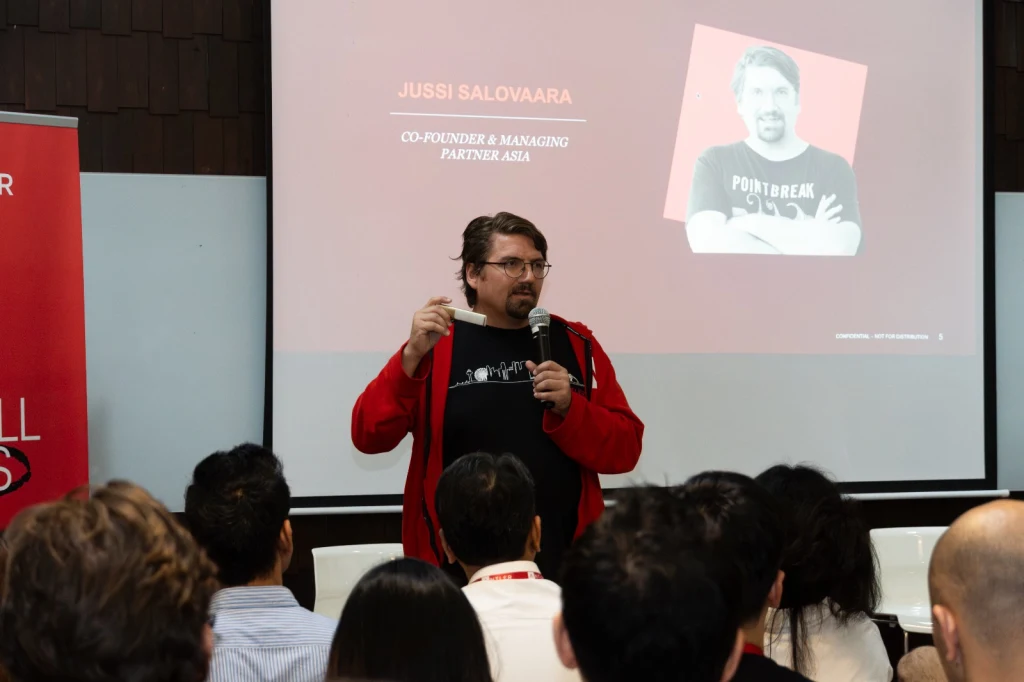
Jussi Salovaara, managing partner and co-founder of Antler / Photo credit: Antler
Obvious risks
Is the tech winter over?
Stay ahead in Asia’s tech landscape
This is premium content. Subscribe to read the full story.
Venture debt is gathering steam as founders and VCs face valuation mismatch, but experts caution about the potential risks.
We know this is not ideal. ⌛ Sign up in 20 seconds. Cancel anytime.
Our subscriber community includes professionals from these companies:





Stay updated on the go with our mobile app.
Get latest insights with smoother, more personalized experience through TIA mobile app.











📅 Upcoming Events
22 October 2026
Payoneer x CSPN Summit 2026