Path of Exile is an RPG released for the PC by Grinding Gear Games, an independent developer from New Zealand. It managed to get onto Steam immediately after finishing its open beta on 23 October 2013, cementing itself as a threat to the flagging granddaddy of action RPGs Diablo III with its numerous unique and fun feature, and being free to play to boot. It’s also being released for Singapore and Malaysia by Garena, but that’s a story for another day.
Contrary to what you might think at first, Path of Exile is actually an MMO game. You will get to see many other players hanging around in towns, and occasionally run past them in combat areas. The MMO aspect of Path of Exile already one-ups Diablo III’s always-online DRM requirement, since you can at least go online to socialize or team up with other players.
Path of Exile was released only after a whopping seven years of development and the wait has been long, but the result has indeed been worth the waiting. While Path of Exile is an indie game, it is surprisingly way better than the disappointing triple A excuse that was Diablo 3. Here’s what we think of it.
Unique, in-depth character development
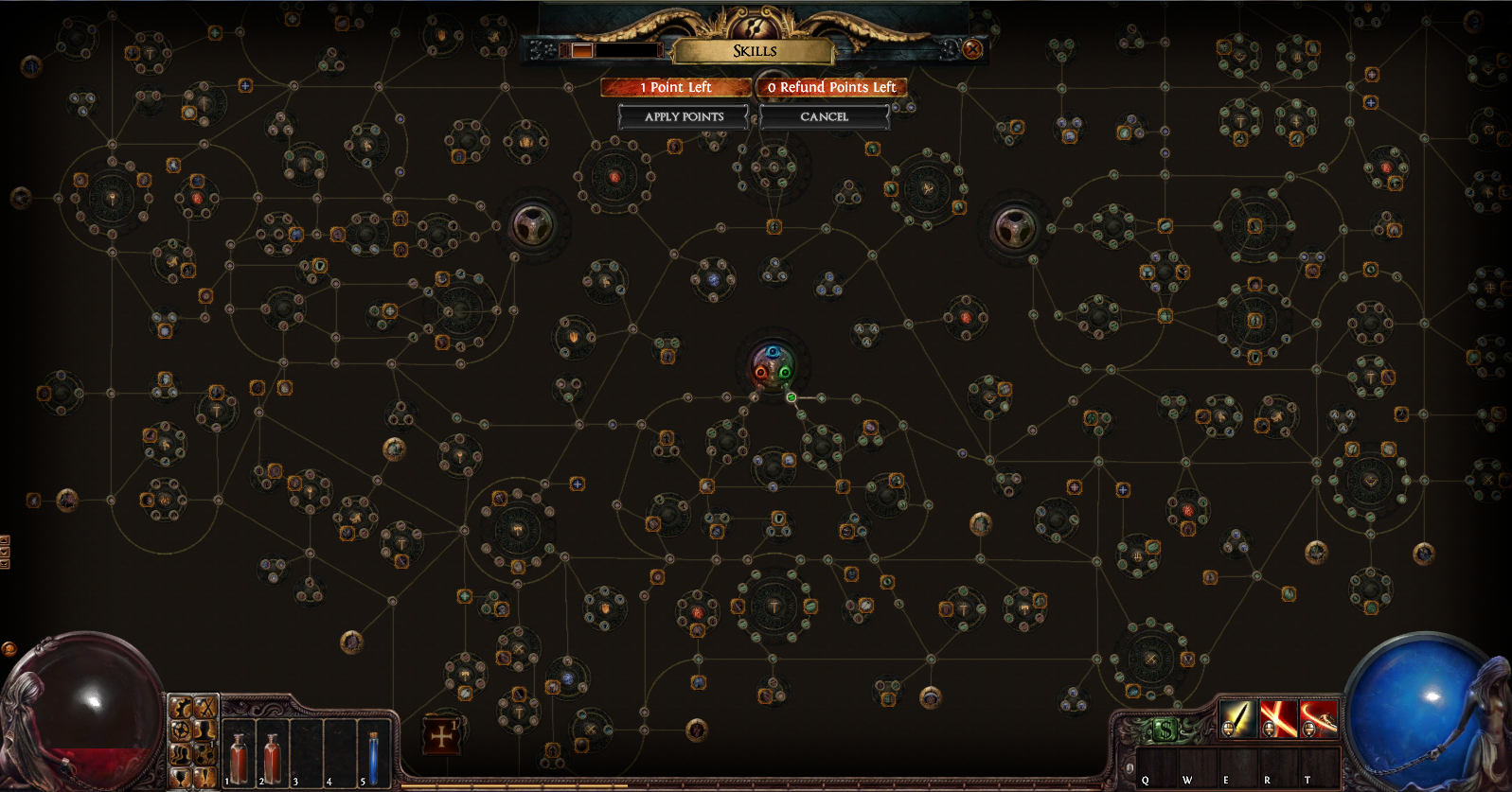
Path of Exile presents many unique game systems, and character development is one of those that caught my eye. In this game, you do not have to unlock or upgrade specific skills. Instead, your hard earned skillpoints go into a huge skill tree shared by all classes. Diversity in gameplay is created by each class beginning in a different part of skill tree, making it is possible to create a completely customized specialization for your character.
Active skills are another aspect of the game that I enjoy. To use active skills, you make use of dropped gems. These gems provide you with skills, but have to be attached to slots in various pieces of equipment first. In a way, you’re in possession of tons of skills that you can change on the fly, but this potential game imbalance is evened out by the fact that you will be wasting precious inventory space by bringing along unnecessary gems. Path of Exile utilizes the grid inventory system first seen in the Diablo series. There are also other kinds of gems. Skill gems level up and improve on your skills, and are transferrable between players. They make the skill system in Path of Exile very dynamic, and this allows you to change skills based on your needs, most notably between solo and group raid.
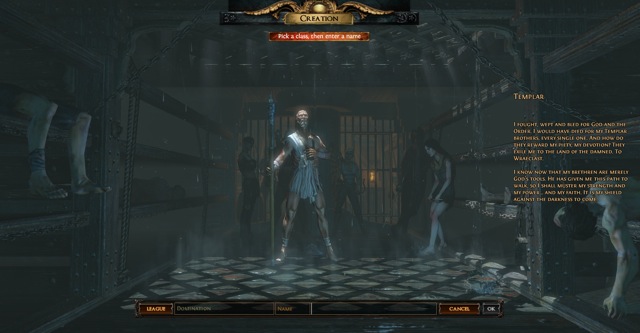
There are currently seven classes in the game, each with their own attribute preferences. The Marauder is a true Strength class. the Ranger is a true Dexterity class, the Witch is a true Intelligence class, the Duelist is a Strength/Dexterity hybrid class, the Templar is a Strength/Intelligence hybrid class, the Shadow is a Dexterity/Intelligence hybrid class, and then you have the Scion, being a true hybrid of all attributes. Non-hybrid classes are much easier to handle in terms of character development, since it’s almost impossible to make mistakes, but the more complex hybrids yield deep customization and flexibility.
A lack of currency
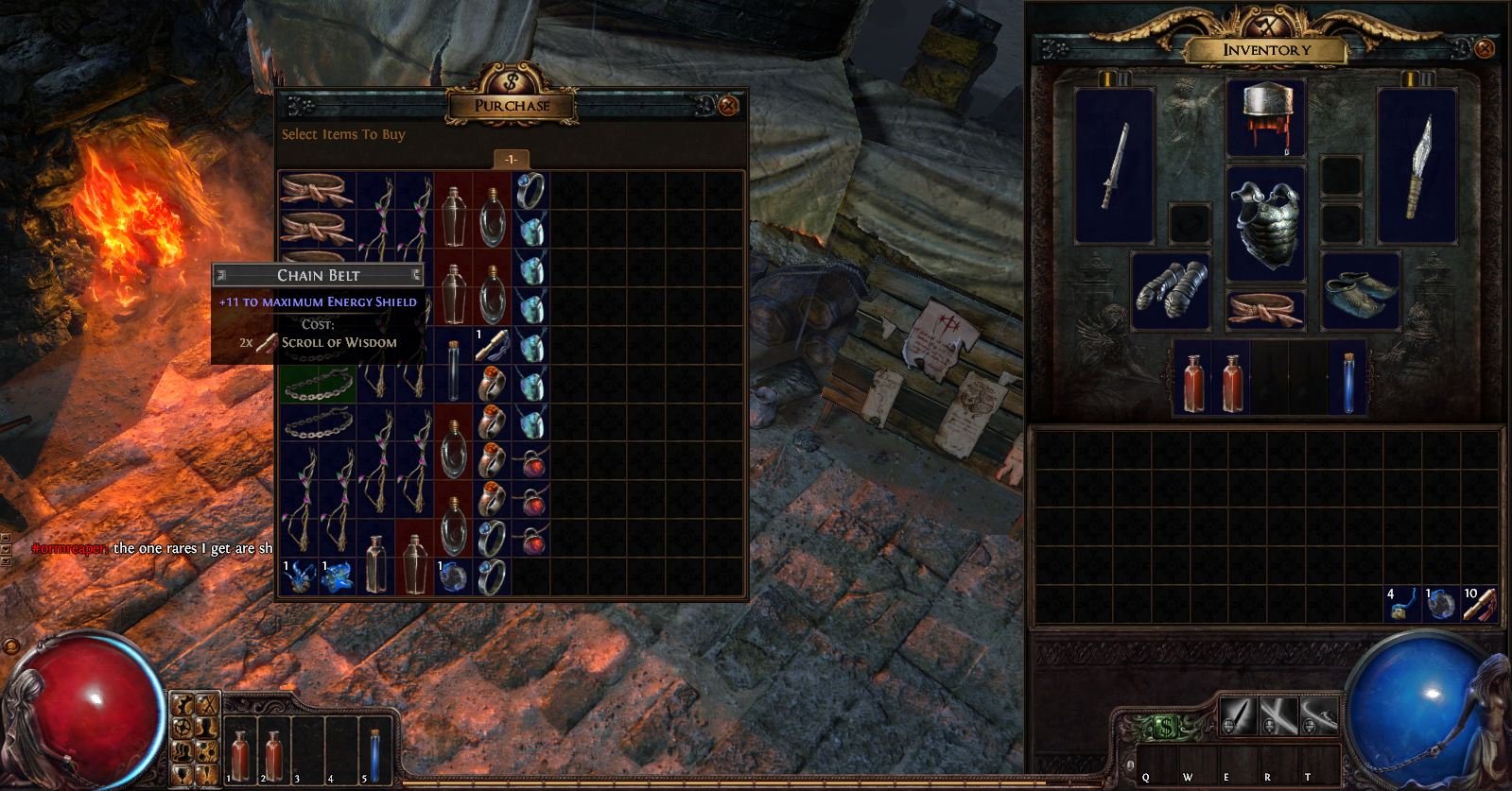
It’s strange but true: have you ever seen an RPG game with no currency? In Path of Exile, you will not gain any money from selling loot to NPCs. Instead you get fragments, scrolls, and other useful consumables that can further be traded for pretty much everything. I found this a bit troubling as it means that there is more than one currency in play. I have two currencies with my character right now: scrolls that are used to identify items, and an orb. However, there are NPCs who want to trade certain items with portal scrolls, which can be obtained only by trading identify scrolls. Sounds confusing? It is. However it makes sense when you think of Path of Exile’s storyline. We’re trading with madmen and criminals, and since there’s no such thing as a government body, there wouldn’t be any currency anyhow. However, that’s not to say that Path of Exile comes with a stellar storyline, and if they made the decision to do away with currency because of that, I think they’ve made a very big gaffe.





Stay updated on the go with our mobile app.
Get latest insights with smoother, more personalized experience through TIA mobile app.