 J.T. Quigley · · 7 min read
The home of the future will have speakers in the carpet and a bed that weighs you as you sleep
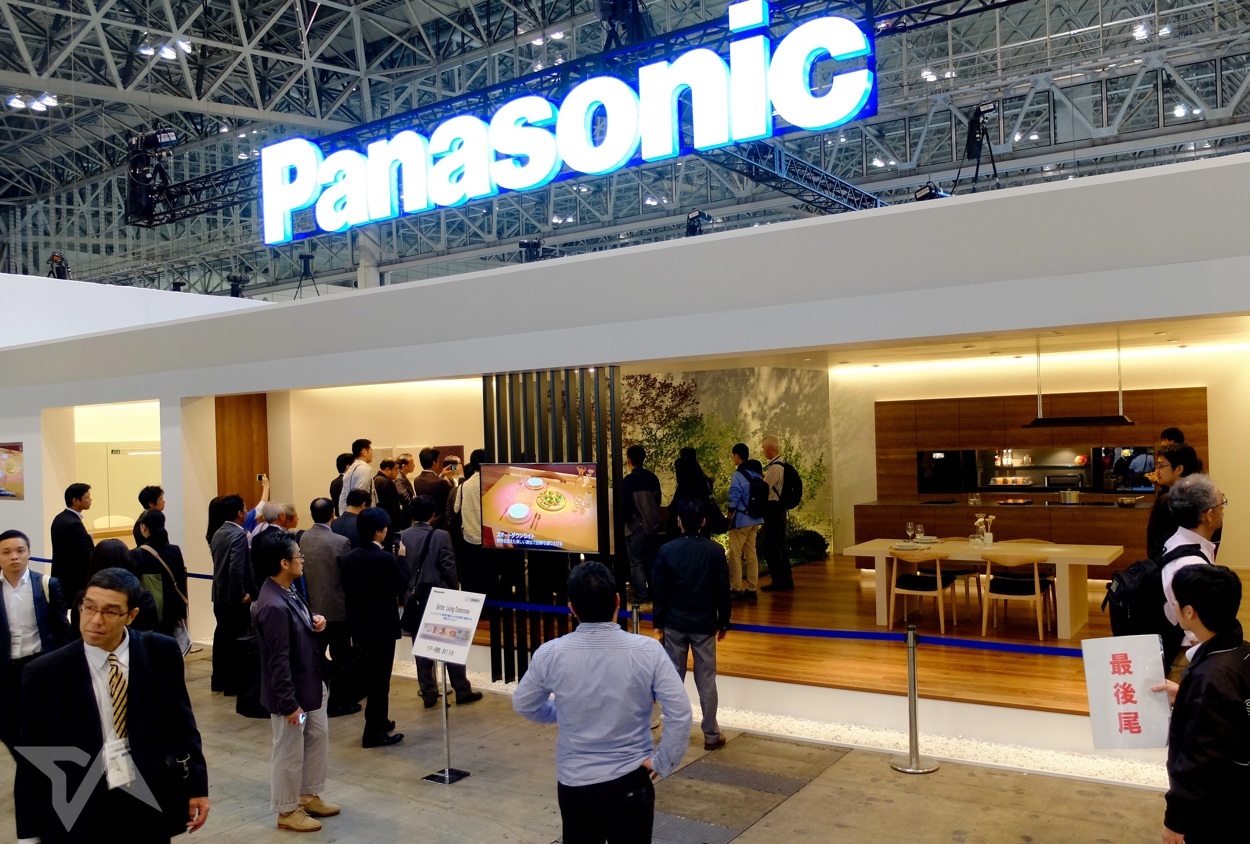
Japanese consumer electronics giant Panasonic gave me a tour of its swanky, health-centric model smart home at the annual CEATEC convention just outside of Tokyo earlier today. It was a glimpse into the future of what very wealthy, image-conscious people’s digs might look like “in three to five years,” according to a company representative.
Panasonic’s smart home demonstration focused on three main areas: the kitchen/dining room, the living room, and the bedroom. The tour began in the kitchen, but I’m going to explain things in reverse, as what happens in the bedroom follows you later.
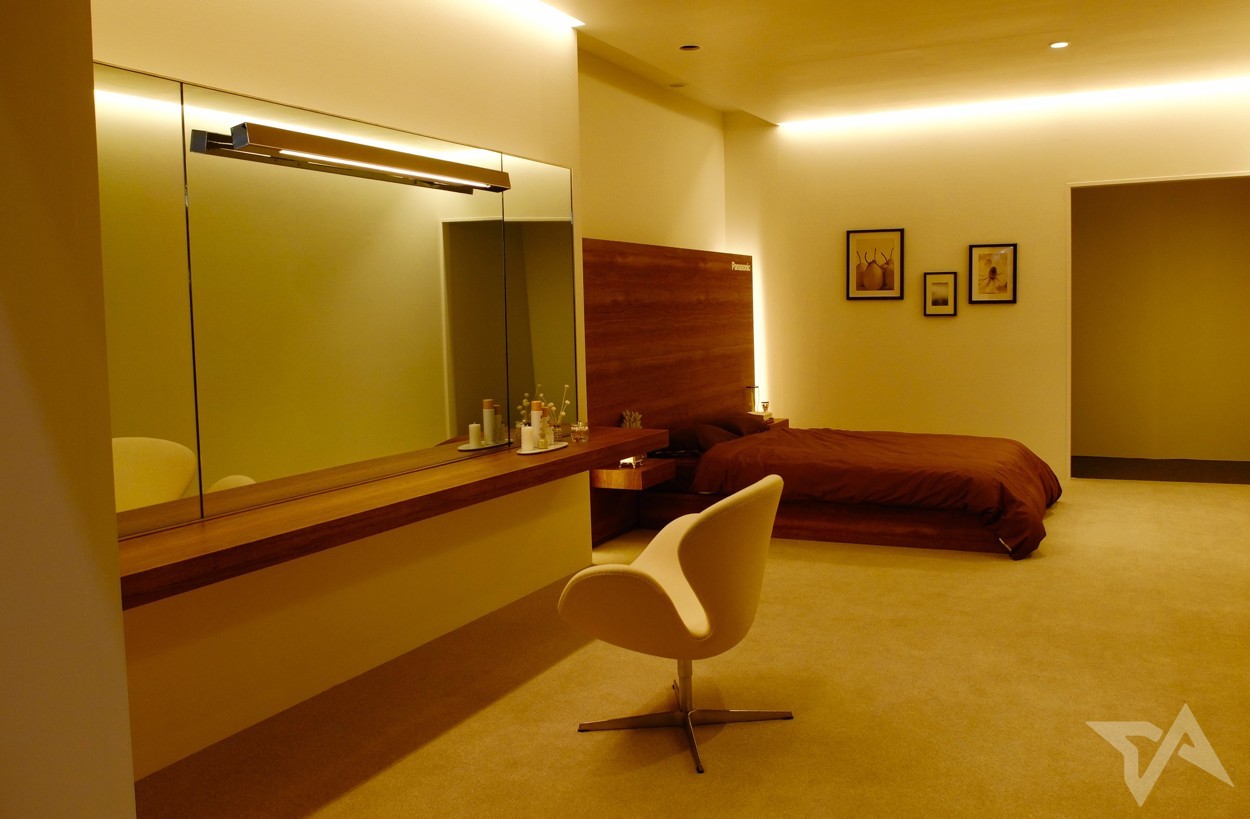
The first thing you notice in Panasonic’s bedroom is the absolutely enormous mirror – I’ve never been on set at a Hollywood production, but I imagine the dressing rooms have something like this. It’s sure to please the vain and the mega-rich, but its ability to display information very clearly was impressive.
Upon sitting down, sensors behind the giant mirror got to work analyzing our tour guide’s skin condition, which was displayed on the left-hand side. Skin care product recommendations then popped up on the right. Our guide’s face also appeared in the middle of the display, separate from her actual reflection – this might seem redundant, but I’ll explain why it works in a moment.
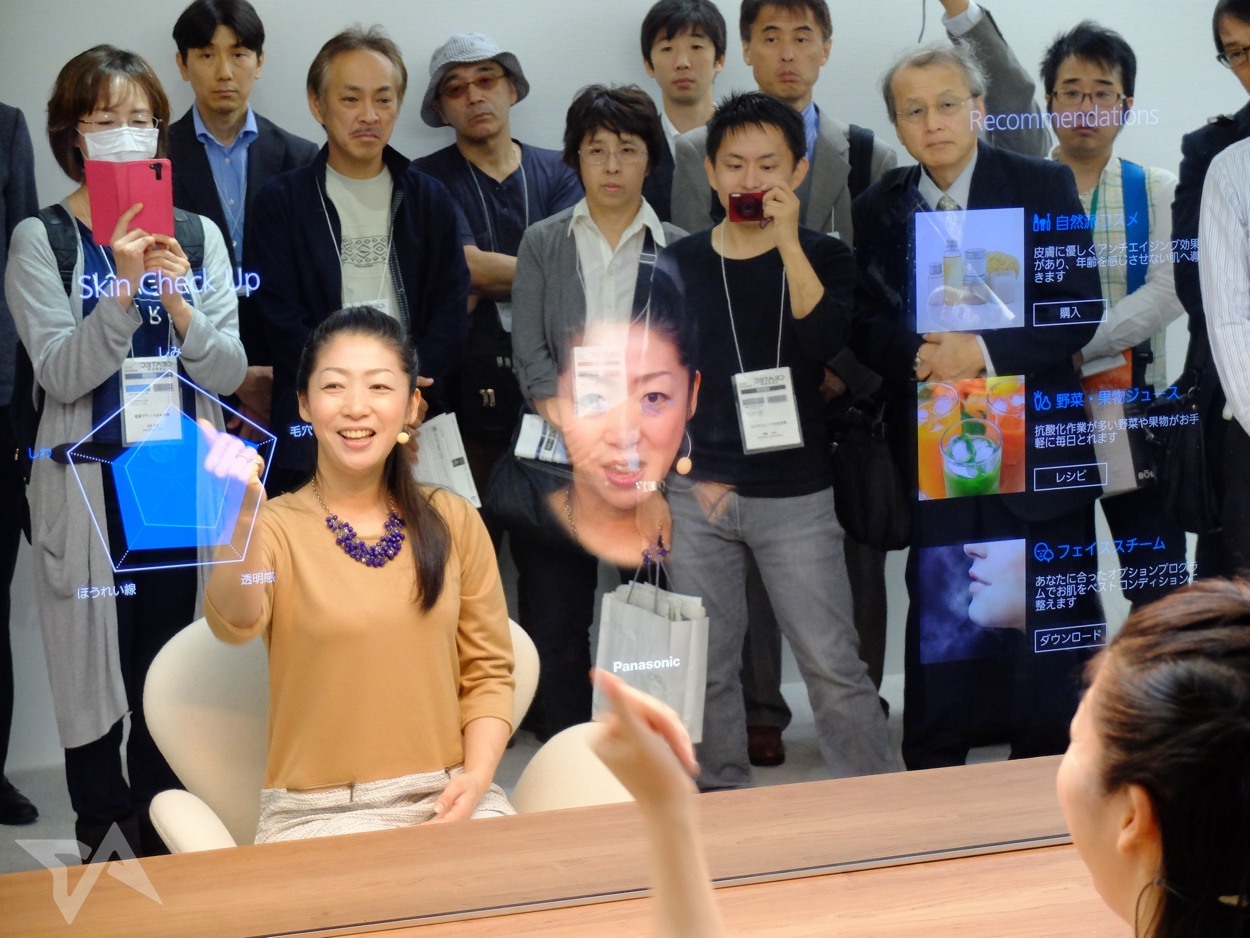
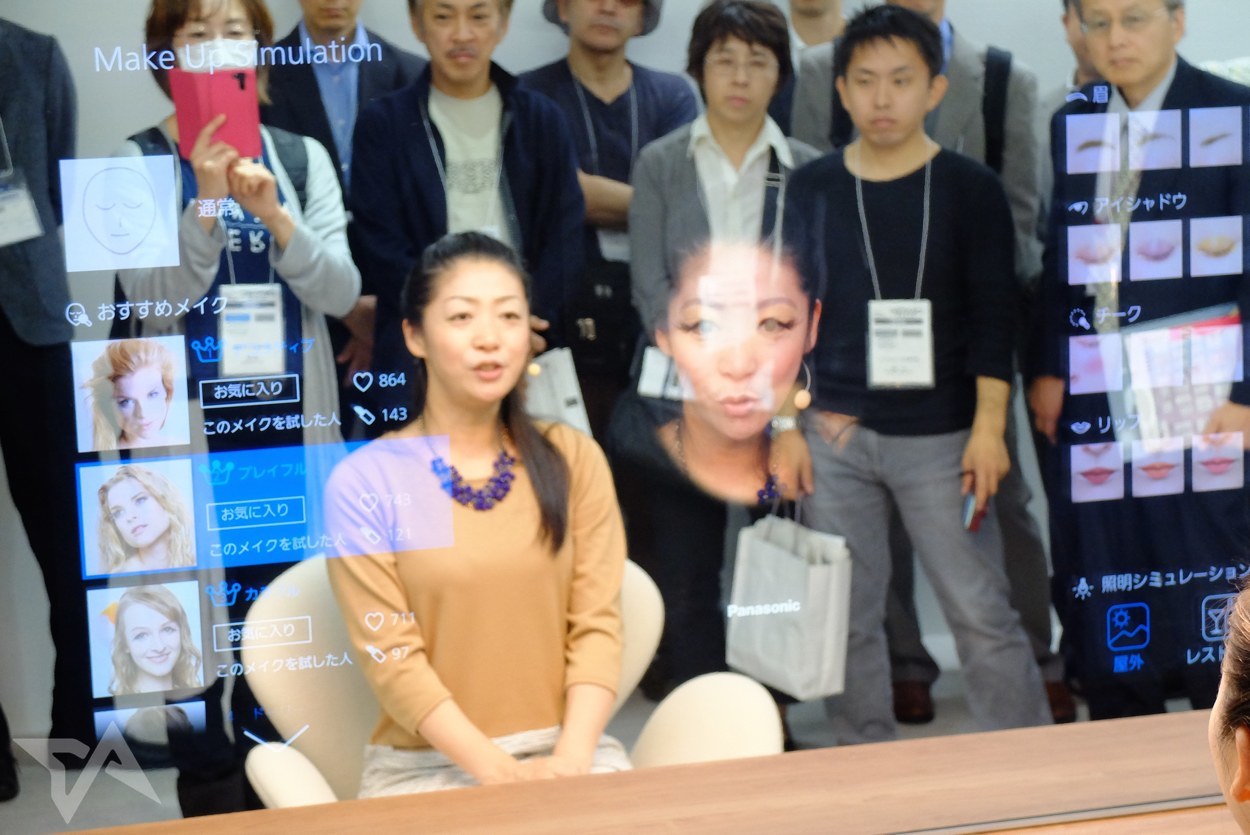
After analyzing her skin – pores, blemishes, wrinkles, “smile lines,” and opacity, according to the Japanese text on screen – the mirror brought up makeup recommendations based on different occasions, such as going to work, a wedding ceremony, or a bar. Waving her hand in front of a recommended style then overlaid a simulation of what the makeup would look like on the image of the guide’s face.
See: With a simple touch, this gadget analyzes your skin and tells you how to improve it
There was a slight delay between the facial display and the guide’s actions, and she demonstrated why – she spun around to face us, then turned back toward the mirror. The delay allowed her to check out how her hair looked from behind – something she said the ladies would love.
The mirror is cool and all, but the bed is arguably the most important part of Panasonic’s smart home. According to a Panasonic spokesperson, sensors embedded in the bed capture a variety of health-related data: heart rate, body temperature, and sleep cycles. This data, along with in-room temperature and humidity, is displayed via a projection above the bed. It’s also a different approach than what we’ve seen before, with Mitsubishi Electric’s smart home sharing health data via a connected wearable device.
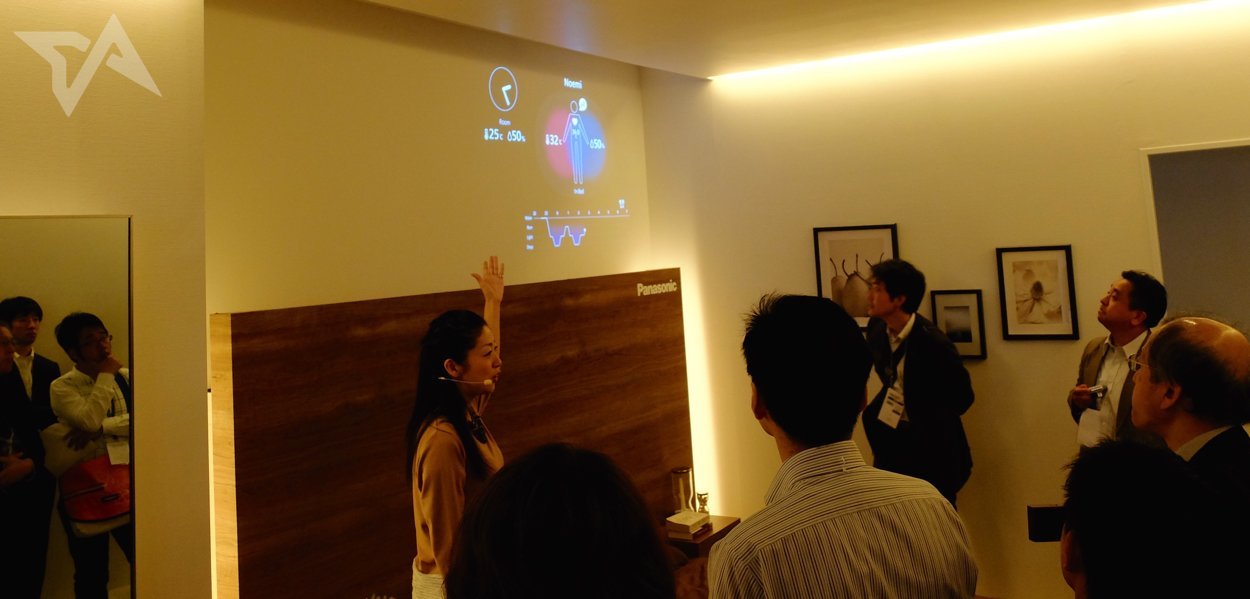
Inhabitants can set a sleep/wake schedule that automatically changes the ambient lighting for bedtime or morning. Upon lying down, the lights turn to a soft amber tone – and you can even project a video of the night sky (absurd number of shooting stars included) above the bed. Brighter, bluer lights and a soundtrack of chirping birds are used to gently wake you up.
A living room where the carpet plays music
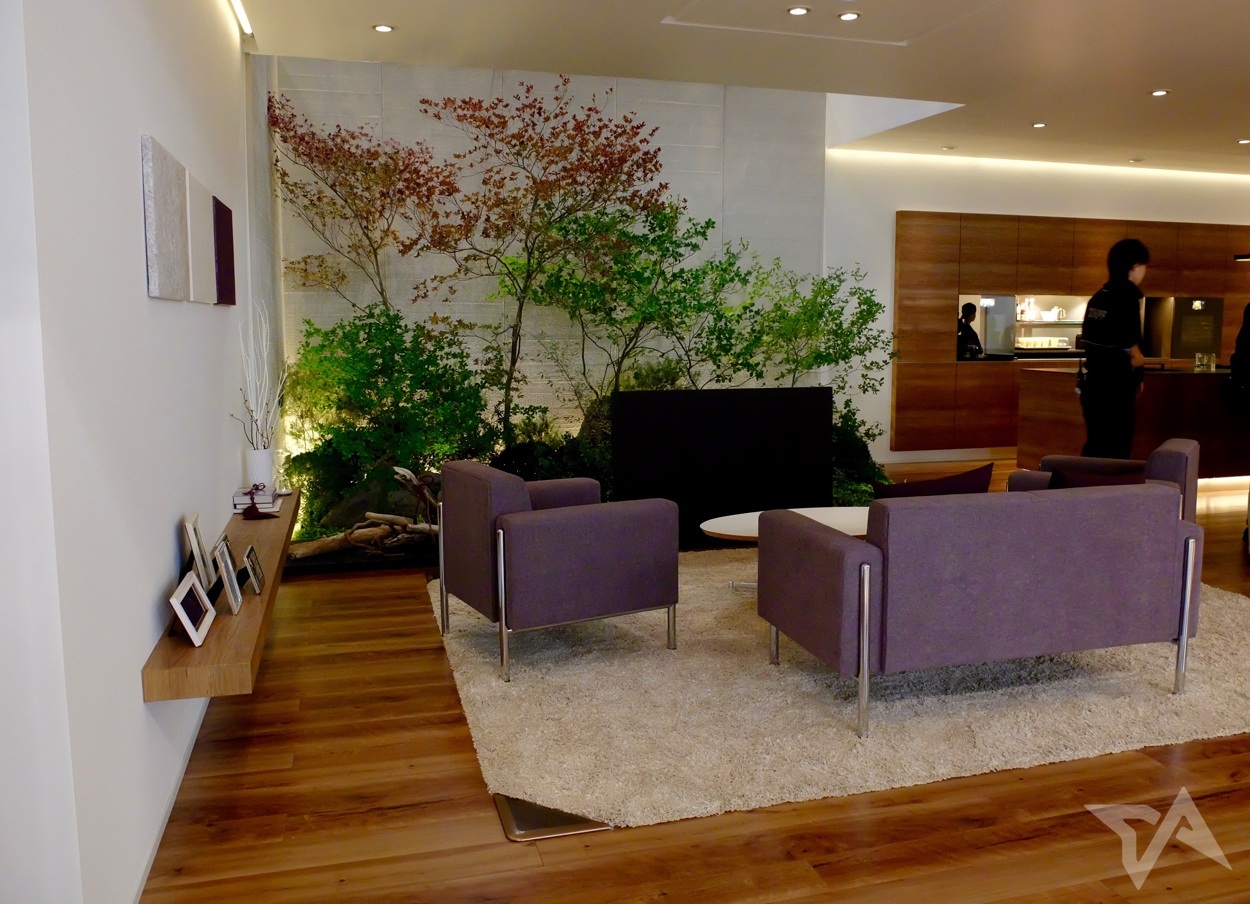
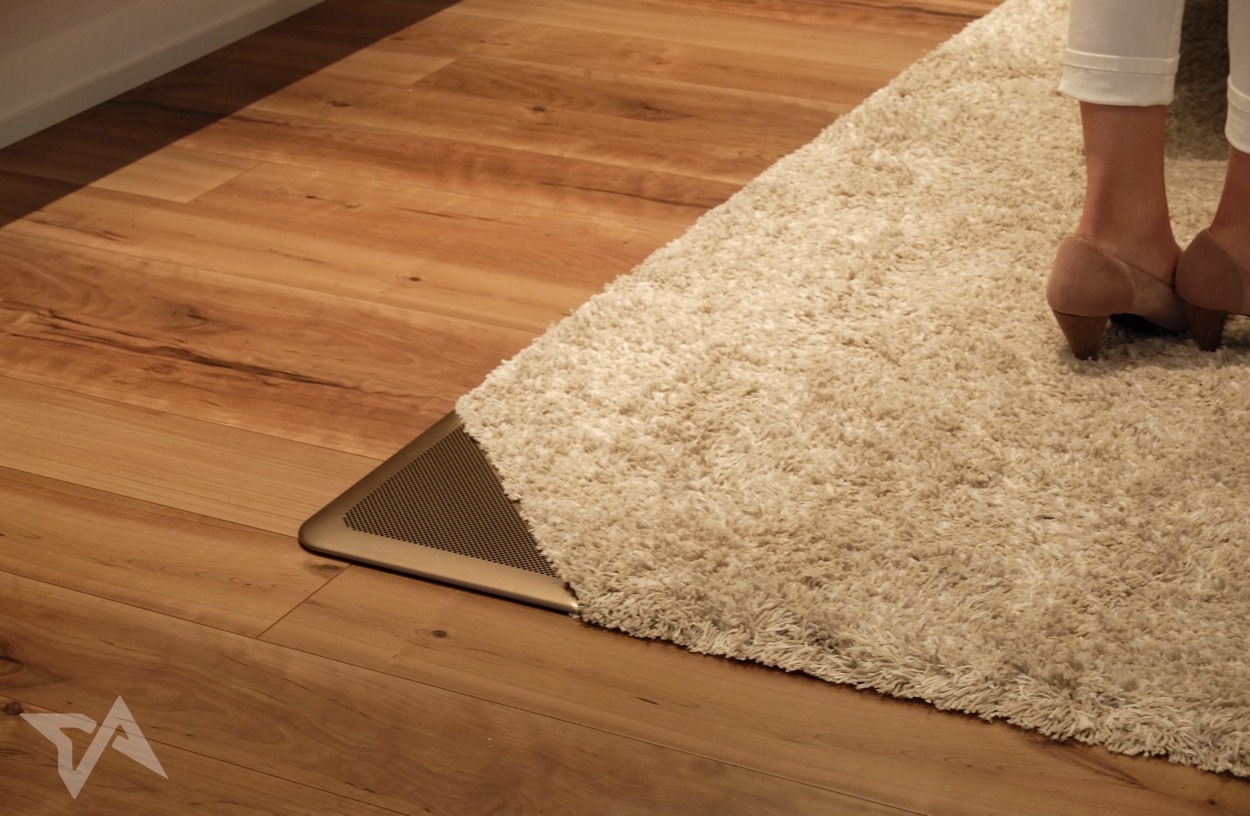
Panasonic’s smart living room was the least exciting area, save for the 6.1-channel surround sound speakers built into the carpet. It sounded fantastic, and Sharp’s spokesperson tells Tech in Asia that sensors can detect where people are sitting or standing and direct the sound toward them. Conversely, it can direct the sound away from someone who’s reading or studying in the same room but not watching the TV.
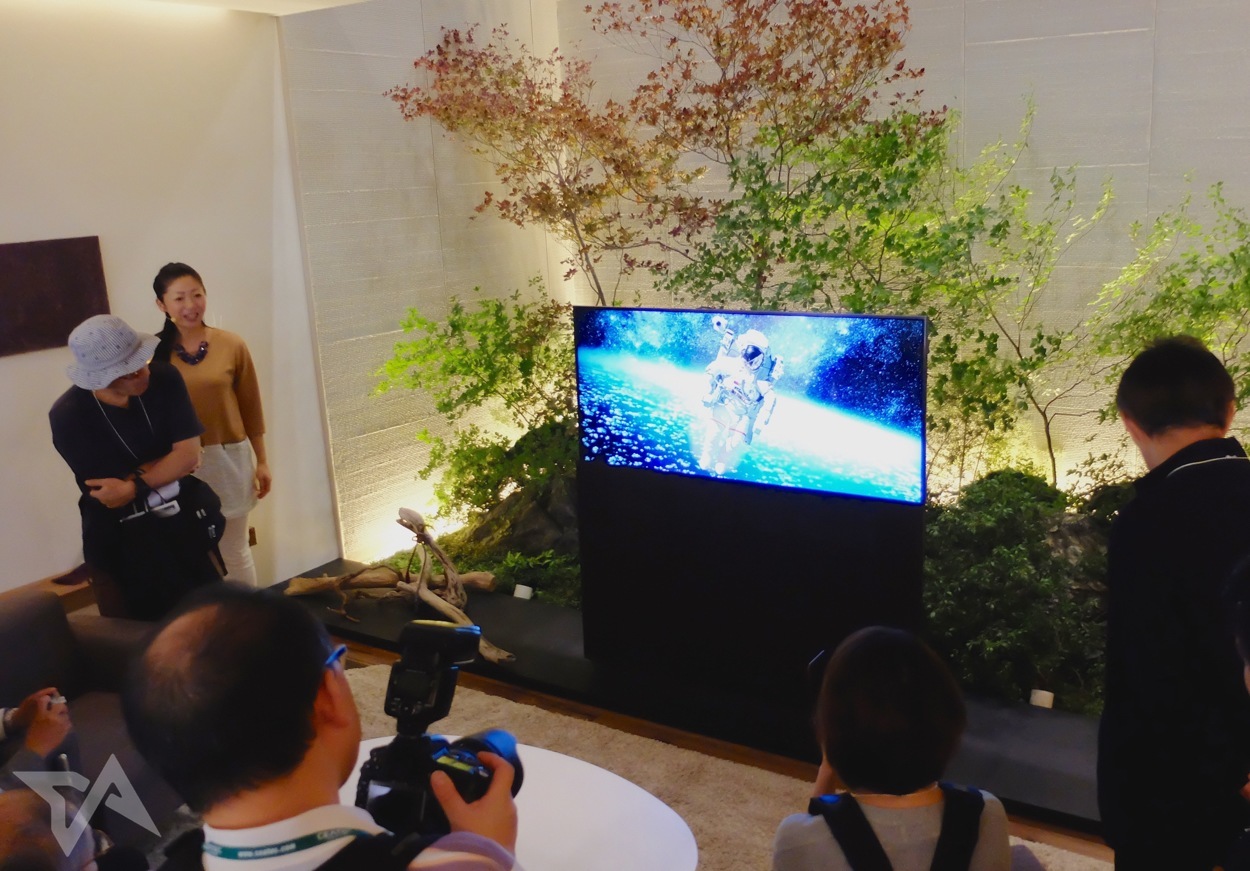
There’s also a black square that a projector can beam information onto (e.g. the popcorn’s ready) that is actually a flat speaker array. A “smart display” is hidden behind it, which pops up at different heights depending on the aspect ratio of what you’re looking at.
Cooking up a smarter kitchen
You’re greeted by Panasonic’s smooth, black “freestyle induction hob” upon approaching the kitchen island. It can track where you place pots and pans and apply heat to those specific locations. It also supplies power, and our tour guide showed off an automatic stirring device that started spinning on its own after she dropped it into a pot of boiling water. The hood above the cooking surface also has a camera, so you can snap pictures of your culinary masterpieces without reaching for your smartphone.
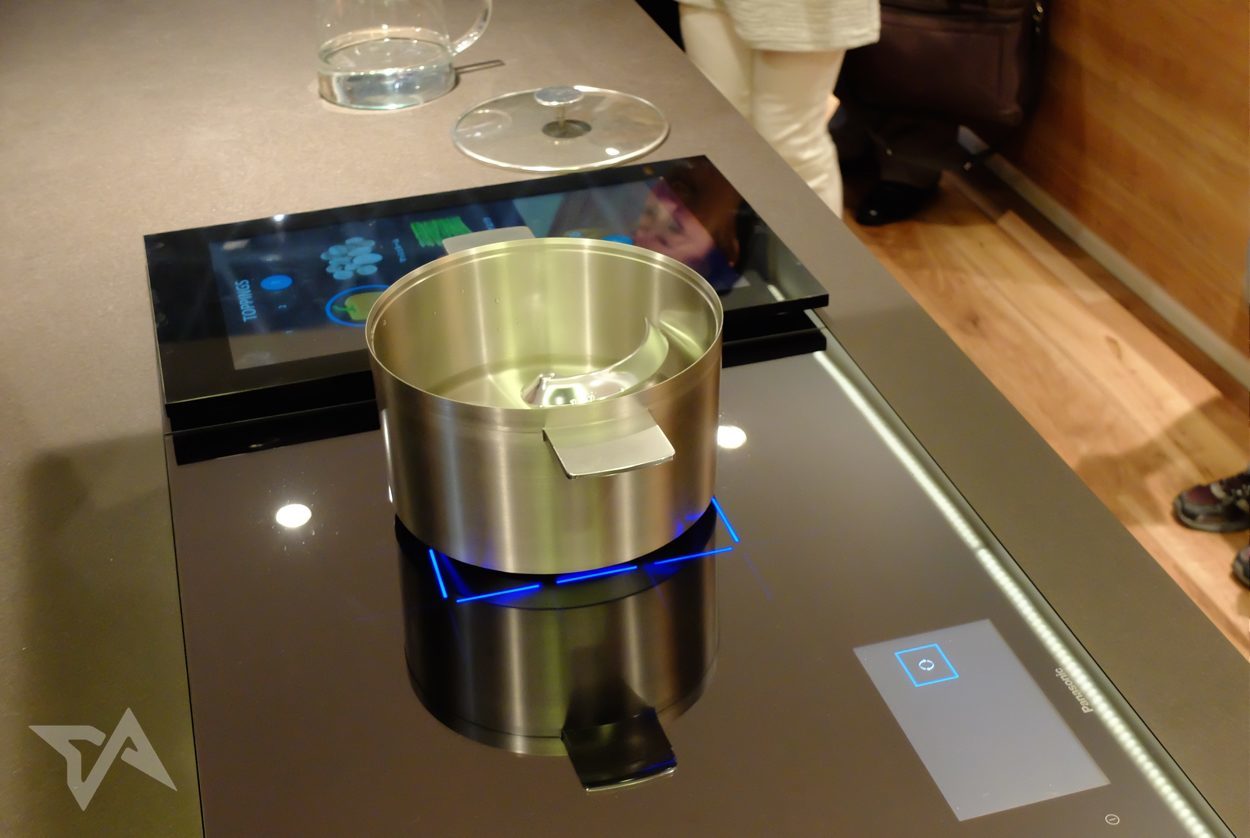
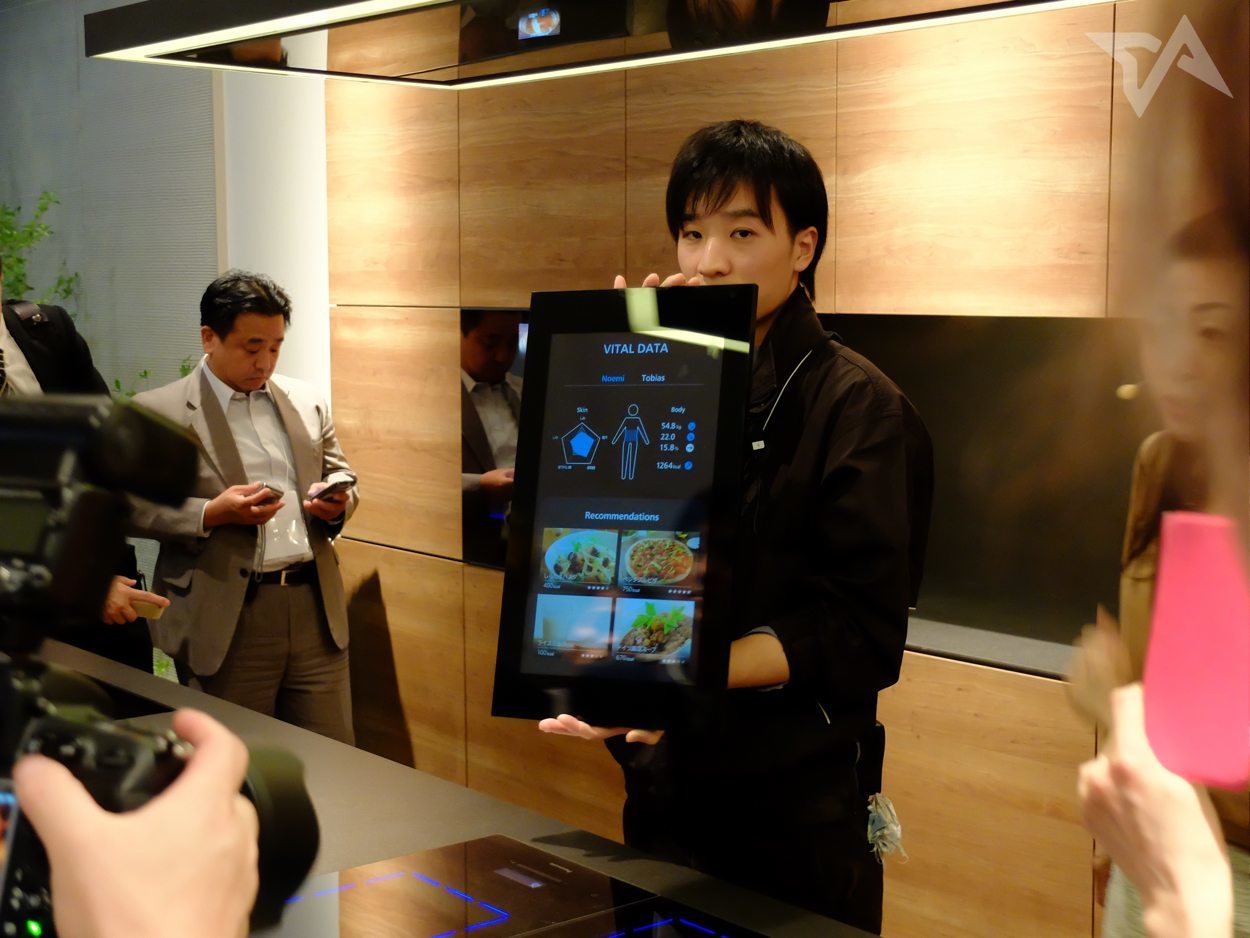
There’s also an enormous moveable display panel that shows the health data collected in the bedroom. It analyzes your vitals to make dining recommendations, and presents recipes accordingly.
There’s even a “food maturing stocker” that allows you to make smoked meats and fermented cheeses at home – I’m sold!
The dining room was my personal favorite, with its “smart downlight” positioned above the dinner table. It’s a cross between a standard light and a projector. When our hostess put a (fake) pizza on the table, the downlight projected a glowing orange light around it. On the side of the table without a pizza on it, the downlight projected images from the virtual inhabitants’ family vacation to some sweet tropical destination. Photos could be rearranged by gesturing above them, but the coolest feature was actually adjacent to the table.
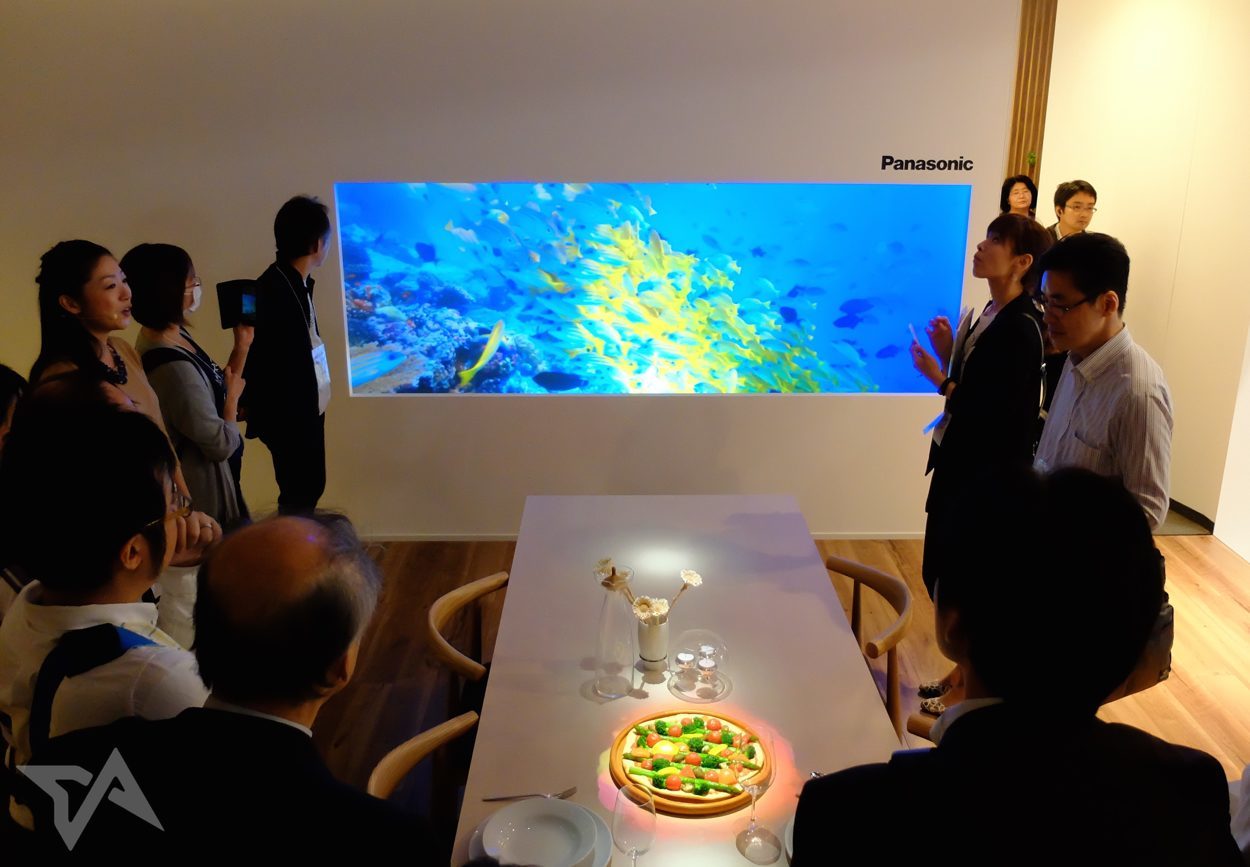
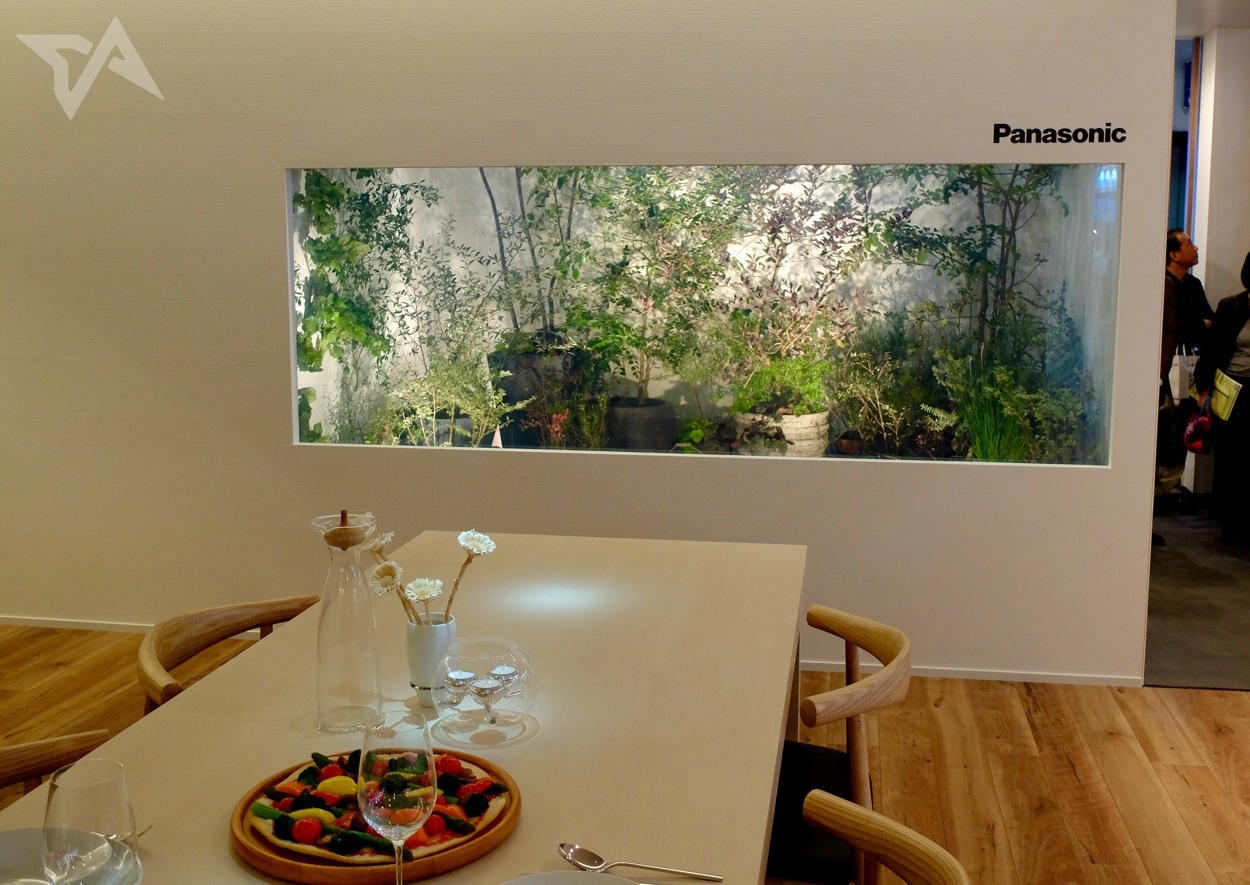
As a Tokyo inhabitant, most of the places I’ve lived have windows that look at the side of the building next door. Panasonic’s smart home had a window with a view to a lush garden, something I can only dream of without moving to the countryside. By making a swiping motion on the dining table, you’re able to beam the projected images from Panasonic’s smart downlight to the window – which is actually a transparent display. We went from looking at still images on the table surface to watching scuba diving footage on the “window.” It was awesome.
At the end of the tour, I felt even more convinced than before that these nearly sci-fi level smart homes will be a hit with consumers. Still, those not firmly established in the uppercrust of society will surely have to sell our firstborns to be able to afford living in the lap of luxury. If this tech is expected in roughly five years, it will probably be at least 15 years before it’s affordable enough for the standard middle class consumer.
Stay updated on the go with our mobile app.
Get latest insights with smoother, more personalized experience through TIA mobile app.
Recommended reads
 OpenAI’s Codex head sees “incredible” adoption across Asia
 The web’s new landlord: Google
 500 designs, 5 designers: AI’s dazzling jewelry math
 AI to cart away ecommerce shoppers?
 Is this new robot hand from China a challenge to Tesla?
 Asia enters the AI video chat
 The 2026 Prediction Bingo update: half right, fully accountable
 When streaming turns into shopping
 Energy is infectious, so pick your tribe
 Asia’s AI video gold rush





Editing by Steven Millward
(And yes, we’re serious about ethics and transparency. More information here.)






📅 Upcoming Events
22 October 2026
Payoneer x CSPN Summit 2026